Просмотр новости
Найдите то, что Вас интересует
 Спутники
 РН
РН SpaceX
 Роскосмос
 NASA
NASA
СпутникиРНSpaceXРоскосмосNASAVice began as a tiny Montreal punk magazine and somehow grew into a media empire worth nearly $6 billion, making co-founder Shane Smith a billionaire on paper. Six years later, Vice was bankrupt, Smith's stake was virtually worthless.
Read more: At Its 2017 Peak, Vice Was Worth Nearly $6 Billion And Co-Founder Shane Smith Was A Billionaire. Just Six Years Later, The Company Was Bankrupt
Vice began in Montreal in 1994 as a government-funded punk magazine called "Voice of Montreal." Its founders, Shane Smith, Suroosh Alvi, and Gavin McInnes, covered music, drugs, sex, fashion, nightlife, and the local counterculture.
It was loud, offensive, cheap to produce, and not particularly concerned with traditional journalistic standards. It did not look like the foundation of a global media empire.
Against all odds and logic, that little Canadian punk magazine eventually became a thriving international news organization with websites, advertising agencies, film operations, a record label, an HBO series, a cable television network, and reporters operating in some of the most dangerous places on Earth.
And to top it all off, some extremely smart financiers decided the company was worth nearly $6 million. Oh, wait. I mean… $6 BILLION.
When Vice raised $450 million at a $5.7 billion valuation in 2017, both Shane and Suroosh were billionaires on paper. Unfortunately (for him), Gavin had cashed out years earlier at a MUCH lower valuation.
At the time, some extremely smart people predicted that Vice was going to become the next Disney or Newscorp. A massive media powerhouse with a market cap that could eventually reach $30 billion, or $100 billion, or more.
Well… six years later, Vice filed for bankruptcy…
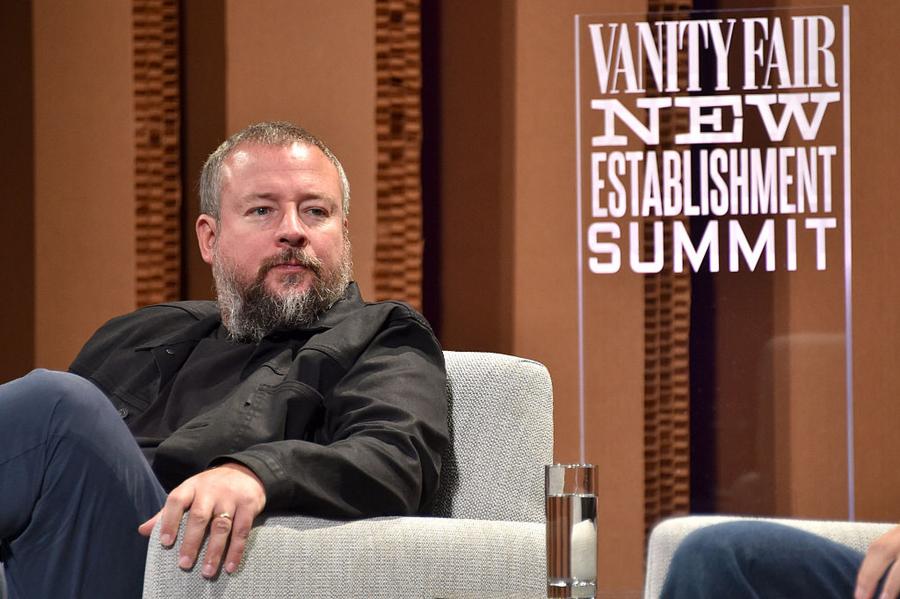
Getty Images
After launching "Voice of Montreal," the three founders bought control of the publication, changed its name to Vice, and moved the operation to New York City.
Vice distinguished itself with a voice that was deliberately provocative and frequently juvenile. Its writers immersed themselves in subcultures rather than observing them from a distance. The magazine built an audience by publishing stories that established media companies would not touch.
McInnes left the company in 2007 following creative differences. His interest was bought out for between $10 million and $20 million.
Smith and Alvi pushed Vice far beyond print. The company launched websites and video channels devoted to news, music, food, technology, travel, fashion, and culture. It built an advertising agency that produced sponsored content for major brands and expanded into dozens of countries.
Smith became Vice's public face, traveling to countries including North Korea, Iran, Liberia, and Afghanistan for documentaries that combined legitimate reporting with Vice's signature taste for danger and spectacle.
Perhaps the most surreal example came in 2013, when Vice organized a basketball exhibition in Pyongyang featuring Dennis Rodman and members of the Harlem Globetrotters. The visit ended with Rodman sitting beside North Korean leader Kim Jong Un, an enthusiastic basketball fan who rarely interacted with Americans. The bizarre spectacle, filmed for Vice's HBO series, generated worldwide attention and perfectly captured the company's ability to go places—and gain access—that traditional news organizations could not.
The strategy culminated in "VICE," the company's HBO news series. The program won an Emmy and a Peabody Award and helped establish Vice as something far more substantial than a magazine for aging hipsters.
For traditional media executives desperately trying to reach younger audiences, Vice appeared to possess a form of magic.
Investors Pour InVice's rise attracted a remarkable collection of media executives, corporations, and investment firms.
In 2011, advertising giant WPP, the Raine Group, and former MTV chief Tom Freston invested $50 million. The deal valued Vice at around $200 million.
In 2013, Rupert Murdoch's 21st Century Fox invested $70 million for a 5% stake, placing Vice's value at $1.4 billion.
A&E Networks and Technology Crossover Ventures invested another $500 million in 2014, lifting the valuation to $2.5 billion. During this round, Shane Smith sold more than $100 million worth of his personal shares. With the sale, Smith described himself as "post-economic." It's not confirmed that Suroosh made a similar sale at this round, but it seems likely that he would have.
Then came Disney. Under CEO Bob Iger, the entertainment giant invested $400 million in Vice through two transactions in 2015.
Disney explored buying the entire company for between $3 billion and $3.5 billion. Smith declined to sell. He believed Vice could become a much larger business and eventually go public.
For a while, that gamble appeared to work.
In June 2017, private equity firm TPG Growth invested $450 million. The funding round valued Vice at $5.7 billion and pushed Smith's personal fortune to $1.6 billion.
A business that had started with Canadian government funding was now worth more than many publicly traded media companies.
The $29 Billion DreamSmith was never shy about his ambitions.
In 2014, he discussed the possibility of taking Vice public at a $29 billion valuation. Had Vice achieved that number while Smith still owned 28%, his stake would have been worth more than $8 billion.
The proposed valuation sounded outrageous, but so did practically every earlier stage of Vice's growth. Investors had repeatedly paid higher prices for smaller pieces of the company. Smith had been rewarded for thinking bigger than everyone else.
The problem was that Vice's valuation had raced far ahead of its financial performance.
The company had built an influential brand and a huge global audience, but it was also expensive to operate. Vice maintained offices around the world, employed thousands of people, produced costly television programming, and expanded into numerous businesses at once.
Its ability to attract investment masked its inability to generate reliable profits.
The CollapseVice's problems became increasingly difficult to hide after the 2017 funding round.
The company missed revenue targets, lost money, and struggled to make its cable channel, Viceland, a commercial success. Digital advertising became more challenging as Google and Facebook captured a growing share of the market.
Vice also faced a damaging workplace scandal. Accounts of sexual harassment and a toxic internal culture undercut the company's progressive public image and exposed serious failures in management.
Smith stepped down as CEO in 2018 and became executive chairman. Former A&E executive Nancy Dubuc took control of the company and attempted to reduce costs, reorganize operations, and find a path to profitability.
By then, the gap between Vice's $5.7 billion valuation and its actual value had become impossible to ignore. Disney eventually wrote down its entire $400 million investment to zero.
Vice kept operating through additional financing, but much of the new money arrived as debt. The company explored a sale and attempted to go public through a merger with a special-purpose acquisition company. Neither plan succeeded.
On May 15, 2023, Vice filed for Chapter 11 bankruptcy protection.
The company was ultimately acquired by a group of creditors led by Fortress Investment Group, Soros Fund Management—founded by George Soros—and Monroe Capital through a $350 million credit bid.
Because the buyers were creditors exchanging debt for ownership, the sale did not produce a $350 million pool of cash for Vice's former shareholders. Secured lenders stood ahead of equity owners, leaving Smith's once-valuable shares with essentially no value.
The Real Estate WindfallSmith also preserved part of his wealth through real estate.
In 2015, Smith and his then-wife, Tamyka, paid $23 million for a 3.35-acre Santa Monica estate. They bought it sight unseen. They sold the property in 2021 for just under $49 million.
Smith subsequently paid $11.7 million for a Malibu mansion. He also owned a La Quinta property that he bought for $2.65 million and later listed for $5.2 million.
From $1.6 Billion To $50 MillionToday, we estimate Shane Smith's net worth at $50 million. Still enough for 99% of humanity to consider themselves "post-economic," but a brutal collapse from $1.6 billion. Not to mention $8 billion or more.
Shane and his wife, Tamyka, divorced in 2021. Earlier this month, it was reported that Shane was dating controversial journalist Olivia Nuzzi. In case you have no idea who that is, Olivia is the former "New York" magazine political reporter whose career imploded after she admitted to having an undisclosed personal relationship with Robert F. Kennedy Jr., a presidential candidate she had profiled and covered. The scandal ended her engagement to fellow journalist Ryan Lizza and led to her departure from the magazine.
Since Vice's bankruptcy, Suroosh Alvi has maintained a much lower profile than Smith. He has continued working in documentary production, including serving as an executive producer of the 2025 Vice documentary "Kids Fight," which followed teenage mixed martial arts competitors using a gym as a refuge from poverty, drugs, and street violence in Pakistan.
As for Gavin McInnes, his life took a dramatically different path after he left Vice and sold his stake for between $10 million and $20 million. He co-founded the advertising agency Rooster, became a conservative political commentator and podcast host, and founded the Proud Boys in 2016. Yes. The Proud Boys. McInnes publicly separated himself from the group in 2018, but has remained a highly controversial media personality and continues to host "Get Off My Lawn" through his subscription platform, Compound Censored.