Просмотр новости
Найдите то, что Вас интересует
 Спутники
 РН
РН SpaceX
 Роскосмос
 NASA
NASA
СпутникиРНSpaceXРоскосмосNASAThanks to a growing body of Antarctic research, scientists are beginning to understand what journeys on the coldest continent do to the human body.
 A manhauler crosses the polar plateau. Photo: Carl Alvey/ALE
In 1911, Robert Falcon Scott and Roald Amundsen set out for the South Pole with little knowledge of nutrition, physiology, or psychology. A century on, modern Antarctic trekkers benefit from advanced training, tailored nutrition plans, and cutting-edge gear such as carbon and Kevlar sleds, synthetic insulation, GPS navigation, and freeze-dried rations. Yet despite these innovations, the basic physical and psychological demands of dragging heavy sleds across the ice remain the same.
Now, thanks to a growing body of research, scientists are beginning to understand what these journeys do to the human body. A paper published late last year in the journal Sports Medicine pulled together data from 12 scientific papers spanning three decades of Antarctic expeditions.
The international team of researchers combed through nearly 2,000 studies across seven online research databases, winnowing them down to only those that met strict criteria: human expeditions (failed or successful) on the Antarctic continent, trekkers sleeping on the ice, and both men and women over 18. Out went tourist trips, overwintering in research stations, or staged endurance events.
The studiesData from 54 polar travelers and expeditions remained, all from the early 1990s onward. Because some studies reported on the same expedition multiple times, there were only 42 unique study participants (21 men and 21 women) in the final sample. These participants had skied, manhauled, or snow kited across distances from 600 to nearly 5,000km.
The studies included well-known expeditions, such as Rune Gjeldnes’ 90-day crossing of Antarctica by snow kite in 2005-6, and Ranulph Fiennes and Mike Stroud’s 95-day partial ski crossing of the continent in 1992-3.
The review only focused on Antarctica, while Arctic and North Pole expeditions tend to be colder, more arduous, and more technically demanding; the researchers did not mention why they focused on Antarctica.
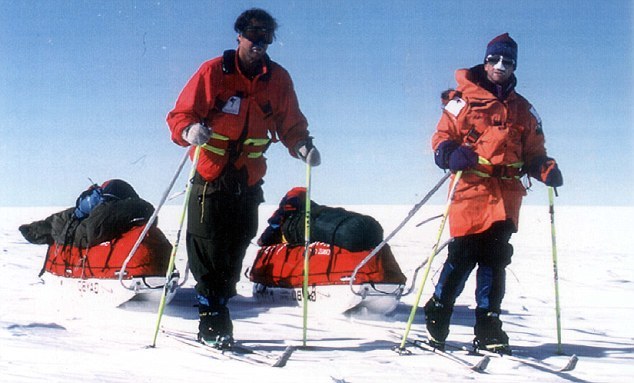
Ranulph Fiennes, left, and Mike Stroud.
Researchers from the included studies followed the trekkers before, after, and, in some cases, during expeditions. Measurements included drawing blood, analyzing saliva and urine, running bone scans, taking skinfold measurements, and analyzing cortisol in hair samples. In their tents or back home, some trekkers filled out psychological questionnaires and took part in interviews.
The findings are an interesting puzzle. Even with rations exceeding 5,000 calories a day, Antarctic trekkers lose weight, bone density shifts, and hormones regulating appetite drop. Beyond physiology, the review also highlights the mental resilience and teamwork required for an Antarctic expedition.
Weight loss unavoidableOne of the review’s clearest findings is that weight loss seems unavoidable. Men and women alike finish expeditions lighter, often with reduced fat. Changes in lean tissue (muscle, body water, organs) are a little unclear and may differ by sex.
Even when diets provided 5,000 to 6,000 calories per day — double what most adults consume — trekkers burned through the calories, and more. Appetite was impacted, with hormones like leptin (which suppresses hunger) and adiponectin (which stimulates hunger) dropping during and after expeditions. This suggests the body’s signals to regulate appetite could weaken just when energy is most needed.
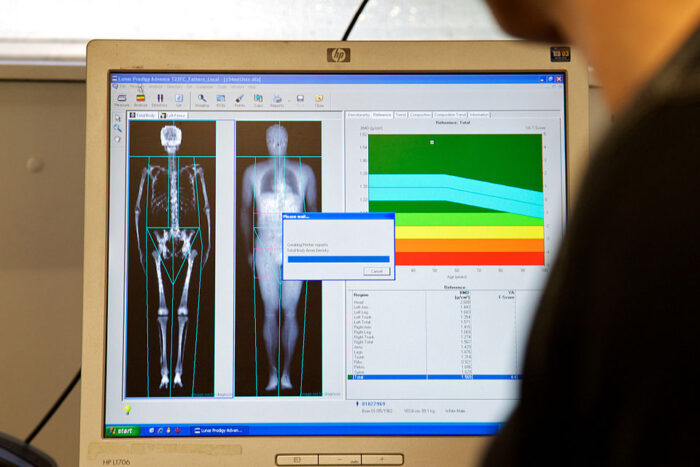
A dual-energy X-ray absorptiometry (DEXA) scanning technique was used to measure bone mineral density and body composition in some of the studies. Photo: Wikipedia
The amount of weight loss varied widely, no doubt as a result of different diets and journey types. The six-man Spear-17 team, who completed a partial crossing of Antarctica (resupplied at the Pole) in 2017, ate 6,500 calories per day, and only lost a modest 7% body weight. Whereas Fiennes and Stroud, who were pulling heavy sleds of over 200kg at the start of their expedition and averaged 5,100 calories per day, lost around 15% body weight.
Bone density was another focus. Women on an expedition hauling 80kg sledges over 1,700km saw reductions in trunk, rib, and spine density. These losses were reversible, but the changes underscore the toll of weeks hauling heavy loads.
Cardiovascular and hormonal changesThe review also highlights cardiovascular and hormonal changes. In one study, heart monitors showed an increase in parasympathetic activity (the body’s relaxation mode after stress or danger) and heart rate variability (variation between heartbeats, generally the higher the better) post-expedition. This suggests the body’s nervous system can recalibrate after weeks of stress.
Antarctica rises from sea level to a high polar plateau of over 3,000m. The thin, cold air produces hypobaric hypoxia, a state of reduced oxygen usually associated with mountaineering. Trekkers ski uphill in this state for weeks while facing temperatures down to around -30°C.

Henry Worsley hauls in Antarctica. Photo: Henry Worsley
Unlike in the Himalaya, there is no Sherpa support, and no camps stocked with cached food. Everything needed for weeks on the ice — fuel to melt snow, high-energy rations, clothing, and electronics — rides in the sled. The review concluded that prolonged exposure to reduced oxygen reduces aerobic capacity (fitness), but the researchers did not present the data for this from the individual studies.
Hormonal results were mixed. Cortisol, the stress hormone, was measured in blood, saliva, and even hair. Some samples showed increases, others no change.
Psychological findingsIn Antarctica, the mind must endure isolation, monotony, and the disorienting brightness of 24-hour daylight. Six studies reported challenges and strengths. Women in particular were found to experience disrupted sleep patterns and changes in mood. One male trekker experienced altered cognitive function. While overall anxiety levels did not shift, researchers noted an increased risk of disordered eating following expeditions and low levels of stress before departure in a female-only team.
Group dynamics emerged as another important theme. Among women-only teams, shared values around leadership, teamwork, and personal growth contributed strongly to success. Decision-making was shown to be highly collaborative, with individuals bringing different skills and perspectives to team discussions.
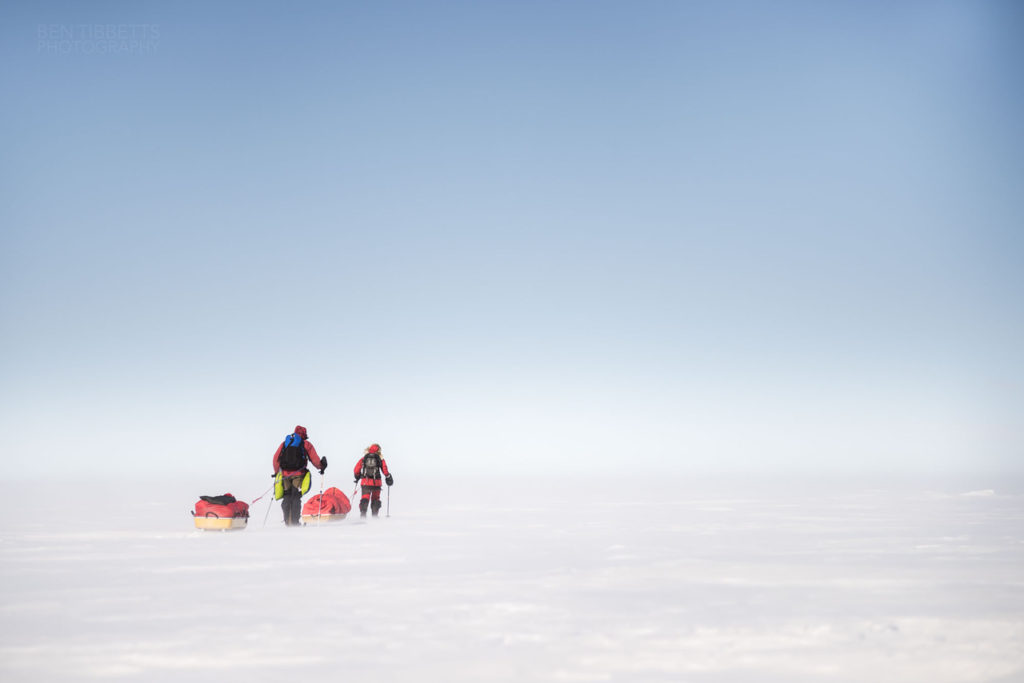
Could you stand the endless sun and nothingness of Antarctica? Photo: Carl Alvey
The parallels to space flight are clear. Like astronauts, polar trekkers live in confined, isolated, and potentially dangerous environments where physical and psychological resilience must hold up under a lot of stress. Understanding how the body adapts to Antarctic extremes may help scientists prepare humans for future manned space flight missions to Mars or extended stays on the Moon.
The review calls for more research. With only 12 studies and 42 unique participants, evidence remains limited. Some of the observations presented in this article result from only one or two studies.
| # | Наименование новости | Тональность | Информативность | Дата публикации |
|---|---|---|---|---|
| 1 | How Life-Threatening Altitude Sickness Struck Down a Worker in Antarctica | 0 | 10.39 | 13-02-2026 |
| 2 | New Funding Cuts Forcing U.S. Researchers Out of Antarctica | 0 | 7.43 | 15-04-2025 |
| 3 | Ancient Rivers Under Antarctica Could Slow Down Melting | 0 | 5.62 | 28-07-2025 |
| 4 | Want To Go to Antarctica? Australia is Hiring | 0 | 7.79 | 16-10-2025 |
| 5 | Пока лед не растаял. Как российский ученый исследует ледниковые пещеры на краю мира | 0 | 0 | 15-05-2025 |
| 6 | What's the Deal With the Human Remains in Antarctica? | 0 | 7.12 | 20-11-2025 |
| 7 | Antarctic Season Starts Soon; Here's What Happened Last Year | 0 | 6.69 | 28-10-2025 |
| 8 | Antarctic Update 2024-25: Skiers Find Their Stride and Dream of Holiday Food | 0 | 8.64 | 26-12-2024 |
| 9 | How South Pole Ski Expeditions Have Changed: What the Numbers Reveal | 0 | 6.21 | 23-02-2026 |
| 10 | Scientists Unlock 3 Million Years of Climate Secrets Hidden in Antarctic Ice | 5 | 7 | 02-04-2026 |