Просмотр новости
Найдите то, что Вас интересует
 Спутники
 РН
РН SpaceX
 Роскосмос
 NASA
NASA
СпутникиРНSpaceXРоскосмосNASACalled enhanced rock weathering, spreading crushed basalt on crop lands can deliver farmers yet another bonus: bigger harvests.
The people of Sarekha Khurd have grown rice for longer than they can remember. A few hundred families live in this village in north-central India. Trees separate their little fields, which are slanty rectangles of land.
As those fields turn gold each fall with ripened rice, a sweet smell perfumes the air. Harvest time is nearing. But these fields aren’t just growing grain: They’re also capturing carbon.
Farmers here are part of a worldwide effort to combat climate change. Its goal is to pull billions of tons of planet-warming carbon dioxide (CO2) from the air.
In Sarekha Khurd, this effort starts in May. That’s when trucks rumble down dirt roads, dumping out huge piles of crushed, volcanic rock. Each load brings several hundred tons of gray basalt. Farmers sprinkle the dust-sized particles onto their fields. Weeks later, when the monsoon rains arrive, they plant rice.
The dust comes from rock usually used in road building. People mine this basalt from a nearby quarry. It doesn’t look like anything special.
“It’s the most abundant rock on the Earth’s surface,” says David Beerling. He’s a biogeochemist at the University of Sheffield in England.
But when the dust breaks down in soil, it “releases nutrients that are important for plant health,” he says. These include calcium, magnesium, potassium and silica.
Sprinkling crushed basalt on soil promotes the mineral dust’s natural breakdown. Known as enhanced rock “weathering,” or ERW, this process offers several big benefits. First, the minerals it releases can boost crop growth.
Rock weathering could also make crops more resistant to droughts, pests and heat waves. Some poor farmers in places like India and Africa “are already facing quite difficult situations,” says Shantanu Agarwal. They “are at the front end of vulnerability to climate extremes.” Agarwal is the founder of a company called Mati Carbon. It provides crushed basalt to Indian farmers in Sarekha Khurd and elsewhere.
But ERW also does another important thing: It traps CO2. As basalt dust breaks down, its minerals react with that gas from the air. They turn its carbon into a chemical form that can’t seep back into the air.
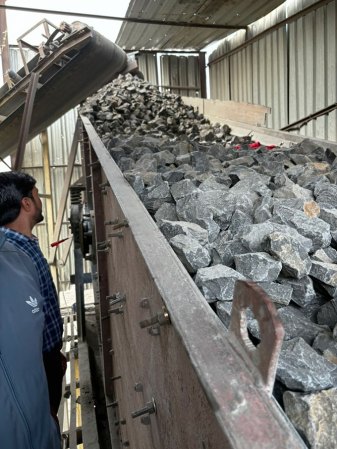 J. Jordan, M. Carbon
This rock crusher at a basalt quarry in India is moving rock that will be crushed into gravel to build roads. Powdered rock that’s too fine for road building can be used on nearby rice fields. Mining enough basalt and crushing it into dust is one challenge to enhanced rock weathering.
If ERW were done worldwide, Beerling’s team has calculated, it might capture up to 2 billion metric tons of CO2 per year. Combined with other CO2-trapping techniques — such as growing forests or using machines to filter the gas from industrial smokestacks — that could do a lot to combat climate change.
But big ERW would also bring big costs. People around the world would need to mine up to 13 billion metric tons of basalt each year. For perspective, that’s 400 million times the volume of a giant cement-mixing truck.
Some people recoil at that idea.
Bhoomika Chaudhury is one of them. “I do not think that very, very large-scale mining helps the Earth or people,” she says. Chaudhury is a business and human rights lawyer based in Dubai, in the Middle East. She previously worked with the international Business & Human Rights Resource Center. There, she studied how mining affects people’s lives in places like India.
Still, ERW has advantages over some other CO2-removal techniques. Growing trees to suck up the pollutant, for instance, might use land needed for growing food. With ERW, you “avoid this competition with land use,” say Beerling. And it doesn’t require anything more technical than dump trucks and tractors.
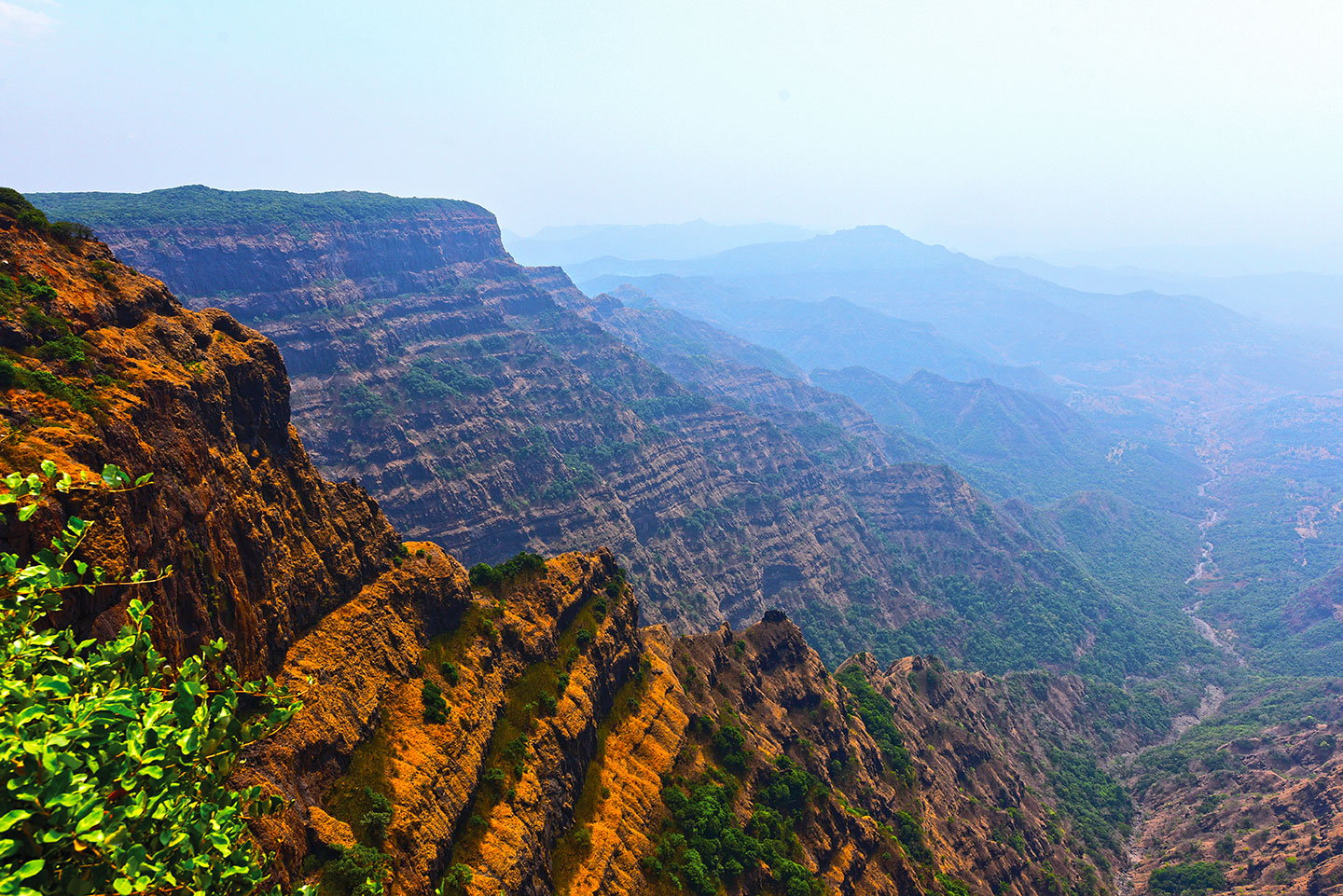 Volcanic eruptions 65 million years ago created this basalt formation: India’s Deccan Traps. Over millions of years, such basalt deposits across the globe broke down, slowly absorbing more than a trillion tons of CO2. This helped cool Earth’s climate, ending a warm spell that happened around 50 million years ago. anand purohit/Moment/Getty Images Plus
Crusty carbon corn
Volcanic eruptions 65 million years ago created this basalt formation: India’s Deccan Traps. Over millions of years, such basalt deposits across the globe broke down, slowly absorbing more than a trillion tons of CO2. This helped cool Earth’s climate, ending a warm spell that happened around 50 million years ago. anand purohit/Moment/Getty Images Plus
Crusty carbon corn
Rocks high in magnesium and calcium — such as basalt — have a knack for capturing CO2. Drive through western India, or Oman in the Middle East, or the Atlantic U.S. coast, and you can see cliffs of basalt or other rocks crisscrossed with white stripes.
Those stripes are carbonate minerals — essentially, petrified CO2. They form naturally. As rainwater percolates through cracks in rocks, CO2 that’s dissolved in the rainwater reacts with calcium or magnesium in the stone. Those reactions lock up CO2 in mineral form.
Something similar occurs at rundown steel mills in England. Refining iron creates gray, gravelly waste. Called slag, it holds lots of calcium and magnesium. So does crumbling concrete and the crushed-rock wastes — called tailings — left behind by mining many metals. Carbonate can even form in the wastes left behind from burning coal or from extracting aluminum from mined ore.
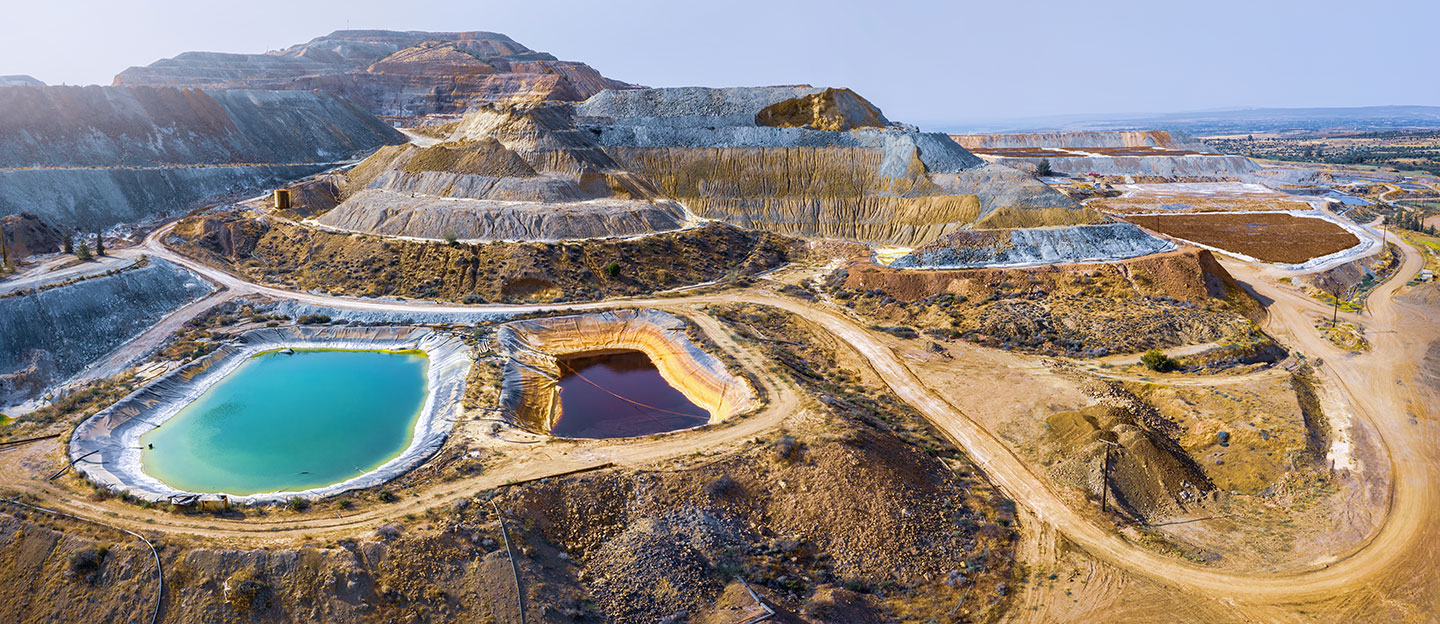 Mining of metals and minerals produces wastes called tailings. These can be high in CO2-trapping magnesium and calcium. Small mountains of tailings exist at sites around the planet and could, in theory, be used to capture CO2. But tailings usually contain toxic heavy metals, so they can’t be used on farms.photomaru/iStock/Getty Images Plus
White carbonate crusts can form in the soil around these old deposits. Researchers are looking for ways to use vast mountains of such waste to capture CO2. (Arca, a CO2-removal company in Vancouver, Canada, for instance, is finding ways to stir mine tailings so they will more quickly bind up the carbon in CO2.)
One problem: Many of these wastes also host toxic metals or metal-like elements, such as chromium, lead and arsenic. So they must be used in a way that does not involve growing food.
Basalt ties up carbon but hosts few toxic metals. That makes it a better candidate for farm fields.
In 2016, Beerling and Evan DeLucia launched an experiment to see if basalt would boost soil’s ability to trap CO2.
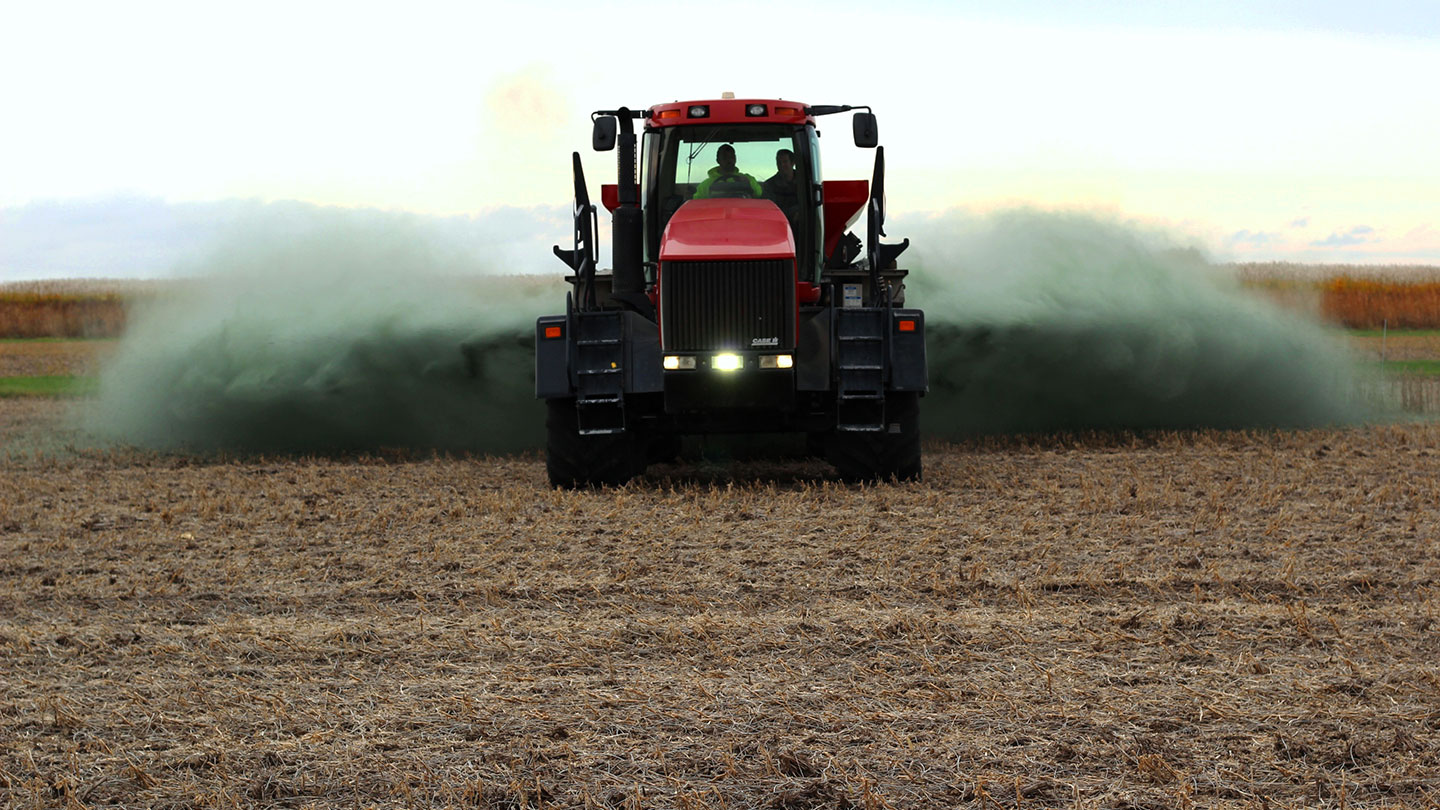 Over a period of four years, researchers spread crushed basalt rock on Illinois fields where alternating corn and soy crops were grown. Data show that this treatment both increased crop yields and trapped CO2 in the soil’s water.Ilsa Kantola/University of Illinois
DeLucia is a plant scientist at the University of Illinois Urbana-Champaign. At a farm there, workers spread basalt dust on several fields. On some, they grew alternating crops of corn and soybeans. On the rest, they planted a tall grass — miscanthus. (It’s used to make biofuels for cars and trucks.)
They started out by adding 21 metric tons per acre (50 tons per hectare). Each year, the team added more basalt.
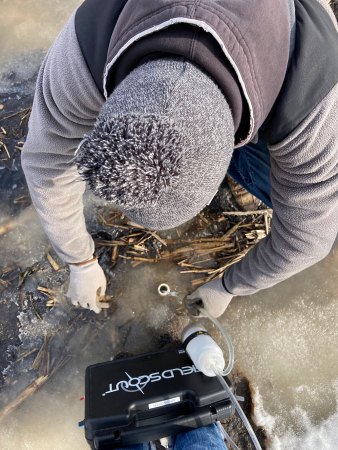 A researcher samples water in the soil of an Illinois field that was treated with basalt before growing corn. By measuring minerals in these samples, a team could estimate how much CO2 the basalt treatment trapped in the fields.Ilsa Kantola/University of Illinois
Beerling and DeLucia regularly sampled the fields’ soil and water. They measured how quickly the rock was breaking down. And they calculated how much CO2 had been trapped per hectare of land. (A hectare is 2.5 acres, or about 1.4 times the size of a soccer field.)
Each hectare of miscanthus captured an average of roughly 8.6 metric tons of CO2 per year. And each hectare of corn and soy captured about 2.6 metric tons of CO2 per year. His team shared its findings in papers published in 2023 and 2024.
“This was really a first for us,” says Beerling. And these greenhouse-gas data are “very exciting,” he adds.
In 2025, another report calculated how much CO2 could realistically be captured if the treatment were ramped up quickly across 20 U.S. states. That tally came to 160 million to 300 million metric tons of CO2 per year by 2050. By 2070, that could rise to 250 million to 490 million metric tons. That would be equal to the CO2 emitted by 1 billion miles traveled by gasoline-powered cars or the energy used to charge 32.3 billion smartphones.
Cow and plant fartsNot all CO2 comes from factories and vehicles. Farming releases a lot, too.
Plants suck up some as they grow. But plowing and fertilizing stimulates soil microbes. These exhale CO2 as they chow down on plant wastes. And where cattle graze, those beasts will burp and fart out even more greenhouse gases. They’re produced by microbes in the animals’ guts.
Overall, crops and livestock produce about one-tenth of all greenhouse gases emitted in the United States. These farm-emitted greenhouse gases add up to about 600 million metric tons of CO2 per year.
Crushed basalt reduces those farming emissions. In the Illinois study, fields growing corn and soy still emitted some CO2 even when basalt was added. But adding the basalt cut those emissions by 20 to 40 percent. In the fields growing miscanthus, adding basalt caused them to trap more CO2 than they released.
Beerling’s team has estimated that spreading basalt on farm soils across 12 large nations — including China, India and the United States — could trap some 2 billion metric tons of CO2 per year by 2050. Building up to mining, crushing and spreading that much rock dust could take years, though.
At the same time, scientists see another possible benefit from spreading basalt on fields: more crops.
In the Illinois study, basalt dust increased corn yields by 12 percent and soy yields by 16 percent. Multiplied across the entire U.S. Corn Belt, that could put an extra $17 billion per year into farmers’ pockets.
And in England, adding crushed basalt increased oat harvests by up to 20 percent. That extra growth came despite it being a dry year, notes Kirstine Skov. A geographer, she led that study. She works for a company in London, England, called UNDO Carbon.
Skov credits the crop boost to silica. Basalt’s breakdown releases it. “Plants use silica to strengthen their cell walls,” she says. Those sturdy barriers shield the plant from drying out. “That can make the crops more drought and pest resistant.”
Basalt’s potential anti-drought benefit could prove a huge boon to farmers in countries hard hit by climate change.
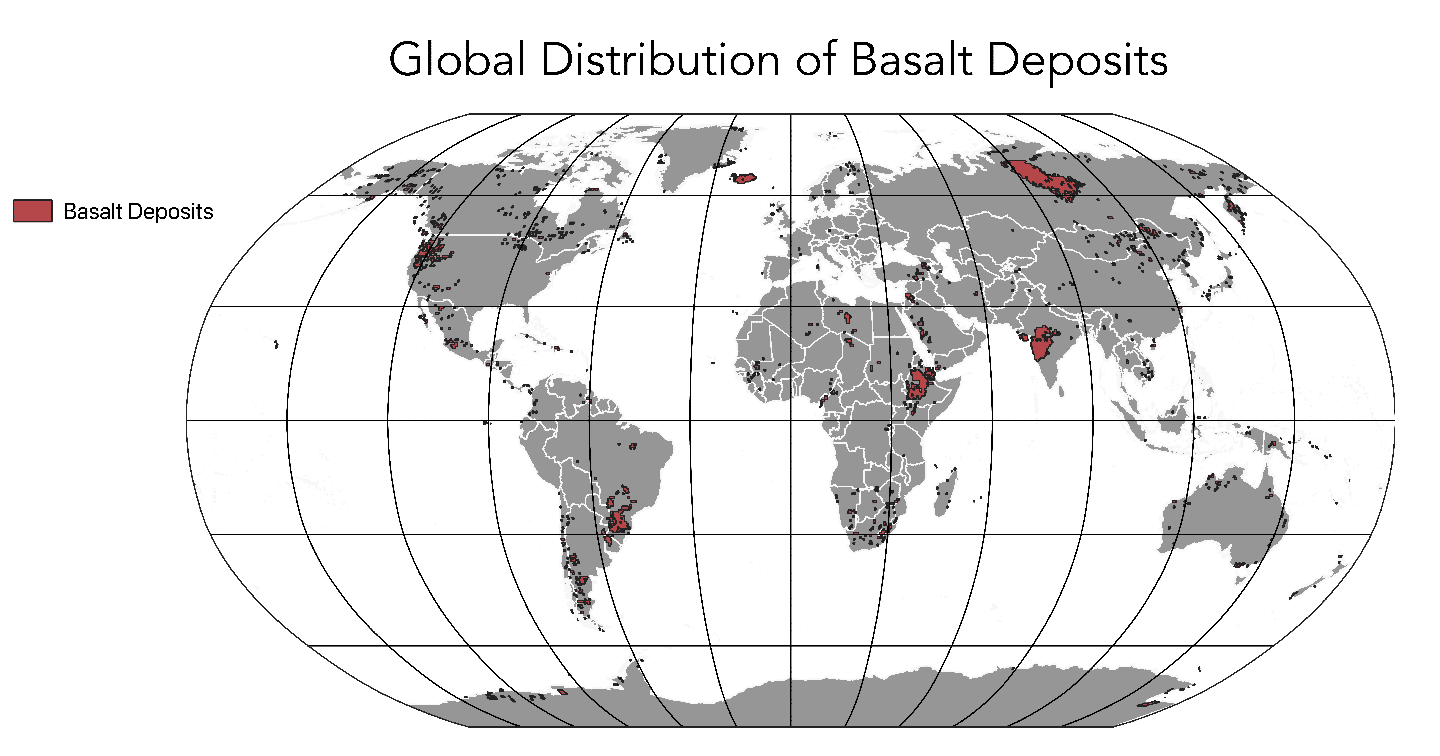
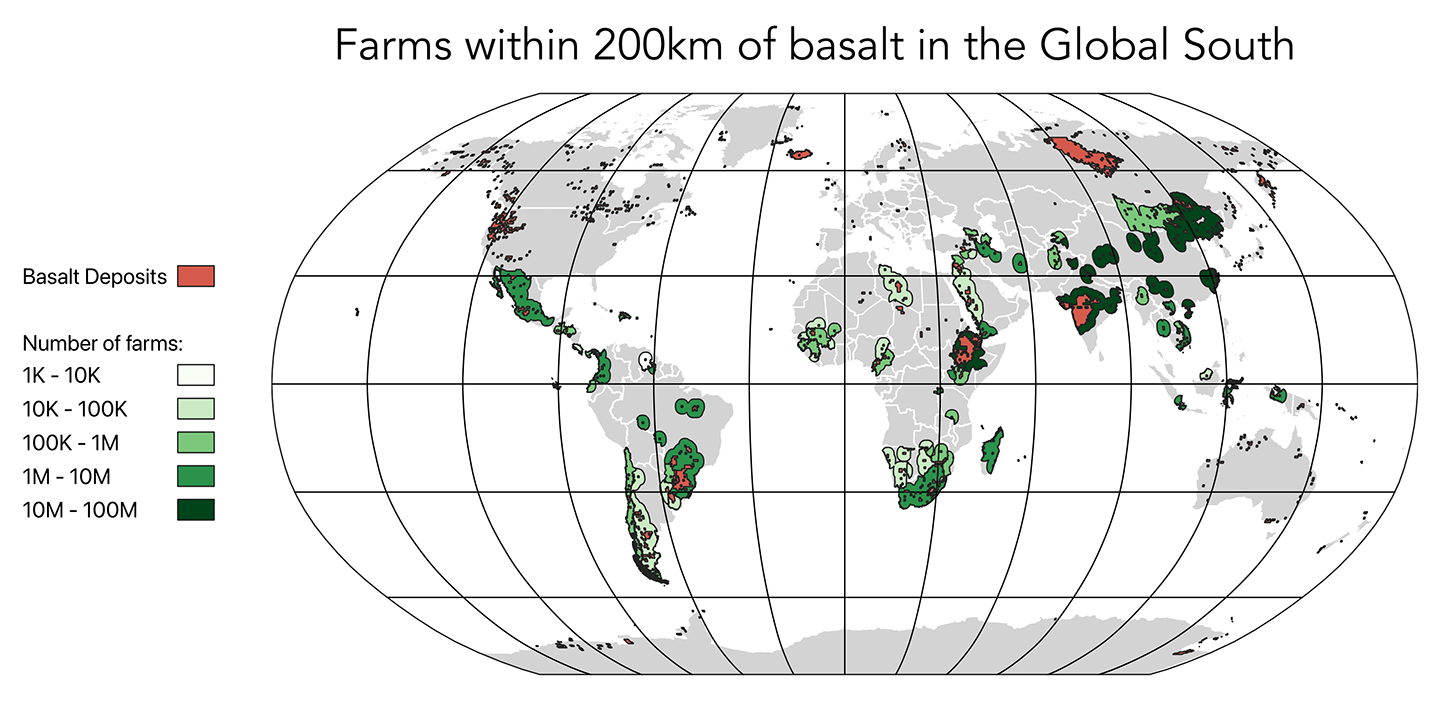
Basalt is one of the most common rocks on Earth’s surface (upper map). That means that many farms are located close to sources of it (lower map), potentially making them good sites for basalt treatment.
 Both: Jonah Bernstein-Schalet, M. Carbon
In central India, rice crops depend on heavy monsoon rains. But over the past 75 years, these summer rains have decreased by around 15 percent. Droughts there have been frequent since 2000, as have the number of extremely hot days.
Fortunately, basalt is plentiful in this part of India.
A few years ago, Agarwal heard about the successful basalt trials on Illinois farms. They prompted this business-starter in Houston, Texas, to launch Mati Carbon in 2022. It aims to bring basalt soil treatment to farmers in India, his home country. He hired Jake Jordan as his chief scientist. A geoscientist, Jordan is based in St. Louis, Mo.
“The goal is to provide climate relief” to poor farmers, who are “most vulnerable” to climate change, says Jordan. They’re also among those least responsible for producing CO2 emissions, he notes. They don’t fly on airplanes or drive big cars.
This farmer is using a tractor to “whip up” the soil in a flooded rice paddy in an Indian test field. The action mixes in recently applied basalt dust. This mixing is done right before the rice is planted.
Mati Carbon arranged for farmers in Sarekha Khurd and other villages to spread basalt dust on their fields. By December 2025, the company was working with 16,000 farmers across India. They had spread 300,000 metric tons of the rock dust onto their fields. Mati Carbon is now working with farmers in two African nations, Zambia and Tanzania, too.
The company is monitoring some of the fields to verify if they’re capturing CO2. In February, Jordan reported some positive early results.
His team looked at the rice paddies of more than 600 farmers in the Indian state of Chhattisgarh. It’s near Sarekha Khurd. Farmers who used basalt dust captured around 4 metric tons of CO2 per hectare of land during the first year. Their rice yields also increased by 23 percent. For an average rice farmer, that could mean an extra $300 of income, according to their calculations.
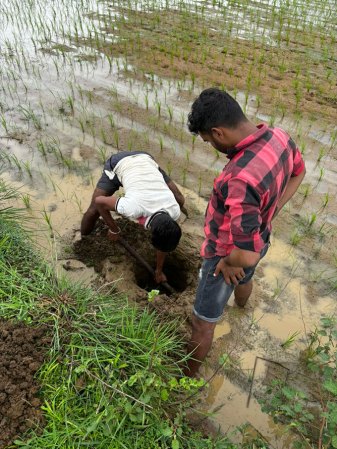
Workers bury a device called a lysimeter at a rice-field test site in India. It will allow researchers to measure chemical changes in the soil and water as basalt dust breaks down. The breakdown of that basalt, which was mixed into the soil earlier in the year, releases nutrients and traps CO2.
 J. Jordan, M. Carbon
That CO2 capture number is an educated estimate, Jordan points out (since measuring it is very challenging). But as basalt is eventually spread over far bigger expanses, he and other scientists could also tally the trapped CO2 another way. Dissolved CO2 reacts with water and minerals to form a molecule called bicarbonate. Researchers could measure bicarbonate levels in rivers that drain the rainwater from treated fields.
This process will take a while, though. Based on one large study of U.S. rivers, it could take 20 to 40 years for those bicarbonate increases to show up in the runoff entering the Mississippi River.
Submit your question here, and we might answer it an upcoming issue of Science News Explores
Obtaining enough rock may be the biggest challenge of all. Digging up and crushing 4.5 cubic kilometers of it each year is a daunting task. It would mean boosting worldwide gravel and stone mining by 30 percent. Crushing and trucking all of that to farms would take money and energy. And it would have environmental costs.
Beerling’s team has included those costs in its calculations. It would cost around $100 to $150 per metric ton of CO2 captured, they estimate. That would be similar to the costs of some other CO2-reduction methods, such as biofuels. And it would be lower than the cost of using machines to capture CO2 from the air.
If you add in basalt’s crop benefits, the picture might look even rosier.
Farmers already use lots of fertilizers. These often come from rock that is mined, crushed, cooked and treated with strong acids. Making them in factories takes lots of energy and spews out lots of CO2 pollution, explains Eunice Oppon. She’s an environmental economist at the University of Exeter Business School, in England.
She compared the environmental costs of farm fertilizers against those for crushed basalt. Basalt “is environmentally more sustainable,” she finds. Its greenhouse-gas emissions, she’s calculated, are “way less, compared to how we [currently] produce fertilizers.”
For farmers in Sarekha Khurd, replacing some of those fertilizers with crushed basalt could make a big difference. Currently, much of what they earn from their rice must go to buy costly fertilizers. A drought and a bad harvest might force them to give up farming.
Losing a farm often forces families to travel far away, to the outskirts of some large city. There, thousands of displaced farmers can end up crowded into rickety shanty towns of concrete blocks and plywood. For the world’s poorest farmers, that future is what climate change threatens.
Basalt soil treatment may avert such a future, some scientists hope.
Our goal is “keeping more of those folks on their farms, doing things they know how to do,” says Jordan. Picturing that, he says, is what “gets me out of bed” every morning.
As farmers water their crops, some CO2 in the air dissolves into that water. Each dissolved CO2 molecule binds to a molecule of water (H2O). The combo turns into carbonic acid (H2CO3). At the same time, any crushed basalt will slowly break down in the wet soil. Its decomposing minerals will react with the carbonic acid. This will pull positively charged hydrogen atoms (+H) off the carbonic acid molecules.
What results is a new molecule: bicarbonate (–HCO3). It has a negative electric charge.
At this point, the CO2 has been effectively “removed from the atmosphere,” says Jake Jordan. He’s a geoscientist at a company called Mati Carbon, based in Houston, Texas. Bicarbonate’s negative charge prevents its trapped CO2 from bubbling back into the air as a gas. The soil’s water will eventually trickle into streams and rivers. Any bicarbonate dissolved in it will travel with that water — until it eventually reaches the ocean. Once there, bicarbonate can stay trapped in the ocean for 100 to 1,000 years. Alternatively, it can combine with positively charged magnesium or calcium atoms. This will form solid carbonate mineral deposits on the seafloor.
aluminum: A metallic element, the third most abundant in Earth’s crust. It is light and soft, and used in many items from bicycles to spacecraft.
arsenic: A highly poisonous metallic element. It occurs in three chemically different forms, which also vary by color (yellow, black and gray). The brittle, crystalline (gray) form is the most common. Some manufacturers tap its toxicity by adding it to insecticides.
basalt: A type of black volcanic rock that tends to be very dense (unless volcanic eruptions seeded it with lots of air pockets).
biofuels: Energy sources derived from carbon stored in living organisms. Although wood is a biofuel, most people who support “green” sources of energy consider biofuels to be liquids that can substitute for gasoline. Examples include bioethanol, an alcohol derived from crops such as corn or sugarcane. Engineers are also developing ways to make biofuels from nonfood crops, such as trees and shrubs. Renewable biofuels are an alternative to nonrenewable fossil fuels.
biogeochemist: Someone who studies processes that cycle (or eventually deposit) pure elements or chemical compounds (including minerals) between living species and nonliving aspects (such as rock or soil or water) of an ecosystem. This field of study is known as biogeochemistry.
calcium: A chemical element and alkali metal common in minerals of the Earth’s crust and in sea salt. It is also found in bone mineral and teeth, and can play a role in the movement of certain substances into and out of cells.
carbon: A chemical element that is the physical basis of all life on Earth. Carbon exists freely as graphite and diamond. It is an important part of coal, limestone and petroleum, and is capable of self-bonding, chemically, to form an enormous number of chemically, biologically and commercially important molecules. (in climate studies) The term carbon sometimes will be used almost interchangeably with carbon dioxide to connote the potential impacts that some action, product, policy or process may have on long-term atmospheric warming.
carbon dioxide: (or CO2) A colorless, odorless gas produced by all animals when the oxygen they inhale reacts with the carbon-rich foods that they’ve eaten. Carbon dioxide also is released when organic matter burns (including fossil fuels like oil or gas). Carbon dioxide acts as a greenhouse gas, trapping heat in Earth’s atmosphere. Plants convert carbon dioxide into oxygen during photosynthesis, the process they use to make their own food.
carbonate: A group of minerals, including those that make up limestone, which contains carbon and oxygen.
chemical: A substance formed from two or more atoms that unite (bond) in a fixed proportion and structure. For example, water is a chemical made when two hydrogen atoms bond to one oxygen atom. Its chemical formula is H2O. Chemical also can be an adjective to describe properties of materials that are the result of various reactions between different compounds.
climate: The weather conditions that typically exist in one area, in general, or over a long period.
climate change: Long-term, significant change in the climate of Earth. It can happen naturally or in response to human activities, including the burning of fossil fuels and clearing of forests.
concrete: To be solid and real. (in construction) A simple, two-part building material. One part is made of sand or ground-up bits of rock. The other is made of cement, which hardens and helps bind the grains of material together.
copper: A metallic chemical element in the same family as silver and gold. Because it is a good conductor of electricity, it is widely used in electronic devices.
crop: (in agriculture) A type of plant grown intentionally grown and nurtured by farmers, such as corn, coffee or tomatoes. Or the term could apply to the part of the plant harvested and sold by farmers.
crust: (in geology) Earth's outermost surface, usually made from dense, solid rock (in planetary science) the outermost surface of rocky planets, dwarf planets and natural satellites.
daunting: A description for something that is intimidating and which seems hard to imagine in detail such that you can figure out how to cope with, master or achieve it.
develop: To emerge or to make come into being, either naturally or through human intervention, such as by manufacturing.
dissolve: To turn a solid into a liquid and disperse it into that starting liquid. (For instance, sugar or salt crystals, which are solids, will dissolve into water. Now the crystals are gone and the solution is a fully dispersed mix of the liquid form of the sugar or salt in water.)
drought: An extended period of abnormally low rainfall; a shortage of water resulting from this.
economist: Someone who works in the field of economics: how a society's resources relate to the things it produces or achieves. Often this is measured in the goods people make, the money they earn or the costs they encounter (such as pollution or sickness). Economists might calculate this for something as small as a village or as large as a nation — even for workers living across the globe.
element: (in chemistry) Each of more than one hundred substances for which the smallest unit of each is a single atom. Examples include hydrogen, oxygen, carbon, lithium and uranium.
fart: One of the oldest words in the English language, it refers to flatulence (or flatus) — the release of gas from the end of the digestive tract.
fertilizer: Nitrogen, phosphorus and other plant nutrients added to soil, water or foliage to boost crop growth or to replenish nutrients that were lost earlier as they were used by plant roots or leaves.
filter: (n.) Something that allows some materials to pass through but not others, based on their size or some other feature. (v.) The process of screening some things out on the basis of traits such as size, density, electric charge.
forest: An area of land covered mostly with trees and other woody plants.
geographer: A scientist who studies Earth’s features and how the living and nonliving parts of the planet affect one another.
global warming: The gradual increase in the overall temperature of Earth’s atmosphere due to the greenhouse effect. This effect is caused by increased levels of carbon dioxide, chlorofluorocarbons and other gases in the air, many of them released by human activity.
greenhouse gas: A gas that contributes to the greenhouse effect by absorbing heat. Carbon dioxide is one example of a greenhouse gas.
gut: An informal term for the gastrointestinal tract, especially the intestines.
host: (v.) The act of providing a home or environment for something. A website, for instance, could host photos, news or other types of information.
iron: A metallic element that is common within minerals in Earth’s crust and in its hot core. This metal also is found in cosmic dust and in many meteorites.
lead: A toxic heavy metal (abbreviated as Pb) that in the body moves to where calcium wants to go (such as bones and teeth). The metal is particularly toxic to the brain. In a child’s developing brain, it can permanently impair IQ, even at relatively low levels.
livestock: Animals raised for meat or dairy products, including cattle, sheep, goats, pigs, chickens and geese. In some cases, farmed insects are referred to as mini-livestock.
lysimeter: (in soil science) A device used to measure the balance of water to soil at a given location, the volume of water percolating down through soil or the chemistry of water moving through soil at a given site.
magnesium: A metallic element that is number 12 on the periodic table. It burns with a white light and is the eighth most abundant element in Earth’s crust.
metal: Something that conducts electricity well, tends to be shiny (reflective) and is malleable (meaning it can be reshaped with heat and not too much force or pressure).
mineral: Crystal-forming substances that make up rock, such as quartz, apatite or various carbonates. Most rocks contain several different minerals mish-mashed together. A mineral usually is solid and stable at room temperatures and has a specific formula, or recipe (with atoms occurring in certain proportions) and a specific crystalline structure (meaning that its atoms are organized in regular three-dimensional patterns). (in physiology) The same chemicals that are needed by the body to make and feed tissues to maintain health.
monsoon: A system of winds that influences the climate of a large area. In southern Asia, monsoons blow from the southwest in the summer and usually bring heavy rains.
nickel: Number 28 on the periodic table of elements, this hard, silvery element resists oxidation and corrosion. That makes it a good coating for many other elements or for use in multi-metal alloys.
nutrient: A vitamin, mineral, fat, carbohydrate or protein that a plant, animal or other organism requires as part of its food in order to survive.
ore: A naturally formed rock or mineral that contains a metal that can be extracted for some new use.
percolate: The action of a liquid that gradually moves through a filter or porous material.
platinum: A naturally occurring silver-white metallic element that remains stable (does not corrode) in air. It is used in jewelry, electronics, chemical processing and some dental crowns.
plywood: An “engineered” product made by gluing thin layers of wood together into big sheets using high heat, strong pressure and glue. Because each layer — or ply — is laid down with its grain running in a different direction, plywood is usually stronger and less likely to warp than an equally thick board made from a single sheet of wood.
pollutant: A substance that taints something — such as the air, water, our bodies or products. Some pollutants are chemicals, such as pesticides. Others may be radiation, including excess heat or light. Even weeds and other invasive species can be considered a type of biological pollution.
potassium: A chemical element that occurs as a soft, silver-colored metal. Highly reactive, it burns on contact with air or water with a violet flame. It is found not only in ocean water (including as part of sea salt) but also in many minerals.
rectangle: A two-dimensional (and therefore flat) shape with four sides, where each corner has a "right" — or 90-degree — angle.
runoff: The rainwater that runs off of land into rivers, lakes and the seas. As that water travels through soils, it picks up bits of dirt and chemicals that it will later deposit as pollutants in streams, lakes and seas.
silica: A mineral, also known as silicon dioxide, containing silicon and oxygen atoms. It is a basic building block of much of the rocky material on Earth and of some construction materials, including glass.
Tanzania: A nation in East Africa that sits just south of the equator. It’s well known in science communities as home to the East African Rift valley, where many hominid fossils have turned up. The country is bordered by the Indian Ocean to the east; Kenya and Uganda to the north; Rwanda, Burundi and Democratic Republic of Congo to the west; and Zambia, Malawi and Mozambique to the south. It became a country in 1964.
Texas: The second largest state in the United States, located along the southern border with Mexico. It is about 1,270 kilometers (790 miles) long and covers an area of 696,000 square kilometers (268,581 square miles).
tissue: Made of cells, it is any of the distinct types of materials that make up animals, plants or fungi. Cells within a tissue work as a unit to perform a particular function in living organisms. Different organs of the human body, for instance, often are made from many different types of tissues.
toxic: Poisonous or able to harm or kill cells, tissues or whole organisms. The measure of risk posed by such a poison is its toxicity.
verify: (n. verification) To demonstrate or confirm in some way that a particular claim or suspicion is true.
waste: Any materials that are left over from biological or other systems that have no value, so they can be disposed of as trash or recycled for some new use.
weathering: The process of breaking down rocks, soil and chemicals (such as crude oil). Weathering can be chemical, such as by oxidation (rust), or mechanical, such as by water, ice, or wind.
Preprint: J.S. Jordan et al. Enhanced rock weathering for improved smallholder farmer welfare: An at-scale case study for rice agriculture in India. CDRXIV.org. February 2026. doi: 10.70212/cdrxiv.2026483.v1.
Report: Congressional Budget Office. Emissions of Greenhouse Gases in the Agricultural Sector. August 2025.
Journal: D.J. Beerling et al. Transforming US agriculture for carbon removal with enhanced weathering. Nature. Vol. 638, February 13, 2025, p. 425. doi: 10.1038/s41586-024-08429-2.
Meeting: G.M. Dipple. Progress towards an MRV system for CO2 capture from air and storage in minerals within ultramafic mine tailings. American Geophysical Union Fall Meeting 2024, December 9-13, 2024, Washington, D.C. Abstract GC31B-07.
Journal: K. Skov et al. Initial agronomic benefits of enhanced weathering using basalt: A study of spring oat in a temperate climate. PLoS ONE. Vol. 19, March 27, 2024, e0295031. doi: 10.1371/journal.pone.0295031.
Journal: D.J. Beerling et al. Enhanced weathering in the US Corn Belt delivers carbon removal with agronomic benefits. Proceedings of the National Academy of Sciences. Vol. 121, February 22, 2024, e2319436121. doi: 10.1073/pnas.2319436121.
Journal: I.B. Kantola et al. Improved net carbon budgets in the US Midwest through direct measured impacts of enhanced weathering. Global Change Biology. Vol. 29, August 17, 2023, p. 7012. doi: 10.1111/gcb.16903.
Journal: E. Oppon et al. Towards sustainable food production and climate change mitigation: an attributional life cycle assessment comparing industrial and basalt rock fertilizers. The International Journal of Life Cycle Assessment. Vol. 29, July 18, 2023, p.2257. doi: 10.1007/s11367-023-02196-4.
Journal: Y. Kanzaki, N.J. Planavsky and C.T. Reinhard. New estimates of the storage permanence and ocean co-benefits of enhanced rock weathering. PNAS Nexus. Vol. 2, April 4, 2023, pgad059. doi: 10.1093/pnasnexus/pgad059.
Journal: D.J. Beerling et al. Potential for large-scale CO2 removal via enhanced rock weathering with croplands. Nature. Vol. 583, July 9, 2020, p. 242. doi: 10.1038/s41586-020-2448-9.
Journal: P. Renforth. The negative emission potential of alkaline minerals. Nature Communications. Vol. 10, March 28, 2019, p. 1401. doi: 10.1038/s41467-019-09475-5.
Journal: S. Fuss et al. Negative emissions—Part 2: Costs, potentials and side effects. Environmental Research Letters. Vol. 13, May 22, 2018, 063002. doi: 10.1088/1748-9326/aabf9f.
Journal: P.A. Raymond et al. Anthropogenically enhanced fluxes of water and carbon from the Mississippi River. Nature. Vol. 451, January 24, 2008, p. 449. doi: 10.1038/nature06505.
Douglas Fox is a freelance journalist who writes about life, earth and Antarctic sciences.
| # | Наименование новости | Тональность | Информативность | Дата публикации |
|---|---|---|---|---|
| 1 | Deeply plowing farm fields can do more harm than good | 0 | 7.35 | 18-06-2026 |
| 2 | Dirt-powered sensors help farmers optimize their fields | 0 | 10.39 | 12-03-2025 |
| 3 | Ученые адаптировали технологию бережного земледелия под сезонно-мерзлотные почвы | 0 | 0 | 15-08-2025 |
| 4 | Изменение климата на юге РФ может спровоцировать рост площадей озимых культур | 0 | 0 | 07-03-2025 |
| 5 | 5 Ways Interseeding Can Change the Farming Landscape | 5 | 5 | 30-03-2026 |
| 6 | Recent rain brings relief to Upstate farmers amid summer drought | 0 | 4.95 | 11-08-2026 |
| 7 | В Запорожской области создают методику выращивания растений в условиях изменения климата | 0 | 0 | 15-03-2025 |
| 8 | На Кубани разработали технологию увеличения эффективности посева | 0 | 0 | 08-02-2022 |
| 9 | A look at the ‘transformative’ effect beavers have had on an Aspen-area testing ground for regenerative agriculture | 0 | 12.28 | 13-08-2026 |
| 10 | Планомерная работа и внедрение передовых технологий позволяют аграриям в России ... | 7 | 8 | 14-07-2026 |