Просмотр новости
Найдите то, что Вас интересует
 Спутники
 РН
РН SpaceX
 Роскосмос
 NASA
NASA
СпутникиРНSpaceXРоскосмосNASABackground Sub-Saharan Africa faces a persistent external-finance constraint that limits investment, employment, technology transfer and progress toward sustainable development. This study examines whether financial inclusion, financial efficiency, government effectiveness and carbon emissions shape foreign capital mobilization through FDI and remittance inflows. Methods Annual data for 44 Sub-Saharan African economies from 2004 to 2022 were analysed using a sequential panel design. Cross-sectional dependence, slope heterogeneity, CADF/CIPS unit-root and Westerlund cointegration tests guided the empirical strategy. CS-ARDL served as the main estimator, with CCEMG, AMG, System GMM, panel quantile regression and Dumitrescu-Hurlin causality used for robustness, endogeneity, distributional and direction-of-association checks. Results Financial inclusion, financial efficiency and government effectiveness increase both FDI and remittance inflows in the long run. Carbon emissions show an inverted-U relationship with FDI and a negative association with remittances. Human capital, trade openness and income reinforce foreign capital mobilization, while globalization has a stronger positive effect on FDI than on remittances. Conclusions Foreign capital mobilization in Sub-Saharan Africa requires more than market size and openness. Policies should expand financial access, improve intermediation quality, strengthen government credibility and align investment promotion with decarbonization.
The external-finance constraint in Sub-Saharan Africa (SSA) remains a structural constraint affecting infrastructure investment, industrial diversification, employment and path to sustainable development. Domestic savings are still very low in some economies and official development assistance is vulnerable to donor cyclicity and fiscal space is constrained. In these circumstances foreign direct investment (FDI) and personal remittances are key private external financing sources. FDI can bring in capital, technology, managerial capability and access to global value chains, and remittances can help to smooth consumption, invest in education and health, and buy housing and make small enterprises investments. In addition, recent evidence also highlights that the development impact of these inflows is not solely determined by the amount of inflow, but by the financial systems and institutions of the recipient countries (Abusomwan & Izevbigie, 2024; Inoue, 2024; Timbi et al., 2023).
The financial system is the first local source for external finance to be available. Financial inclusion involves greater access to formal financial services, mobile money and digital payments, savings, credit and insurance. The Global Findex evidence demonstrates that the escape to digital financial access was front and foremost in post-COVID resilience, in particular where mobile money was able to address the unmet needs of traditional banking. (Demirguc-Kunt et al., 2022). Fintech and mobile money can also increase access and bring previously unbanked households into the formal financial system while lowering transaction cost as recently evidenced in fintech and mobile money related studies focusing on SSAs (Djoufouet & Pondie, 2022; Kamara & Yu, 2024; Ndung'u, 2022). This is important for remittances as migrants require safe, efficient and inexpensive transfer channels. For FDI it is important because foreign companies consider whether suppliers, workers, and partners in the local area are able to deal with payments, credit and working capital, etc. via a financial architecture.
Financial efficiency has a different aspect of financial development. Inclusion measures, whether households and firms can enter into the formal system, and efficiency measures whether intermediaries can provide low-cost allocations of capital and manage risk. An increase in the number of ways people can access banking services does not guarantee that the credit market will reach out to the population, or that credit intermediation mark-ups and the sophistication of risk-management instruments will be reduced. The separation is significant for SSA as the growth in mobile-money has not always led to the growth of credit markets. There is recent literature in the FDI-finance nexus in SSA which maintains that financial deepening and dynamic financial-sector conditions matter for FDI; and the CS-ARDL type estimators are reasonable since SSA countries are subject to shocks (Abusomwan & Izevbigie, 2024). Literature on financial development and growth, as well as the literature on ICT diffusion and inclusive growth, also reveal that financial systems determine the growth enhancing nature of the digital transformation (Ofori et al., 2022).
Government effectiveness is added to get the institutional credibility channel. It reflects the quality of public service and bureaucratic competence, and the credibility of policy formulation and implementation. Sunk costs and long horizons are the characteristics of foreign investors, who are very sensitive to policy predictability and administrative capacities. Remitters are also affected by the domestic governance conditions as, when, institutions safeguard property and limit uncertainty, remittances are more likely to be used for housing, education, business creation and savings. The effects of remittance and its linkages with financial inclusion are also influenced by governance as revealed by recent studies (Timbi et al., 2023). Meanwhile, there are not fully uniform discourses on the FDI and the institutions. Recent studies for SSA and ASEAN also support the fact that governance and institutional quality is significant in attracting FDI (Azam et al., 2025; Shittu & Erasmus, 2026), but that of lower-middle income economies indicates that government effectiveness is not necessarily significant even when other dimensions of institutions are accounted for (Saha et al., 2022). Such a mixed evidence means that the effectiveness of the government is not a given but an empirical and direct question.
The environmental-risk channel is added by the carbon emissions. Theory suggests that there is a positive and a negative effect of FDI. Pollution haven argument: Some companies may choose to establish production facilities in an economy with less stringent pollution regulations and/or less costly enforcement. The green-haven argument is that when it comes to pollution risk and pollution management, as well as future carbon-cost exposure, investors with environmental, social and governance mandates might eschew pollute-laden and weak pollution management areas. Recent panel evidence, however, points towards a nonlinear view that carbon emissions can initially attract FDI but, when environmental deterioration is high, can repel FDI (Gok et al., 2024). Additional recent studies reveal that the FDI-emissions nexus varies with income levels (Apergis et al., 2022), the carbon-intensity of countries (Derindag et al., 2023; Furtuna & Atis, 2024; Tran, 2022), and the stringency of environmental regulation or trade policy.
The environmental channel doesn’t work with remittances. While migrants could provide short-term support in response to shocks, long-term asset degradation can lead to a loss of trust in the ability to invest back home—particularly in land, housing, health and small business investment. The impact of remittances on the environment is various in the recent studies. Some papers suggest that remittances potentially lead to increase in emissions due to consumption and investments in carbon-intensive goods, and others suggest that remittances can also improve environmental quality by investing into a cleaner technology or resilience investments (Liu et al., 2022; Ogede & Tiamiyu, 2023). This ambiguity is useful to incorporate carbon emissions into the remittance equation and provides a justification for considering the emissions as an environmental-risk signal.
This study has four contributions. Firstly, it distinguishes between financial inclusion and financial efficiency and examines both within the same framework with regard to FDI and remittances. Second, it puts government effectiveness into the equation and doesn’t just use it as a control; it also includes carbon emissions as a key determinant. Thirdly, it is based on the second generation econometric design. The unit root and cointegration tests of the second generation as well as the cross sectional dependence and the slope heterogeneity guide the choice of the estimator. CS-ARDL is adopted as the basic estimator as it removes the affect of unobserved common variables by taking cross sectional average and includes heterogeneous dynamics (Chudik & Pesaran, 2015). CCEMG tests for robustness, AMG tests for endogeneity, panel quantile regression tests for distributional effects and Dumitrescu-Hurlin causality tests for the direction of association. Fourth, the study builds a link between the empirical findings and policy sequencing for SSA, and finds that finance, governance and decarbonisation must be considered as complementary elements in an external-capital mobilisation approach.
The remainder of the paper follows. Section 2 takes a look at some of the recent literature and proposes hypotheses. The conceptual framework, data and variables are described in Section 3. In Section 4, Econometric Methodology and equations are shown. The empirical results reported and interpreted in Section 5. In Section 6 the findings are discussed with respect to the pertinent evidence which was collected in the past. The policy implications are discussed in Section 7. Sections 8 and 9 offer the limits, directions for future research and the conclusion.
Financial inclusion and foreign capital mobilization
Financial inclusion is now increasingly defined not as access to banking services, but in a multidimensional way as development finance, involving account ownership, digital payments, savings, credit and insurance and quality of use. Digital payments and mobile money played a key role in resilience and inclusion in developing economies in 2021, as revealed by the Global Findex report (Demirguc-Kunt et al., 2022). Fintech has lowered costs and increased competition in the payment sector and facilitated savings and remittances in SSA (Djoufouet & Pondie, 2022; Ndung'u, 2022). Kamara and Yu (2024) also illustrate that fintech can complement traditional forms of financial inclusion in SSA and that digital access can be a channel of capital mobilization, in addition to a way of enhancing household welfare.
Financial inclusion is relevant to remittances in terms of costs, reliability/regularity and formality. Digital financial inclusion enables migrants and recipients to access mobile transfer platforms as well as formal savings products and payment history which can be leveraged for access to credit later. Inoue (2024) establishes the connection between financial and digital inclusion, international remittances and poverty reduction, and Timbi et al. (2023) demonstrate interaction between remittances and governance as well as financial inclusion in SSA. The evidence from these studies suggests remittances are more development-oriented if the formal financial services are available to recipients that enable them to save, invest and access credit. Inclusion helps to increase market size and supplier participation of FDI. Firms and households’ adoption of formal accounting and digital payments reduces the transaction costs for foreign investors and enables them to connect with local partners in value chains. Recent evidence also suggests that FDI can have a positive effect on women’s financial inclusion in SSA through a reverse channel, namely, when investment is accompanied by job creation, income, and institutional exposure, it can foster financial inclusion in the formal sector (Bobbo & Kapume, 2025). The study thus predicts that the more inclusive the financial system is, the more FDI and remittances will be. The impact should be greater for remittances, as there is a direct connection between remittances’ formal channels and accounts and payment connectivity.
Financial inclusion increases FDI inflows in SSA.
Financial inclusion increases remittance inflows in SSA.
Financial efficiency and the intermediation channel
Quality of intermediation is captured in financial efficiency. It shows the extent to which banks and financial institutions turn deposits into credit and manage to manage all issues related to price risks, screening borrowers, settling transactions etc. We consider efficiency to measure the performance of financial intermediation, unlike inclusion that measures access. This distinction is important in SSA since countries can have a significant leap in the number of accounts, but not necessarily see a commensurate gain in assigning credit and reliability for banking services. Abusomwan and Izevbigie (2024) investigate the finance-FDI relationship in SSA and argue that such relationship should be evaluated using methods that consider both cross sectional dependence and heterogeneity. For the current study, the key take-away is that efficient intermediation can serve as a place advantage for foreign investors. Financial efficiency can also impact remittances. Decreasing transfer costs, improving payment infrastructures and formal financial channels increase migrants’ incentives to use formal channels. Remittances become part of a development-finance chain when recipients are able to turn remittances into savings, insurance or business credit. Recent studies on remittances, financial inclusion and governance in SSA have shown that the benefits arising from remittances hinge on domestic pathways to channeling it into productive finance (Ogede et al., 2023; Timbi et al., 2023). Thus, the impact of financial efficiency should be positive for both types of inflow.
Financial efficiency increases FDI inflows in SSA.
Financial efficiency increases remittance inflows in SSA.
Government effectiveness, governance credibility and investor confidence
Institutional credibility and external finance. Investors and migrants react both to uncertainty. Government effectiveness indicates quality of public services, the competence of the bureaucracy, policy implementation and trust in public institutions. Even according to recent studies, governance remains a key factor in determining FDI but studies also point to the varying impact on institutional and regional aspects. Shittu and Erasmus (2026) analyze investment inflows and governance in SSA and find that governance indicators play a role in investment inflows to SSA. Anipa et al. (2025) take a hierarchy-of-institutions approach to SSA and reveal that political and economic institutions are intertwined regarding the determination of FDI. Furthermore, Azam et al. (2025) also discover that macroeconomic factors and institutional quality affect the ASEAN FDI attraction. Evidence generally in the negative sense is also important. According to Saha et al. (2022), some components of institutional quality have a positive impact on FDI in LMICs, while others do not always do so, such as government effectiveness and political stability. This implies that the effectiveness of government might be reliant upon the complementary institutions such as regulatory quality and control of corruption. Governance is important for remittances as migrants can choose to use remittances for consumption, house, education or business investment. In SSA, the relationship between remittances and financial inclusion is mediated by governance, Timbi et al. (2023) demonstrate. In line with the fact that good governance helps to boost confidence in the remittances-to-formal-finance conduit.
Government effectiveness increases FDI inflows in SSA.
Government effectiveness increases remittance inflows in SSA.
Carbon emissions, pollution-haven effects and green-haven effects
The environmental aspect of FDI is still under debate. The pollution haven view suggests that polluting companies might relocate to countries that have either lax environmental laws, or a low compliance cost. Green haven view suggests that investors could shun locations with high emissions due to reputational risks, carbon disclosure mandates and supply chain pressures and coming regulation. This ambiguity is backed up by recent evidence. Gok et al. (2024) conclude that the effect of carbon emissions on FDI is a nonlinear effect that is initially attracting and later pushing away FDI. In this paper, Apergis et al. (2022) re-estimate the pollution haven hypothesis, relying on bilateral FDI flows from OECD countries to BRICS economies and reveal that FDI-emission effects are country specific. Derindag et al. (2023) apply a threshold regression model and demonstrate that the impacts of trade openness and FDI on emissions vary across the different regimes. Results show the differences and the need for a nonlinear specification. There are studies that indicate that FDI can lead to pollution increases in carbon-intensive countries or places with lower regulations (Furtuna & Atis, 2024). But others believe that FDI can lead to decreased emissions due to the transfer of cleaner technology or due to better governance practices that lead to better environmental management. ECOWAS recent evidence shows that FDI has a potential to reduce carbon emissions in the long term with the support of good governance that enhances the environmental channel. In addition, Tran (2022) reveals that environmental regulation and FDI are not one-way but have feedback, which means that FDI also influences the stringency of environmental regulations. The overall results suggest that there are contradictory impacts, which is why the carbon-emission term in the FDI equation is squared.
Fewer studies have focused directly on the relationship between remittance and emissions but what they have found is ambiguous. In another study by Ogede and Tiamiyu (2023), the findings show that financial inclusion has a positive moderating impact on CO2 emissions in the context of SSA, thus highlighting the financial dimension of environmental impacts of household and firm behavior. Liu et al. (2022) conclude that there is an environmental impact of remittances and economic complexity in Asian economies. Remittances can have negative or positive environmental implications, depending on where they are used—for carbon-intensive purchases or cleaner technologies or resilience investments. Other studies indicate that remittances can lead to greater emissions if they are used to purchase goods with a high carbon footprint; however, remittances can positively contribute to environmental quality if they are used to purchase cleaner technologies or for resilience investment. In the current model, emissions of carbon are viewed as a signal of environmental-risk for migrants. The high level of emissions is likely to negatively affect remittance confidence in the long run.
Carbon emissions have an inverted-U relationship with FDI inflows in SSA.
Carbon emissions reduce remittance inflows in SSA.
Structural controls and research gap
Financial, institutional, and environmental factors influence human capital, trade openness, globalization, natural resource rents and income, which constitute the structural factors within which they function. Human capital enhances the absorptive capacity which enables the host economies to enjoy the technology transfer advantage from FDI. Trade openness and globalization are indicators of market integration, and the impacts can vary between channels of FDI and remittance. Recent evidence from the SSA suggests that there may be a nonlinear effect of trade integration on FDI, meaning that trade integration does not necessarily have a simple linear impact on FDI (Ouedraogo, 2025). Natural resource rents can have positive effects on attracting resource- seeking FDI; however, they can also drive up the governance risk and enclave investment. Income per capita represents the market size, purchasing power and financial capacity. The recent literature has progressed each piece, and there are still some significant gaps. There are many studies that consider either FDI or remittances, but not both. A third group performs general financial-development indicators, which incorporate access, depth and efficiency. Earlier, several environmental studies attempt to model FDI as a source of emissions; however, few studies attempt to model emissions as a determinant of FDI and remittances. The current work contributes to close these gaps by placing effect government variables and carbon emissions among the core variables and by adding the measurement of financial inclusion besides financial efficiency, as well as by employing a cross-sectionally dependent SSA panel and applying the CS-ARDL, the CCEMG, the AMG, the System GMM, the panel quantile regression and the Dumitrescu-Hurlin causality.
Human capital, trade openness, income and globalization support FDI inflows in SSA.
Human capital, trade openness and income support remittance inflows in SSA, while globalization may have a weaker or negative effect if it substitutes for migration-related transfers.
This study uses a country-level longitudinal panel design to examine the determinants of two foreign-capital outcomes: FDI inflows and remittance inflows. The design is suitable because the research question concerns long-run macroeconomic adjustment, cross-country heterogeneity and common external shocks in Sub-Saharan Africa. The estimation sequence follows four diagnostic steps and five estimation steps: cross-sectional dependence testing, slope heterogeneity testing, second-generation unit-root testing, cointegration testing, CS-ARDL baseline estimation, CCEMG and AMG robustness checks, System GMM endogeneity assessment, panel quantile regression and Dumitrescu-Hurlin causality testing.
There are four main explanatory components linked with two foreign capital outcomes. Financial inclusion and financial efficiency are two financial architecture channels. The institutional channel is government effectiveness. The environmental risk channel is the carbon emissions. Structural controls are human capital, globalization, natural resource rents, trade openness and income. As illustrated in Figure 1, FDI and remittances can be directly affected by a change in each of the core determinants. The structural variables also impact on the outcomes and condition the strength of the direct channels. The model is well-suited to SSA due to the commonality of external shocks, commodity cycles, migration networks and financial spillovers among countries in the region, as well as the fact that countries also vary widely in terms of their governance, financial and carbon footprint profiles.
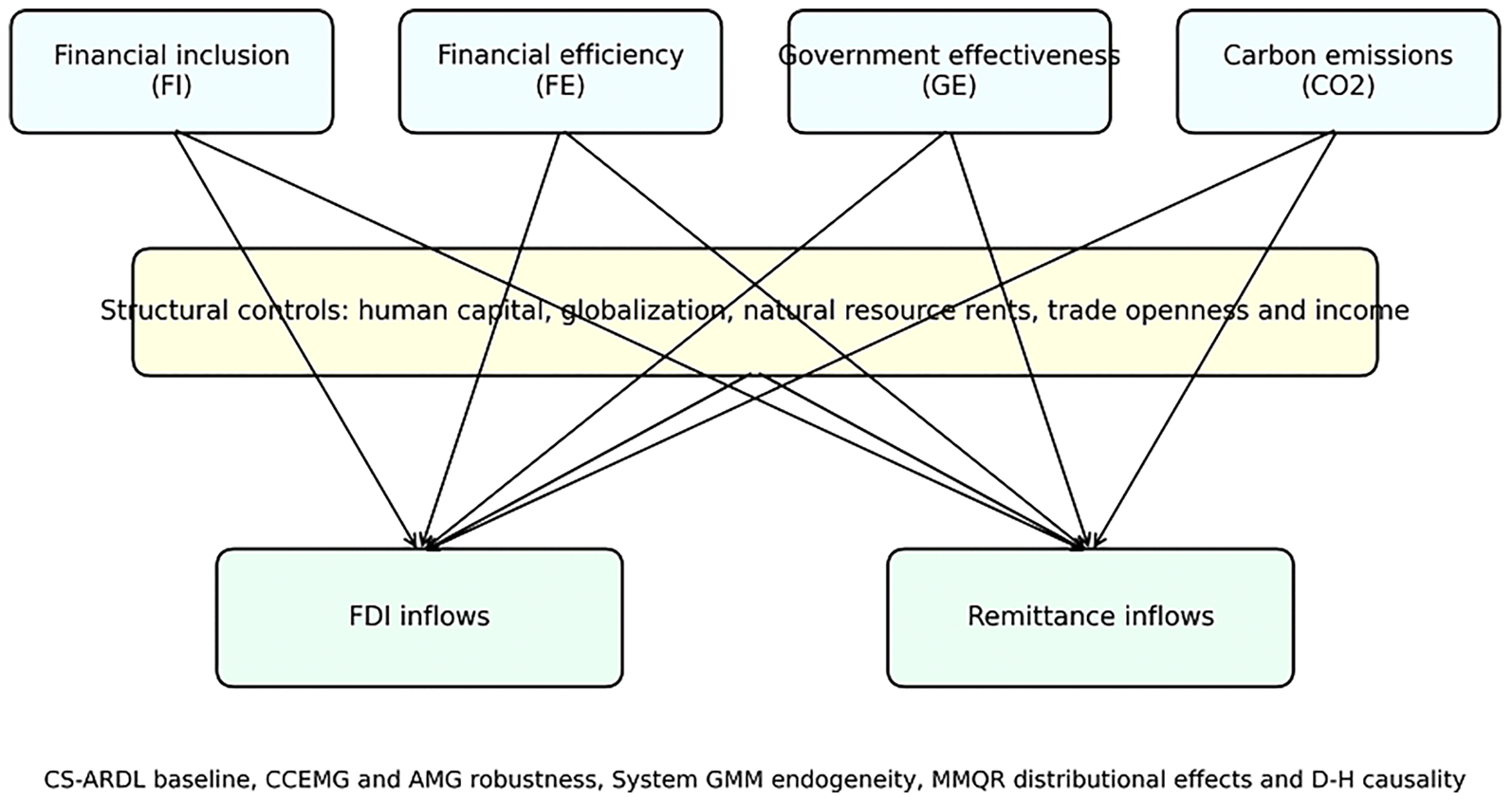
The figure links financial inclusion, financial efficiency, government effectiveness and carbon emissions to FDI and remittance inflows. Structural controls include human capital, globalization, natural resource rents, trade openness and income. The figure also summarizes the estimation sequence: CS-ARDL baseline, CCEMG and AMG robustness checks, System GMM endogeneity assessment, MMQR distributional effects and Dumitrescu-Hurlin causality.
Abbreviations used in the tables: AMG, augmented mean group; CADF, cross-sectionally augmented Dickey-Fuller; CCEMG, common correlated effects mean group; CIPS, cross-sectionally augmented IPS; CO2, carbon emissions; CS-ARDL, cross-sectionally augmented autoregressive distributed lag; ECT, error-correction term; FDI, foreign direct investment; FE, financial efficiency; FI, financial inclusion; GE, government effectiveness; GLO, economic globalization; HCD, human capital development; LR, long run; NRR, natural resource rents; REM, remittances; SH, slope heterogeneity; SR, short run; TO, trade openness; Y, income per capita.
Data is taken from 44 Sub-Saharan African countries for the period 2004–2022. The time frame accounts for the presence of financial inclusion and governance measures and also the growth of mobile financial services. The dependent variables are inward FDI inflows and personal remittances received (as a percentage of GDP). Financial inclusion, financial efficiency, government effectiveness and carbon emissions are the key regressors. The variables that act as controls are human capital, economic globalization, natural resource rents, trade openness and income per capita. These are derived primarily from World Development Indicators, IMF (International Monetary Fund (2024) Financial Access Survey, World Bank(2024a, 2024b) Global Findex, Worldwide Governance Indicators, KOF Globalization Index (KOF Swiss Economic Institute (2024)) and the World Bank Human Capital Project (Kaufmann et al. (2010)). Wherever a variable can be interpreted as a scale and is positive, it is natural logged. Variables that have negative governance values are first normalized (by adding a constant that maintains the order of their distribution) prior to logging.
The range is large as indicated in Table 2. The FDI and remittances are very much country-specific, as evidenced by the huge differences between countries, underscoring the importance of using the heterogeneous panel techniques. The low average of government effectiveness suggests that a portion of the sample countries exhibit a low level of government effectiveness, and the large range indicates that there are significant variations in the level of government effectiveness across countries. On average, carbon emissions are low, but there is a high dispersion, which shows various energy mixes, industrials and urbanization. Data pattern allows the application of methods which consider cross sectional dependence, slope heterogeneity and distributional variation.
The full list of variables and sources is reported in Table 1. Descriptive statistics are reported in Table 2.
The general long-run model is specified as follows:
(1) K_it = f
(FI_it, FE_it, GE_it, CO2_it, HCD_it, GLO_it, NRR_it, TO_it, YPC_it)
where i = 1, …, N denotes countries, t = 1, …, T denotes years, and K_it is alternatively FDI inflows or remittance inflows. The empirical equations are:
(2) lnFDI_it = alpha_i + beta_1 lnFI_it + beta_2 lnFE_it + beta_3 lnGE_it + beta_4 lnCO2_it + beta_5(lnCO2_it)^2 + beta_6 lnHCD_it + beta_7 lnGLO_it + beta_8 lnNRR_it + beta_9 lnTO_it + beta_10 lnYPC_it + epsilon_it
(3) lnREM_it = delta_i + theta_1 lnFI_it + theta_2 lnFE_it + theta_3 lnGE_it + theta_4 lnCO2_it + theta_5 lnHCD_it + theta_6 lnGLO_it + theta_7 lnNRR_it + theta_8 lnTO_it + theta_9 lnYPC_it + mu_it
The squared carbon-emission term is included in the FDI equation to test the pollution-haven and green-haven channels. A positive coefficient on lnCO2 and a negative coefficient on (lnCO2)^2 support a concave relationship. The remittance model uses the linear carbon-emission term because persistent environmental degradation is expected to weaken long-run migrant confidence in productive home-country investment.
Cross-sectional dependence is tested before estimation because SSA economies are exposed to shared shocks through commodity prices, international financial conditions, migration networks, regional banking links and climate events. The Breusch and Pagan (1980) LM statistic and the Pesaran (2004) CD statistic are specified as:
(4) LM = T sum_{i=1}^{N-1} sum_{j=i+1}^{N} rho_ij^2
(5) CD = sqrt[2T/ {N(N - 1)}] sum_{i=1}^{N-1} sum_{j=i+1}^{N} rho_ij
The null hypothesis is cross-sectional independence. Rejection supports cross-sectionally augmented unit-root, cointegration and estimation methods.
Slope heterogeneity is tested using the Pesaran and Yamagata (2008) delta tests:
(6) Delta = sqrt(N) [(N^{-1} S - k) /sqrt(2k)]
(7) Delta_adj = sqrt(N) [(N^{-1} S - E(z_it)) /sqrt (Var(z_it))]
where S is the Swamy statistic and k is the number of regressors. Rejection of slope homogeneity indicates that pooled homogeneous estimators may be misleading.
The study uses second-generation CADF and CIPS tests because the diagnostic evidence confirms cross-sectional dependence. The CADF regression is:
(8) Delta x_it = a_i + b_i x_{i,t-1} + c_i xbar_{t-1} + d_i Delta xbar_t + sum_{j=1}^{p_i} phi_ij Delta x_{i,t-j} + e_it
(9) CIPS = N^{-1} sum_{i=1}^{N} CADF_i
The null hypothesis is that all series contain a unit root. The ARDL framework allows I(0) and I(1) variables but cannot be used if any variable is I(2).
Westerlund panel cointegration tests are then applied using the following error-correction representation:
(10) Delta y_it = a_i + lambda_i(y_{i,t-1} - beta_i'X_{i,t-1}) + sum gamma_ij Delta y_{i,t-j} + sum pi_ij' Delta X_{i,t-j} + u_it
A negative and significant lambda_i supports a long-run equilibrium relationship between the dependent variable and the explanatory variables.
The CS-ARDL estimator of Chudik and Pesaran (2015) is used as the main estimator because it handles dynamic heterogeneity, cross-sectional dependence and weakly exogenous regressors. The model is:
(11) y_it = alpha_i + sum_{l=1}^{p} phi_il y_{i,t-l} + sum_{l=0}^{q} beta_il'X_{i,t-l} + sum_{l=0}^{s} psi_il'Zbar_{t-l} + e_it
where Zbar_t = (ybar_t, Xbar_t) contains cross-sectional averages of the dependent and explanatory variables. The country-specific and panel long-run coefficients are:
(12) LR_im = [sum_{l=0}^{q} beta_{im,l}] / [1 - sum_{l=1}^{p} phi_{il}]
(13) LR_m = N^{-1} sum_{i=1}^{N} LR_im
The error-correction form is:
(14) Delta y_it = eta_i + varphi_i(y_{i,t-1} - omega_i'X_{i,t-1}) + sum kappa_il Delta y_{i,t-l} + sum tau_il' Delta X_{i,t-l} + sum psi_il' Delta Zbar_{t-l} + e_it
A negative and significant varphi_i confirms convergence toward the long-run equilibrium.
CCEMG and AMG are estimated to test whether the baseline findings are robust to alternative heterogeneous estimators that control for unobserved common factors.
(15) y_it = alpha_i + beta_i'X_it + gamma_i'Zbar_t + e_it
(16) beta_CCEMG = N^{-1} sum_{i=1}^{N} beta_i
(17) Delta y_it = alpha_i + beta_i'Delta X_it + sum_{t=2}^{T} c_t D_t + epsilon_it
(18) y_it = alpha_i + beta_i'X_it + d_i c_t + u_it
(19) beta_AMG = N^{-1} sum_{i=1}^{N} beta_i
Dynamic endogeneity is addressed through the two-step System GMM estimator:
(20) y_it = rho y_{i,t-1} + beta'X_it + mu_i + nu_t + epsilon_it
(21) E [y_{i,t-s} Delta epsilon_it] = 0, for s >= 2
(22) E [Delta y_{i,t-1}(mu_i + epsilon_it)] = 0
The instrument set is collapsed to reduce instrument proliferation. Validity is assessed through AR(1), AR(2) and Hansen J tests.
Distributional heterogeneity is assessed using method-of-moments quantile regression:
(23) Q_y(tau|X_it) = alpha_i(tau) + X_it'beta (tau), 0 < tau < 1
The direction of association is tested using the Dumitrescu-Hurlin panel causality model:
(24) y_it = alpha_i + sum_{k=1}^{K} gamma_i^(k)y_{i,t-k} + sum_{k=1}^{K} beta_i^(k)x_{i,t-k} + epsilon_it
(25) H0: beta_i^(1) = beta_i^(2) = … = beta_i^(K) = 0 for all i
Table 3A indicates that the null hypothesis of cross-sectional independence is rejected for all variables. The Pesaran CD statistics are between 10.275 and 45.293, and are statistically significant at the 1% level. This outcome is likely in an SSA context as countries are all vulnerable to commodity price fluctuations, the global interest-rate environment, migration patterns, connections with the regional banking system, trade networks, climate risks and policy spillovers. The result has immediate methodological consequences. Dating back to the first generation, there are estimation methods that assume cross sectional independence which may overstate precision when it is the case that some unobservables are common across all countries. The conclusion hence suggests the application of cross sectionally augmented methods. This is in line with Pesaran (2004) who demonstrates that the presence of cross-sectional dependence (CSD) cannot go undiagnosed prior to the estimation of the model in a panel framework, and Chudik and Pesaran (2015) who advocate CS-ARDL as an appropriate estimator for heterogeneous dynamic panels in the presence of common unobserved factors. Economically, it is not only that there is cross sectional dependence, but also substantively. Foreign capital flows are not only influenced by domestic conditions. Communities of countries can be affected by a combination of factors in terms of FDI and remittance inflows, including regional contagion, global risk appetite, commodity cycles and shared policy episodes. For instance, an abrupt global financial conditions can affect risk appetite of investors simultaneously in several SSA economies and migration and remittance channels can pass on income effects from destination countries to several origin countries. The diagnostic result thus suggests that the mobilization of foreign capital be considered a regionalized process, not just a series of isolated country relations.
Table 3B shows that the null hypothesis of homogeneous slopes cannot be accepted for both outcome equations. The rejection suggests that the impact of finance, governance, emissions and structural controls varies from country to country. This is tenable since the banking-sector depth, the penetration of mobile money, as well as the administrative capacity, natural-resource dependence, energy mix, industrial structure, and migration intensity of SSA economies differ. In some economies with established mobile-money facilities, the remittance response might be greater for a 1% rise in financial inclusion than in economies where access to formal finance is still based on bank branches. Likewise, effect of a change of government on FDI may be stronger in countries where investors experience permit delays, customs bottlenecks and/or infrastructure delivery problems.
The second generation unit-root evidence is provided in Table 3C. The integration order of the variables is a mixture. Government effectiveness and human capital are stationary at level and FDI, remittances, financial inclusion, carbon emissions, globalization and income are stationary after first differencing. There is weak stationarity at level and strong stationarity after first difference for financial efficiency, natural resource rents and trade openness. Order two variable not integrated. This finding is significant since ARDL-type estimators are suitable for a mix of I(0) and I(1) variables, but not when any variable is I(2). Given that the cross-sectional dependence tests reject cross sectional dependence, the use of CADF and CIPS tests is appropriate. Pesaran (2006), Pesaran (2007) demonstrates that CIPS subtracts the cross sectional averages from the unit-root regression to counter bias due to common shocks. The mixed integration pattern is an economic representation of the characteristics of the variables. Governance and human capital moves slowly and may exhibit mean-reverting tendencies and FDI, remittances, financial inclusion, globalization and income are often on sustained development trajectories. Hence, the test result is supportive of the application of CS-ARDL that allows to estimate the short run adjustment and the long-run equilibrium relationships with mixed integration order.
Table 3D supports the hypothesis of long-run cointegration for both equations. The group statistics and panel statistics are both negative and significant, showing that FDI inflows and remittance inflows have a stable long run relationship with financial inclusion, financial efficiency, government effectiveness, carbon emissions and the control variables. This finding lends support to the long run interpretation of the CS-ARDL estimates. It also points to the fact that the mobilization of foreign capital is not necessarily a purely short-term phenomenon as a reaction to temporary shocks, but rather a long-term equilibrium reaction driven by the financial architecture, public sector credibility and environmental risk. The result of the cointegration is similar to the logic of Westerlund (2007) who test whether an error-correction mechanism exists in panel data. The important statistics indicate that there will be a tendency to return to the long run path over time when deviations from the long run path occur. This is also in line with Westerlund and Edgerton (2008), who point to the importance of testing for cointegration in the presence of potential structural breaks and dependence. The finding implies that for SSA, foreign capital flows can respond to policy change over the long haul, where policy changes in finance, in governance and environmental management, affect the long-run fundamentals of investment confidence and the formal transfer of behavior.
The key long-run data is found in Table 4. Both FDI and remittances have a positive and statistically significant impact with financial inclusion. Financial inclusion has a positive and significant long term impact on FDI (+0.105%) and remittances (+0.175%) with every 1% increase in the former. The meaning of the larger remittance elasticity is: The use of formal accounts, mobile-money, ID infrastructure, and payment connectivity and trust in formal payment channels are all directly necessary for remittance. The findings complement recent studies on the role of digital financial inclusion in enhancing the poverty reduction and development impacts of international remittances (Inoue, 2024) and the fact that governance and remittances are intertwined with financial inclusion (Timbi et al., 2023 and Ogede et al., 2023) in SSA. It also aligns with Global Findex findings of a greater forced increase in formal account ownership and digital payments during COVID-19, which facilitated a rise in financial resilience in developing economies (Demirguc-Kunt et al., 2022).
Further, the greater financial efficiency the more that both outcomes are realized. Based on the long-run FDI coefficient of 0.085, the credit allocation, intermediation frictions and the capacity of the banking sector have all a positive impact on the investment climate. Foreign investors need local partners in banking sector, reliability of settlement, financing and credit facilities to their local affiliates. This finding aligns with the intermediation theory of finance and is in line with some recent findings from the SSA which indicates that FDI and Financial deepening are dynamically connected (Abusomwan & Izevbigie, 2024). The positive remittance coefficient value, 0.118, shows that good financial services facilitate migrants and recipients in utilizing formal transfer, saving and investment products. This helps to cement the separation of the financial access and financial quality. Inclusion is the issue of bringing people (households) into the formal system, and efficiency is whether the formal system can successfully translate access to productive use of capital.
Long run positive and significant effect of government effectiveness. The FDI elasticity coefficient of 0.072 confirms that good public-service delivery, administrative capability and policy management builds investor trust. FDI includes sunk costs, long project time horizons, and permit/customs/infrastructure, taxation/dispute settlement. High performance of the public sector helps to lower uncertainty and transaction costs. Evidence from this study is in line with the recent findings of SSA regarding the influence of governance parameters on FDI inflows (Shittu & Erasmus, 2026) as well as with the global evidence showing the role of institutional quality in investor confidence (Azam et al., 2025; Anipa et al., 2025). Additionally, migrants also react to governance, with a remittance elasticity of 0.061. Stable public services and credible regulation increase the likelihood of formal remittances and that remittances are used for education, housing and enterprise activity. Meanwhile, the contrasting findings by Saha et al. (2022) suggest that government effectiveness is not the only factor that is important in lower-middle income panels. This implies that it could be a combined action which must be dismissed along with financial efficiency, regulatory quality and corruption control.
There are varying impacts on carbon emissions by FDI and remittances. For the FDI equation, the CO2 and CO2 squared have positive and negative signs, respectively, thus indicating a concave relationship. CO2 can serve as an indicator for industrial activity, energy consumption, resources and production potential and low environmental compliance costs, which can stimulate resources seeking and/or pollution intensive investment at lower CO2 emission levels. Emissions turn into a risk signal at higher emission levels. They contain a risk of future compliance costs, reputational risk, physical climate risk and potential exclusion from green supply chains. This finding aligns with the recent nonlinear evidence on the nexus of inward FDI and carbon emissions (Gok et al., 2024) and with the evidence of thresholds in the FDI-carbon emissions nexus (Derindag et al., 2023). The finding also aligns with the literature that finds that there can be feedback effects between the environment and FDI (Tran, 2022). In the case of remittances, the negative sign in the coefficient causes environmental damage to erode migrants’ trust in investing in the home country in the long run. This is aligned with the recent studies that revealed the complex influence of remittances, technology, and financial development and environment quality (Liu et al., 2022; Ogede & Tiamiyu, 2023).
The control variables are further explanations of how the transmission channels are used. Human capital is involved in FDI and remittances, suggesting that education, health and skills have an impact on absorptive capacity and the expected return on external funding. There is an additional effect of open economies on trade openness, which increases both flows, due to market access, import capacity and supply chain integration. Increase in income has long term effect – Market size and financial capacity. Globalization increases FDI, but decreases remittances, indicating that, in some cases, trade and investment integration can partially serve as a substitute for all migrants’ household transfers. This is where natural resource rents have an impact: they raise both flows, but it should be read with caution as rent can mobilize capital, as well as governance risks. That the error-correction terms are negative and significant supports the convergence to a long run. For both FDI and remittances, the adjustment speed is negative: −0.425 for FDI and − 0.505 for remittances, showing that remittance flows are more agile to adjust to disequilibria than FDI, probably because remittances are from household transfers, which tend to react more quickly than investment projects subject to longer planning and approval processes.
Table 5 verifies that there is no one estimator that is driving the baseline results. Like the CS-ARDL model, the signs of the CCEMG and AMG estimates are all the same. The Financial inclusion and Financial efficiency and government effectiveness continues to be positive and statistically significant in both FDI and remittance equations. The consistency is important as, in addition to unobserved common factors, CCEMG deals with cross sectional averages, while AMG deals with an unobserved common dynamic process. The consistency of the results for the various estimators reinforces the notion that foreign capital mobilisation in SSA is contingent on access to finance and quality of financial and public institutions. The channel of carbon-emissions is also stable. The positive linear-negative squared form of the FDI equation remains consistent with an interpretation of an inverted-U. The remittance equation keeps the coefficient of CO2 negative. This is important as environmental factors are frequently linked with industrial structure, income, energy use and energy trade openness. The similarity in the two (CCEMG and AMG) indicates that the carbon finding is not an indirect impact of common shocks or some other factor in the global environment. This also aligns with findings which indicate mixed/mixed effects between FDI and environmental policies (Apergis et al., 2022; Furtuna & Atis, 2024; Xaisongkham & Liu, 2022).
Table 6 deals with the dynamic endogeneity. The sign and statistical significance of the lagged dependent variables show that both the FDI and remittances flow are persistent. This resilience is natural given that investment relationships, migrants’ networks, institutional credibility, and financial practices take a long time to change. Reliability of financial inclusion, financial efficiency and government effectiveness coefficients are core. This underlines the notion that finance and governance are not only a result of external capital flows, but also an enabling factor. Validity of the System GMM specification is supported by the diagnostic tests. It is important that the AR(1) test is significant, as is typical for 1st differenced dynamic models. Differenced residuals of both equations show no second-order serial correlation as the AR(2) test is not significant in both equations. The p value obtained from Hansen J is 0.298 and 0.294 which was not rejected thus the validity of the instruments is not questioned. These results satisfy the normal conditions to identify this as a reliable two step System GMM model under Arellano-Bover and Blundell-Bond framework (Arellano and Bover (1995), Blundell and Bond (1998)). That the same main coefficients are preserved after dealing with endogeneity issues bolsters the causal interpretation, but does not resolve all of the concerns surrounding observational country-level data.
As revealed in Table 7, effects are heterodox within the distribution of foreign capital inflows. As expected, financial inclusion has a positive impact on remittances at all the quantiles, and the impact is greatest at the 10th and 25th quantiles. This suggests that low-remittance economies benefit more from providing access to the formal sector since the basic act of owning an account and having mobile-money connectivity and payment infrastructure help to minimize exclusion from formal transfer channels. The finding aligns with recent studies on how digital financial inclusion affects the development impact of international remittances (Inoue, 2024), and the relationship between fintech adoption to formal financial inclusion in SSA (Djoufouet & Pondie, 2022; Kamara & Yu, 2024; Ndung'u, 2022).
Generally, the better the government, the higher the quantiles in the FDI model. The GE-FDI coefficient is increasing from 0.064 (10th quantile) to 0.091 (90th quantile). From this trend, it’s clear public-sector credibility is more important for countries already attracting higher levels of FDI inflows, given the needs of larger investors—predictable permits, infrastructure delivery, contract enforcement, customs efficiency and regulatory coordination—are more critical. This is consistent with recent evidence which highlights the role of governance and institutional quality in attracting FDI inflows in SSA and similar regions (Anipa et al., 2025; Azam et al., 2025; Shittu & Erasmus, 2026). A similar pattern is observed for the carbon coefficient of FDI which also increases with each quantile, but it should be interpreted in conjunction with the baseline squared term. The positive coefficient is evidence of the industrial intensity at various flows levels, the concave CS-ARDL result suggests that the impact becomes negative after the emissions threshold.
The quantile evidence is meaningful in terms of policies. The reform sequence should not be a copy of that of high-flow economies in the case of low-flow economies. In low remittance countries, there is the most potential for lowering access restrictions and boosting formal pathways for remittances. It means that, if the country is a high FDI one, then the bigger the governance effect, the higher the investment returns are in case of a marginal improvement in the quality of public services. The findings thus suggest a policy sequencing approach at the targeted level, instead of the one-size-fits-all option.
Direction of association is given in Table 8. There is a bi-directional causal relationship between financial inclusion and FDI as well as financial inclusion and remittances. This translates into access to finance leading to external capital flows, and external capital flows augment the use of finance. There is an intuitive feedback effect. FDI generates demand for banking services as well as demand for suppliers’ finance and payment systems. Remittances drive up the use of accounts, demand for digital transfers, and savings-product demand. This finding aligns with the studies which consider finance and external flows as a two-way road rather than one-way (Abusomwan & Izevbigie, 2024; Timbi et al., 2023).
Both FDI and remittances are granger caused by financial efficiency and government effectiveness. This will validate their upstream conditions. Efficient intermediation decreases the capital-processing cost and government effectiveness decreases uncertainty and enhances the credibility of implementation. Carbon emissions Granger-cause FDI and remittances, which validates the notion that environmental conditions not only are the result of growth and investment, but also factors to be considered by decisions of external capital. This finding is in line with the integrated perspective of this study, as foreign capital mobilization cannot go hand in hand with institutions and environmental credibility without finance.
The findings contribute to the fields of foreign-capital and development-finance literature by demonstrating that external private finance is a response to the mix of a financial, institutional and environmental architecture. The positive impacts of financial inclusion on both outcomes align with recent evidence that financial access and technology, whether digital or formal, expands the possible development impacts of remittances and enhances conditions in which external capital is being absorbed (Demirguc-Kunt et al., 2022; Inoue, 2024; Timbi et al., 2023). The higher remittance elasticity is in line with the fact that accounts and mobile money instruments and payment connectivity play a direct role in reducing the costs of transfers and promote the use of formal channels. It also corroborates the evidence of FinTech and mobile money playing a prominent role in SSA’s inclusion achievements (Djoufouet & Pondie, 2022; Kamara & Yu, 2024; Ndung'u, 2022).
The financial-efficiency result is in line with the intermediation channel. The efficient financial institutions decrease the price of local credit, increase the reliability of settlement and enhance the ability of local companies to be linked with the multinationals. This result aligns with that of Abusomwan and Izevbigie (2024) which reveals that FDI and financial deepening in the SSA region are not without any significant dynamic relationship. It also builds on a number of other findings in the literature that have investigated the relationship between ICT and finance-growth, including the contributions of Ofori et al. (2022), who also find that the quality of finance is a determinant for inclusive growth, but have not examined the impact of the quality of finance on external capital attraction and processing. The difference between inclusion and efficiency is thus a key element. Inclusion renders access and efficiency translates access to productive intermediation.
In terms of the institutional credibility channel, the positive impact on the role of governments is evidenced. Investors’ reaction to credible public services is underpinned by two factors: First, FDI entails sunk costs and long time exposure, and second, implementation and administration capacity. Uncertainty serves as a catalyst for migrants to invest in the same channel as remittances are more likely to finance housing, education and business investment when institutions reduce uncertainty. This finding aligns with recent evidence from the SSA which indicated that governance influences FDI (Shittu & Erasmus, 2026) and evidence from the broader literature which showed that institutional quality influences investment confidence (Anipa et al., 2025) and (Azam et al., 2025). It corroborates the findings of Timbi et al., (2023) wherein they reveal that in the relationship between remittance and financial inclusion in SSA, there is mediation of governance.
However, the results of the governance should be viewed with practices. Saha et al. (2022) conclude that although in some cases government effectiveness does not seem to be a significant determinant of FDI to lower middle-income countries, in other cases it is. This contrast can point towards a possible pathway in which the impact of government effectiveness is through complementary instruments like regulatory quality, control of corruption, political stability, and contract enforcement. In the context of SSA, the results suggest that public-sector credibility matters when combined with finance and environmental risk, but needs not to be solely used as a proxy for other institutional changes.
The carbon-emission finding offers a deeper understanding of the nature of FDI with regard to the environment. The positive linear term and the negative squared term are in line with the presence of both the pollution haven and the green haven effects. CO2 could serve as a proxy for industrial activity, energy use and energy production capacity, which might be of interest to some investors, at lower emissions. More emissions means environmental damage will turn into a risk signal for investors, as they’ll likely expect regulatory expenses, carbon data, suppliers constraints and reputation risk. This aligns with Gok et al. (2024) who report nonlinear effects of carbon emissions on inward FDI. It also corresponds with threshold and heterogeneous evidence of the existence of FDI-emissions relationships, which are sensitive to carbon intensity and regulation, and trade regimes and income levels (Apergis et al., 2022; Derindag et al., 2023; Furtuna & Atis, 2024; Tran, 2022).
But the result is interpreted by the contrasting of environmental evidence. Some studies have found that FDI can lead to lower emissions, either as a result of the transfer of cleaner technologies, or through governance enhancing the control over environmental management. ECOWAS (2024) reports that FDI can lead to a long term decrease of CO2 emissions, if the governance situation is conducive to cleaner investments. This contrast does not detract from the inverted-U result rather it strengthens it, that is, the impact of FDI on the environment is influenced by the nature of regulation and level of industrialization. The policy implication for SSA is that it might gain in the short term with FDI based on lax environmental protection regulations, but at the long run it could be faced with risks in the forms of investment.
Carbon emissions’ negative impact on remittances provides another contribution, which has not been considered as extensively. Temporary support can be sent by migrants following environmental shocks but persistent emission can lead to a loss of trust in fostering long-term support to home countries. Health, property values and urban livelihoods and agriculture is under risk due to pollution and climate risk. This is aligned with studies that revealed that remittances and environmental quality are interlinked in the context of consumption, technology and finance channels (Liu et al., 2022; Ogede & Tiamiyu, 2023). Nor does it address the conflicting results that remittances can lead to increased emissions due to remittance induced carbon-intensive spending choices, while remittances can lead to reduced emissions due to remittance induced investments in “clean” technologies. Unlike many other studies, the current study does not consider remittance as a driver of emission, it demonstrates how emission may influence remittance decisions.
The quantile results indicate there are differential policy effects. Financial inclusion in low-remittance economies is constrained by access barriers and is more beneficial. The high-FDI economies benefit more from the government effectiveness as complex investors need government to be credible in permitting, delivery of infrastructure, and enforcement of contracts. The distributional pattern contributes to a policy sequencing. Weak access countries require emphasis on account ownership, digital identity/payment systems and interoperability. A greater focus on investment potential countries must be given to the credibility of the public sector, efficient intermediation and green infrastructure.
The causality results lend themselves to a dynamic interpretation. There are positive interactions between financial inclusion and external flows. Access to financial services draws in FDI and formal remittances and increases the demand for financial services and the usage of accounts. The financial efficiency and the effectiveness of the government are upstream conditions, and emissions are an environmental signal. The evidence thus points to an integrated reform agenda in the following sense: finance draws capital, institutions foster confidence and environmental management helps to ensure the quality of capital.
The first policy implication is that financial inclusion should be considered as ‘capital mobilisation infrastructure’. Governments and central banks should provide more low-cost accounts, interoperable payments, digital identity, mobile money regulations and consumer protection. Especially for remittance dependent economies, such reforms are important. Formal remittance channel should be connected to savings account, Micro insurance, Housing finance and Small business credit.
The second implication is that it takes money to make money. Policies should lower the share of non-performing loans, better credit registers, better insolvency frameworks, and enhance the competitiveness of the banking and e-financial services industry. With efficient intermediation domestic firms are able to be more effective partners of MNCs, as well as remittance receivers to turn remittances into productive assets.
The third implication is related to the effectiveness of government. Investment promotion agencies do not replace lack of good public delivery. Credible public services, predictable rules, speedy permitting, contract enforcement and transparent public procurement are required in countries. These changes mean that there is less uncertainty and will therefore boost FDI and diaspora investment. Public-sector performance indicators to be included in FDI and diaspora policies.
The fourth implication is related to Environmental Policy. The inverted-U carbon result cautions a method of free-for-all ecological standards. On the other hand, countries are able to attract short run polluting FDI but such high emissions eventually discouraging the investment and the confidence in remittance. Renewable energy, energy efficiency, emissions monitoring and green industrial zones should be encouraged by the governments. There needs to be environmental policy as investment policy – and not just climate policy.
The final statement is policy sequencing. First, low-inclusion economies need to make more people, more accessible and make more payments possible. Governments should focus on the government’s performance, the efficiency of the financial system and its green infrastructure in economies with greater FDI potential. Natural resource-rich economies should tie natural resource rents to transparency, sovereign stabilization funds and local supplier development, to prevent enclave investment.
The sixth implication is ‘coordination in the region’. Cost of remittances and investment barriers are cross border. From external financing, the scale of finance can be increased and frictions can be reduced within regional payment systems and harmonized know your customer rules, AfCFTA investment protocols and shared green standards.
The study has several limitations. First, the analysis uses country-level secondary data; therefore, it cannot identify firm-level or household-level mechanisms behind FDI decisions and remittance behaviour. Second, FDI is measured in aggregate terms, although sectoral FDI may respond differently to financial access, government effectiveness and carbon emissions. Third, government effectiveness is measured through perception-based governance indicators, which may not fully capture public-service delivery quality within countries. Fourth, financial inclusion is proxied by formal access indicators, while usage quality, digital literacy and gendered access constraints remain harder to measure consistently over a long panel. Fifth, System GMM reduces endogeneity concerns but does not replace natural experiments or policy-based causal identification.
Future research can extend the model in four directions. First, sectoral FDI data can be used to distinguish resource-seeking, manufacturing, services and greenfield investment. Second, subregional panels for West, East, Central and Southern Africa can clarify whether the channels differ across migration corridors, financial systems and environmental profiles. Third, future studies can test thresholds for government effectiveness, carbon emissions and financial inclusion. Fourth, firm-level and household-level data can show how financial access, governance and environmental risks shape investment and remittance decisions at the micro level.
This study examines how financial inclusion, financial efficiency, government effectiveness and carbon emissions shape FDI and remittance inflows in Sub-Saharan Africa over 2004–2022. The diagnostic tests reveal cross-sectional dependence, slope heterogeneity and long-run cointegration, which justify the use of second-generation panel methods. The CS-ARDL results show that financial inclusion, financial efficiency and government effectiveness increase both FDI and remittances. Carbon emissions have a concave effect on FDI and a negative effect on remittances. The robustness checks using CCEMG and AMG confirm the baseline findings. System GMM results show that the relationships survive endogeneity controls. Panel quantile regression reveals stronger inclusion effects for low-remittance economies and stronger governance effects for high-FDI economies. Dumitrescu-Hurlin tests (Dumitrescu and Hurlin (2012) indicate feedback between financial inclusion and external flows and confirm that governance, efficiency and emissions precede capital-flow changes.
The study concludes that foreign capital mobilization in SSA depends on more than market size and openness. It requires financial access, intermediation quality, credible government and environmental sustainability. A policy strategy that expands financial inclusion, improves financial efficiency, strengthens government effectiveness and reduces carbon risk can help convert FDI and remittances into sustainable development finance.
Ethical approval and consent to participate were not required. The study uses country-level secondary data from public international databases and does not involve human participants, animals, identifiable personal data or field intervention.
AI-assisted tools, Paperpal AI and Jenni AI, were used only for language editing, formatting and drafting support. The authors reviewed and verified the manuscript and remain responsible for its content.
Figshare. Financial Inclusion, Financial Efficiency, and Foreign Capital Mobilization in Sub-Saharan Africa: Evidence from FDI and Remittance Flows. https://doi.org/10.6084/m9.figshare.32095906. (Qamruzzaman, M. 2026).
This project contains the following underlying data:
• Compiled country-year panel dataset for 44 Sub-Saharan African economies over 2004–2022, including FDI inflows, remittance inflows, financial inclusion, financial efficiency, government effectiveness, carbon emissions, human capital, economic globalization, natural resource rents, trade openness and income variables.
Data is available under the terms of the Creative Commons Attribution 4.0 International license (CC-BY 4.0).
No clinical, animal, qualitative or individual-level observational health reporting guideline applies to this country-level econometric panel study. The manuscript reports the data sources, variable definitions, estimation equations, diagnostic tests and robustness strategy to support reproducibility.
The authors acknowledge the institutional research support provided by King Faisal University, Saudi Arabia, and United International University, Bangladesh.