Просмотр новости
Найдите то, что Вас интересует
 Спутники
 РН
РН SpaceX
 Роскосмос
 NASA
NASA
СпутникиРНSpaceXРоскосмосNASABackground The rapid growth of mobile technology has significantly influenced individuals’ daily lives; however, there are limited studies on how older adults adopt these technologies. Understanding the factors that influence this demographic is essential for promoting digital inclusion and enhancing the quality of life. Therefore, this study aims to explore these factors based on a qualitative research approach. Methods This study employed a semi-structured interview approach to investigate the factors influencing the adoption of mobile apps among older adults. The study uses the purposive sampling method. The only older adults who use smartphones are included in the interviews. Fourteen participants aged 60 years and above were interviewed. All the interviews were audio-recorded, transcribed verbatim, and analysed using thematic analysis. The data were coded, and several factors were identified and categorized based on existing theories and models, such as the Technology Acceptance Model, Unified Theory of Acceptance and Use of Technology, and Perceived Risk Theory. Results Based on the thematic analysis, several factors were identified and categorized in relation to existing theories and models, including the Technology Acceptance Model, Unified Theory of Acceptance and Use of Technology, and Perceived Risk Theory. The factors that emerged were Perceived Usefulness, Perceived Ease of Use, Social Influence, Facilitating Condition, and Perceived Risk. The study also develops a conceptual model and propositions based on the identified factors. Conclusion Based on the qualitative insights and thematic analysis, this study identifies the factors influencing the mobile adoption of older adults. The findings reveal that older adults are likely to adopt mobile apps when they perceive them as useful and easy to use. Privacy and financial risk emerged as major barriers for older adults in using the mobile apps. However, older adults are likely to use the mobile apps if proper training is provided to them.
Mobile applications, also known as mobile apps, have revolutionized the way people interact with technology and various aspects of daily life (Kwon, 2014). They have become an integral part of modern life, offering convenience in multiple areas, including communication, healthcare, banking, and social engagement. However, despite its advantages, one of the important segments of the population-older adults-often remains marginalized due to challenges such as cognitive overload, lack of digital literacy, and accessibility barriers that persist (Amouzadeh et al., 2025). This hindrance not only restricts access to many services but also impacts their overall quality of life.
Global aging, also known as population aging, is a significant demographic trend that is expected to continue for the next 50 to 60 years, peaking around 2080. By 2050, one in six people worldwide will be over the age of 65, up from one in 11 in 2019 (World Health Organization, 2025). The inclusion of older adults in digital ecosystems is essential for promoting independence, social connectivity, and overall well-being. Mobile apps have the potential to enhance the quality of life (Mattli et al., 2025) by providing access to healthcare services (Siripipatthanakul & Siripipattanakul, 2025), facilitating financial transactions (Bhosale et al., 2023), and promoting social interaction (Pratap Singh et al., 2025). Yet, adoption among older adults remains relatively low compared to younger populations (Gu et al., 2025). Thus, understanding the underlying barriers and challenges is crucial for designing inclusive technologies.
Older adults face several challenges in adopting mobile apps, including usability issues, cognitive barriers, and socio-economic factors. For example, usability issues include the small fonts, complex navigation, and unintuitive design (Khamaj & Ali, 2024; Li & Luximon, 2020). Studies have shown that they require initial support from family or caregivers, which can significantly enhance their adaptation to mobile apps (Lai et al., 2025; Nautiyal et al., 2024). Older adults who receive family support and find emotional satisfaction in using apps are more likely to continue using them (Lai et al., 2025). However, fear of committing mistakes may hinder their use of mobile apps (Wong et al., 2018). Findings from earlier studies indicate that perceived usefulness and ease of use are crucial for older adults. Mobile apps perceived as beneficial and easy to use are more likely to be adopted by older adults (Lai et al., 2025).
While existing studies focus on quantitative measures of mobile app adoption among older adults (Chiu et al., 2025; Verma et al., 2025), the qualitative exploration of factors influencing older adults’ usage, perceptions, and barriers remains underexplored. This gap can be attributed to several limitations within the literature. First, older adults are often underrepresented in technology research due to age-related assumptions about their capabilities. Second, the older adult population is highly heterogeneous, with individuals differing in terms of health status, cognitive ability, and socio-contextual conditions. This diversity makes it challenging to conduct systematic investigations and complicates the development of generalized models of technology adoption. Subsequently, there is a lack of a nuanced, context-specific understanding of mobile app adoption among older adults, highlighting the need for more targeted empirical inquiry. Therefore, this study aims to fill this gap by providing rich, qualitative insights into the factors influencing mobile app adoption among older adults. Thus, the primary objective of this qualitative study is to investigate age-specific factors (i.e., older adults) that influence the adoption of mobile apps. For the purposes of this study, the World Health Organization (WHO) definition is adopted. According to the WHO, older adults are commonly defined as people aged 60 years and above, a definition widely adopted in global and digital health studies (World Health Organization, 2023).
To achieve the stated purpose, this study answers the following questions: 1) What is the current state of mobile app usage by older adults in general? 2) What is the experience of older adults while using mobile apps? 3) What sources of support facilitate mobile applications? 4) What are the barriers? and 5) What is the older adults’ willingness to use mobile apps? Accordingly, the study has the following research objectives.
• To understand older adults’ current state of mobile app adoption.
• To explore the lived experiences of older adults in using mobile applications.
• To identify the key sources of support that facilitate mobile application usage among older adults.
• To identify barriers to mobile application usage?
• To understand the older adult’s willingness to use mobile apps?
This study makes a significant contribution to the literature on mobile app adoption by older adults. It develops a conceptually grounded, older-adult-specific framework for mobile app adoption based on qualitative insights. Unlike previous studies that rely on quantitative models, the current study captures the lived experience of older adults, their motivations, and the barriers to using mobile apps. Based on a thematic analysis, the study identifies specific variables for older adults. By doing so, it advances existing theories of technology adoption by identifying contextual usage patterns and support mechanisms that are often underexplored in traditional models. Additionally, the proposed propositions offer a validated, theory-building foundation for future empirical testing using quantitative methods such as structural equation modeling.
The remainder of the study is as follows. The literature section provides theoretical frameworks for technology adoption and discusses technology adoption among older adults. The research methodology section includes research design, sampling methods, data collection, ethical considerations, data analysis, and participant profile. The results section analyses the qualitative insights from participants in line with the study’s objectives. The discussion section includes detailed information on the identified factors influencing the adoption of mobile apps by older adults. Additionally, based on the identified factors and variables, the study proposes a conceptual framework for future research directions. The theoretical and practical implications are also discussed. Based on the study’s limitations, future research directions are also recommended.
In 1989, Fred Davis proposed the Technology Acceptance Model (TAM) to explain individuals’ acceptance and adoption of technology. It argues that the user’s adoption primarily depends on two key factors: Perceived Usefulness (PU) and Perceived Ease of Use (PEOU). While PU refers to the extent to which a technology enhances users’ performance, PEOU indicates the degree to which the technology is effort-free. Further, this theory argues that these two factors not only influence users’ attitudes but also their behavioral intentions. This makes TAM a foundational model for any technology adoption (Davis, 1989). Building on TAM, Venkatesh et al. (2003) introduced the Unified Theory of Acceptance and Use of Technology (UTAUT). This identifies four core determinants of behavioral intention and use, namely, Performance Expectancy (PE), Effort Expectancy (EE), Social Influence (SI), and Facilitating Conditions (FC). While the construct PE is parallel to PU, EE corresponds to PEOU. SI refers to the roles of peers, family, and other social networks in shaping technology adoption. FC refers to the availability of technical and organizational support needed for effective use (Venkatesh et al., 2003). Both frameworks have been widely used in technology adoption research, including mobile apps adoption (Wu et al., 2022).
The mobile app adoption among older adults has increased significantly due to the proliferation of smartphones and internet access. However, despite widespread availability, the mobile app adoption remains limited. Previous studies have identified many factors, including technological, social, psychological, and demographic factors. For example, studies have found that attitudinal and perceptual factors, such as patient and clinician attitudes, PEOU, PU, prior experience, and trust, influenced their adoption (James et al., 2026; Lim et al., 2025). Usability and design factors are also critical in mobile app adoption. Study results indicate that older adults prefer simple, intuitive mobile apps that are easy to navigate and feature accessibility enhancements. Additionally, age-friendly features such as guided learning, simplicity, and security of interfaces enhance adoption (Chua et al., 2022). Studies have also demonstrated that the difficulties with mobile interfaces, such as a lack of technical skills, and concerns about data privacy and security, hinder adoption (Arana-Ramos et al., 2026; Wilhelm et al., 2026).
While the prior studies on older adults’ mobile app adoption mostly rely on structured, theory-driven models, they often fail to capture the complexity of real-life interactions and the contextual factors that influence adoption (Chua et al., 2022). A recent qualitative study evaluating mobile apps among older adults identified three key factors: learning experience, value perception, and usability (Chua et al., 2022). Additionally, challenges related to digital literacy, usability, and trust are identified but not deeply examined from the users’ perspective (Arana-Ramos et al., 2026). Therefore, an exploratory qualitative approach is appropriate, as it enables an in-depth understanding of older adults’ subjective experiences, motivations, and barriers, thereby addressing the gap between theoretical assumptions and actual user behavior. Addressing this gap is crucial for enhancing their quality of life and improving access to essential services, such as healthcare and communication. It also enables the design of age-friendly technologies tailored to their unique needs and informs policy interventions to reduce the digital divide and support active and independent aging.
This study employed an exploratory qualitative research design to gain an in-depth understanding of older adults’ lived experiences and perceptions regarding their adoption of mobile apps. This design was considered appropriate because it allows for the exploration of older adults’ perceptions, experiences, barriers, challenges, and factors influencing the actual usage of mobile apps that cannot be adequately captured with other methods, such as quantitative ones. Given the inductive nature of the study, no prior theoretical frameworks were applied before the data collection. However, relevant theories/frameworks will be considered during the interpretation phase to contextualize findings within broader scholarly discourse.
The study employed a purposive sampling method. The participants with smartphones are only included in the study. Initially, the lead researcher explained the study’s objectives. Participants who have agreed to and expressed their willingness are only included in the interview. All participants were previously unknown to the interviewer, reducing potential interviewer bias. There are 14 participants aged between 60 and 75. Some participants were members of registered elderly welfare organisations. The older adults who are not part of any elderly welfare organisations were also included.
Data were collected through semi-structured interviews (Gopal, 2026a). The interviews were conducted in person at the premises of the elderly welfare organisations and other convenient locations as recommended by the participants. Each interview lasted approximately 30 minutes. It focused on participants’ awareness of mobile applications, the types of apps they used, their frequency of usage, usefulness, perceived benefits, barriers, challenges, and factors influencing their adoption.
Ethical approval for the study was obtained from the institutional ethics committee (No. 214/2020) of Kasturba Medical College and Kasturba Hospital, Manipal Academy of Higher Education, Manipal, India (Registration No.: ECR/146/Inst/KA/2013/RR-19). This study is also registered under the Clinical Trials Registry - India (CTRI/2020/09/027977). All participants were well-informed about the study’s objectives and expectations during the interview. Additionally, written informed consent was also obtained from the participants. Participants were assured of the confidentiality and anonymity of personal data. They were also informed that participation in this survey was voluntary and that they could withdraw from the study at any time. The data was for this study was collected between 1st October 2022 and 31st June 2023.
We conducted in-depth content analysis within a constructivist paradigm (Green & Thorogood, 2018). All structured interviews were audio-recorded and transcribed. The two authors independently performed open coding, followed by axial coding, grouping codes into more abstract categories. For instance, responses such as “We concern about our data … bank accounts … ” were grouped under the sub-theme financial risk and data risk, while statements like “We senior citizens need assistance …” were grouped under need for training. During this process, no pre-existing theoretical frameworks were used to guide coding. This process resulted in sub-themes. Following the development of sub-themes, the findings were interpreted using an abductive approach. At this stage, the emergent sub-themes were compared with relevant theoretical perspectives from the existing literature to provide conceptual clarity, identify the construct, and support the development of propositions. The illustrative examples are provided in the following table (Table 1).
The study comprised 14 older adults, including nine males (64.3%) and five females (35.7%). In terms of occupation, seven participants were retired (50.0%), three were housewives (21.4%), two were engaged in business (14.3%), and 2 (14.3%) did not specify. Educationally, 7 participants held an undergraduate degree (50.0%), 5 had education below undergraduate level (35.7%), and 2 were postgraduates (14.3%). Regarding marital status, seven were married (50.0%), four were widowers (28.6%), one was a widow (7.1%), and two did not disclose their status (14.3%). Geographically, eight participants resided in urban areas (57.1%), while six were from rural locations (42.9%).
The research objective was to understand the current state of mobile app adoption by older adults. For this purpose, we asked them a series of questions, including duration, the purpose and context, and whether they found it useful.
Regarding the duration, the responses are coded as follows. Phrases such as “since inception,” “since the beginning,” and “since the availability of smartphones” were coded as referring to early adopters. Similarly, phrases such as “recently” were coded as “recent adopters.” Responses that specify duration (e.g., 7 years, about 5 years) are classified as duration-based adopters. The analysis suggests that 50% were early adopters, indicating long-term smartphone use. Recent adopters (20%) mentioned starting “recently,” suggesting limited exposure and potential need for onboarding support, such as digital literacy programs. The remaining 30% specified durations of 5–7 years (mean = 6 years), highlighting sustained use among some participants. This variation highlights the differing usage, level of confidence, and training needs within the senior citizen cohort.
The next question was about the purpose of using a mobile app. We counted the number of times an app or category was mentioned across all responses. The top mentions were communication. Of the 89 mentions, 30 were related to communication, including WhatsApp calls, emails, and SMS. Payments and banking had emerged as the second-most-used mobile app. The other usage of mobile apps is presented in the following table ( Table 2).
When we asked about the usefulness of mobile apps, participants overwhelmingly described them as useful, particularly for communication and staying connected. Several respondents emphasized the role of mobile apps in maintaining relationships and exchanging information, stating “Very useful to contact and for information exchange” (R1) and “Useful to communicate with family members and customers” (R7). “To send greetings, it is very useful” (R7). The importance of apps during the pandemic was highlighted through comments like “Very useful, including online meetings in the period of COVID” (R2) and “Covid time online meetings, phone calls, WhatsApp were only used to be in touch” (R4), “I remember it was useful at the time of COVID” (R11), “Pandamic time time, it was useful to connect” (R12). WhatsApp emerged as a preferred tool, with one participant noting, “Use only WhatsApp to be in touch and communicate” (R5). At the same time, another shared, “I like the Voice Call and WhatsApp apps, easy and helps to communicate and also to gossip (she laughs)” (R10). Despite these positive views, a note of caution appeared, suggesting that “Even though useful, maybe it is risky sometimes” (R8), which raises concerns about privacy or misuse. Overall, the narratives reflect strong perceived usefulness for social interaction and information exchange, with occasional reservations about safety.
To understand the different types of mobile apps used by older adults, we asked them to name a few. Since no single mobile app emerged, the interviewer provided the names of various types of mobile apps, including fitness apps, health apps, and reminder apps. Many respondents reported not using any mobile health (mHealth) apps. Most respondents said, “Not using any apps related to healthcare” and a few of them added, “I personally visit the hospital as per the regular timings” (R4), “Phone Call is easy” (R8), “I don’t know about medication or healthcare apps” (R11), suggesting a preference for the traditional method of personal visits. However, three respondents reported using the Mediclaim app for consultations and hospitalization, and they found it very useful. One respondent was using reminders for that purpose, saying “Reminder apps are used” (R9), which indicates their unawareness. The most common reason for not using any mHealth app is a lack of awareness. Additionally, we also inquired about the mobile app’s usage for other purposes, such as food ordering, banking, and travel. The insights are discussed below.
The responses from the older adults revealed that many of them are aware of food-related apps, but their actual usage is limited. Several respondents expressed that they are dependent on family members for such activities. For example, one respondent stated, “Grandchildren do it for me, so I do not want food ordering apps” (R2), and another respondent said, “Children do it for me, so I do not want food ordering apps” (R5). Others reported complete non-usage, stating “Not using any food-related apps” or “Never used.”
However, situational adoption was noted during the pandemic: “Covid time, a few food ordering Apps were very useful” (R4). A few respondents mentioned using recipe apps rather than ordering apps: “I use apps to watch Food Preparation” (R10). Therefore, it can be concluded that there is a preference for traditional methods amongst older adults, which is evident in responses such as “Whenever food order is required, I use phone call. I find it difficult using so many options on the phone” (R10). These findings suggest that complexity, perceived lack of need, and reliance on family are major barriers to adoption.
Regarding the usage of Banking, Payment, and Purchase apps, responses indicate a mixed level of comfort. It is found that some older adults actively use apps like Google Pay for payment and Amazon for purchasing online, as reflected in “Using mobile banking and mobile payment apps like Google Pay, Phone pay. For purchase, also comfortable in using apps. Also using Amazon for purchase” (R1). Additionally, they found it easy to use these apps, as reflected in the statement “Using payment, banking, and finance related apps. I find it very easy. For purchase, Amazon is used the most” (R9). However, hesitation and fear were also common among older adults. A few respondents said, “I hesitate to use” (R3), “Sometimes I am scared” (R10), “I am not aware and also do not know how to use so hesitate to use these apps” (R3), and “I don’t know using financial related, and I am also scared” (R13). Several respondents expressed their preference for traditional methods, stating “Using Debit cards only, I find easy than mobile apps” (R4) and “ATM Card are used to purchase” (R7). Most importantly, some expressed willingness to adopt if provided with guidance: “If I get more details and assistance may be useful” (R7). This highlights the role of digital literacy and trust in influencing the adoption of new technologies.
The responses from the older adults suggest that the usage of travel-related apps is minimal, with only a few respondents reporting comfort with platforms like IRCTC and Clear Trip as seen in comments “Using IRCTC, Clear Trip, ixigo are comfortable” (R1) and “Rail Yatra is used occasionally” (R2). Most respondents do not use apps for travel, as seen in “Not using any of these apps” (R3, R5) and “I use only Phone Calls; I have contact with them (travel operators), and it is easy for all services” (R8), “Apps are not available, or I am not aware. If available, I want to use I am currently using phone call to get these services” (R9), and “I heard about only booking, but never used” (R11). The preference for phone calls and personal contacts suggests that convenience and familiarity outweigh perceived benefits of app-based services for this demographic.
The second research objective was to understand the overall experience of older adults when using mobile apps.
Older adults reported a range of experiences when they first started using mobile applications. Several participants noted that they “found useful and started using” (R1, R4) or “slowly started using” (R2), reflecting a cautious and gradual approach. Others conveyed discomfort, saying they “hesitate to use the mobile apps” (R3) or were “not very comfortable” (R6). Fear was also evident, as one respondent shared, “I was scared in the beginning, if anything goes wrong” (R10), “A Little worried” (R11, R14). Another emphasized deliberate pacing: “I wanted to use slowly one by one” (R8), “Just started when I came to know one by one” (R11). These narratives illustrate an initial apprehension, balanced by a perceived usefulness, leading to a slow but steady adoption.
Participants expressed mixed feelings about their current experience with mobile applications. Many described a sense of comfort and utility, stating “Using mobile apps is very useful, and I am very comfortable” (R1), “It gives a lot of options, apps are user-friendly, and good” (R1), and “Apps are very useful” (R5). Others highlighted the selective use, saying, “I like the apps for communication like WhatsApp and Facebook” (R5). However, hesitation persists for some, as reflected in “I hesitate to use these apps” (R6), “Little worried to use mobile apps” (R14), and concerns such as “Apps use a lot of our time” (R4). A few participants noted progress, sharing, “Now I am comfortable using the applications which I am using at present” (R10). These narratives reveal a spectrum from confidence and appreciation to lingering reluctance, underscoring the need for ongoing support and time-saving strategies.
The third objective was to understand key sources of support that facilitate mobile app usage among older adults. When respondents were asked about assistance in using a mobile app, family assistance was identified as the primary source of help. There were some respondents learnt themselves. Two respondents stated that they did not receive any assistance, and one respondent reported receiving help from the business organization.
Our fourth research objective was to identify the major barriers of using mobile apps. The feedback from the older adults reveals several concerns. Respondents expressed, “I do not know much about these apps” (R3) and “We do not have that much confidence to use payment or finance apps” (R6), “If information is available may be easy to use” (R11), highlighting knowledge and confidence gaps. Some respondents also expressed the stress they experienced due to technical issues while using such apps. One respondent noted, “If any app hangs or responds slowly, we get anxiety” (R5). Privacy and security fears are also very prominent. For example, a few respondents said, “We are concerned about our data, information related to bank accounts, etc., What if something goes wrong?” (R1) and “I think it is risky using payment or banking-related apps” (R8, R14). Additionally, discomfort with unfamiliar applications was evident, as indicated by responses such as “Other Apps I do not want to use, as I am not comfortable with unknown apps” (R2) and “I don’t like receiving unknown and unnecessary calls” (R2, R13). Thus, based on the feedback provided by the older adult, the following items of perceived barriers were identified ( Table 3).
This table presents the key barriers expressed by older adults during the interview. Barriers includes lack of digital knowledge and literacy, anxiety, and discomfort.
Our next question was their willingness to use Apps. The responses to this reveal a mixed level of willingness among older adults to adopt mobile Apps. While some expressed clear interest, such as “I wish to use” (R1), “I may use sometime later” (R14) their readiness is conditional on receiving support and guidance, as indicated by statements like “If any training program is there, it will be useful” (R4), “We need to know what apps are all available and their purpose. With that, if any training is provided, it will be easy” (R5), and “Assistance if available makes it easy to handle these mobile apps” (R9). These responses highlight that the lack of awareness and digital literacy are major barriers. Few respondents showed selective interest, prioritizing essential apps over non-essential ones, as reflected in “May be Banking related apps are useful for me” (R7, R11). Conversely, some respondents expressed resistance or a perceived lack of need, stating, “I don’t want to use any other mobile apps” (R8) and “I don’t want to try other apps” (R11). Altogether, the responses suggest that the intention to use apps among older adults depends largely on perceived usefulness, simplicity, and the availability of training and assistance.
While the study findings align with established constructs from TAM and UTAUT, the present research extends these models by unpacking the specific ways in which these constructs manifest within the older adult context. Rather than treating PU, PEOU, SI, and FC as abstract predictors, the qualitative findings reveal their underlying dimensions, including financial and data-related risk concerns, technology anxiety, dependence on family support, and the need for training and digital literacy. These dimensions highlight that technology adoption among older adults is shaped not only by cognitive evaluations but also by experiential, relational, and capability-based factors. For instance, social influence is not merely normative but operates through intergenerational dependence, while facilitating conditions emerge as structured support needs rather than general resource availability. By embedding older-adult-specific variables within established constructs, the study offers a more fine-grained, contextually grounded understanding of technology adoption and demonstrates how existing models can be meaningfully extended to capture the lived experiences of aging users, rather than simply reaffirming their predictive validity ( Figure 1).
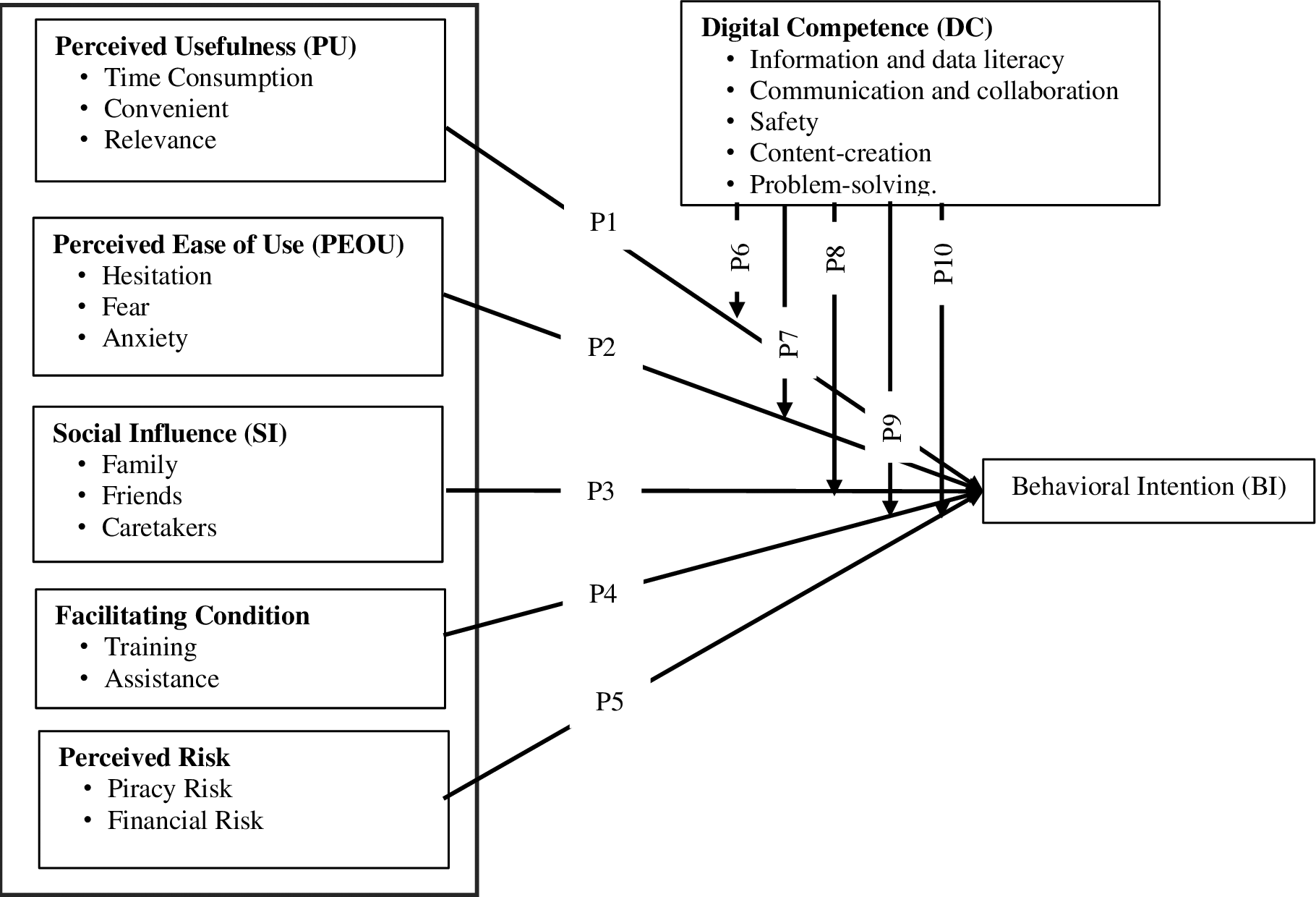
This is a conceptual framework developed based on the qualitative insight provided by the older adults on mobile app adoption. This model is developed by integrating three existing theories.
Fred Davis developed the Technology Acceptance Model (TAM) in 1989 (Davis, 1989). It focuses on the user acceptance of technology. The PU and PEOU are the two main constructs of the Technology Acceptance Model (TAM). Davis defines PU as “the degree to which a person believes that using a particular system would enhance their job performance” and PEOU as “the degree to which a person believes that using a particular system would be free from effort”. Since its inception, this model has been widely used in understanding the adoption of various health apps. For example, a study conducted in Korea highlights that PU and PEOU significantly influence user satisfaction, which in turn drives their behavioral intention to use mobile health apps (Park et al., 2025). Similarly, a mixed-method study conducted in Indonesia reveals that PU was the most significant factor influencing positive user responses (Aqilah et al., 2024).
Furthermore, multiple studies confirm the positive and significant role of PU and PEOU on users’ acceptance and behavioral intention (Lin et al., 2019; Park et al., 2025; Saare et al., 2019; Xie & Or, 2020). Specifically, a study conducted in Iraq revealed that PU and PEOU were significant predictors of adoption of mHealth apps among older adults (Saare et al., 2019). Thus, based on the above literature and findings of our qualitative study, the propositions are proposed:
PU is a significant predictor of behavioral intention
PEOU is a significant predictor of behavioural intention
The Unified Theory of Acceptance and Use of Technology (UTAUT) model (Venkatesh et al., 2003), integrates constructs from eight prominent TAM frameworks to explain user intentions and usage behavior. It identifies four core constructs: Performance Expectancy (PE), Effort Expectancy (EE), SI, and FC. According to this model, PE refers to the degree to which using the technology will provide benefits to users in performing specific activities. Whereas EE is associated with technology, such as PEOU. While SI refers to the extent to which individuals perceive that important others believe they should use the technology, FC deals with the degree to which an individual believes that an organizational and technical infrastructure exists to support the use of the system.
In the context of health app adoption, SI refers to the impact that others (e.g., family, friends, healthcare providers) have on an individual’s decision to adopt apps. Past literature has mixed evidence on the significance of SI on individuals. Several studies suggest that SI has a significant impact on the behavioral intention to use mHealth apps. For instance, SI was a substantial predictor of mHealth app adoption among high-income individuals (Akiogbe et al., 2025). SI was also found to be an important influencing factor in mHealth adoption during the COVID-19 pandemic (Meng & Guo, 2024). Additionally, social influencers, such as healthcare workers, have been found to have a significant impact on mHealth adoption among hospital patients (Lee & Chong, 2021).
On the other hand, some studies have not established a significant relationship between SI and BI. Research conducted during the COVID-19 pandemic in Indonesia revealed that SI had no significant effect on mHealth app adoption (Candra et al., 2025). Similarly, a Tanzanian study also found that SI had no impact on the adoption of mHealth among health workers (Mbelwa et al., 2019). These contradictory findings highlight the need for further research to elucidate the role of SI in shaping BI across diverse contexts and populations, including older adults. Accordingly, we propose the following proposition:
Social Influence positively influences Behavioral Intention
As mentioned earlier, FC refers to the resources and support available to users that facilitate the use of mHealth apps. The empirical evidence regarding the relationship between FC and BI remains inconclusive. FC was found to significantly impact the user’s BI in mHealth adoption. In high-income countries, FC were identified as a significant predictor in shaping user acceptance of mHealth apps (Akiogbe et al., 2025). Likewise, in an African study, FC were a crucial element for the adoption of mHealth apps among youth (Mtshali et al., 2024). In contrast, a few studies reported a weak or insignificant impact of FC on BI. For example, a survey conducted during the COVID-19 pandemic in Indonesia revealed that FC had a very weak effect on mHealth usage intention. Similarly, the Tanzanian study did not establish a significant impact of FC on BI. Therefore, additional research is warranted to explore why FC produces divergent effects in users’ BI. Thus, the following proposition is put forward.
Facilitating Conditions positively influence Behavioral Intention
According to the Perceived Risk Theory (PRT) (Cox, 1967), PR is a combination of uncertainty and the severity of possible consequences when choosing products or services. PRT identifies several risks, including financial, performance, social, psychological, and privacy-related. When PR exceeds an acceptable threshold, individuals engage in risk-reduction strategies. They may seek additional information or rely on trusted sources. This theory is widely applied in technology adoption research, particularly in the context of mHealth adoption, where privacy and security are crucial (Velverthi et al., 2024; Wei et al., 2010; Zhao et al., 2025). PR has emerged as a significant barrier to the adoption of mHealth apps (Halvadia et al., 2025; Wang et al., 2023). Thus, based on the qualitative feedback from the respondents of our study and the above discussion, we propose the following proposition.
Perceived risk negatively influences Behavioral Intention
Digital Competence (DC)
The concept of the DC has emerged alongside technological development. It refers to the set of knowledge, skills, and attitudes required to use digital technologies effectively, responsibly, and safely in various contexts, such as work, study, and everyday life (Ncube et al., 2025). DC is one of the key competencies for lifelong learning (Vuorikari et al., 2022), defined in 2006, involves the confident, critical, and responsible use of, and engagement with, digital technologies for learning, at work, and for participation in society. It includes information and data literacy, communication and collaboration, media literacy, digital content creation, safety, intellectual property-related questions, problem solving, and critical thinking (Directorate-General for Education, Youth, 2019). Research findings suggest that the DC impacts technology adoption across various contexts. For example, it has been found that teachers’ competence is a significant predictor of integrating digital resources in schools (Codina & Estebanell, 2023).
DC as a moderator within the TAM framework
Prior research has shown that the DC has a significant impact on the PEOU and PU. Higher digital competence enhances users’ perception of usability and usefulness, which in turn positively influences their BI (Faradiba et al., 2025; Nikou et al., 2020; Rodafinos et al., 2024). For instance, digital capability was found to moderate the effects of perceived usefulness and ease of use on business performance (Faradiba et al., 2025). In the context of AI adoption in education, it has been found that digital literacy significantly enhances the adoption of AI (Tomczyk & Majkut, 2025). Similarly, digital skills were also found to have a significant impact on PEOU, PU, satisfaction, and actual use, confirming their dual role as both predictor and moderator (Netinant et al., 2025). Therefore, it can be concluded that the DC could be a critical factor in enhancing the use of technology, such as mHealth, and its adoption within the TAM framework. By enhancing DC, trainers, educators, and policymakers can significantly improve the integration and use of mobile apps among older adults. Thus, based on the above discussion, we propose the following propositions.
DC positively moderates the relationship between PU and Behavioral Intention
DC positively moderates the relationship between PEOU and Behavioral Intention
DC as a moderator within the UTAUT framework
UTAUT is one of the is widely used frameworks to understand the technology acceptance and usage intention. In this framework, DC can play significant role as a moderator that influences various relationships among UTAUT constructs, such as performance expectancy, effort expectancy, facilitating conditions, and social influence on behavioral intention. For example, a study integrating the Digital Competence Framework (DigComp) with UTAUT2 found that DC variables, such as problem-solving skills and ethical considerations, significantly influenced students’ intention to use GenAI tools (Caner-Yıldırım, 2025). Another study exploring the link between AI usage and DC among college teachers found that SI and DC, both predicted the teachers’ BI (Yi et al., 2025). The findings of this study further suggest individuals with higher DC are more likely to act on social cues because they feel confident and capable. However, with regards to the FC, there are no empirical evidence for DC as moderator between FC and BI in the literature. This represents a clear research gap and opportunity for the future research directions. Therefore, the following propositions are suggested.
DC positively moderates the relationship between social influence and Behavioral Intention
DC positively moderates the relationship between facilitating condition and Behavioral Intention
DC as moderator within the Perceived Risk Theory
PR generally has a negative impact on mobile app adoption. For instance, privacy risk perceptions negatively influence continued usage intention (Mishra et al., 2020). A study conducted in the context of mobile banking app usage intention revealed that PR, encompassing financial risk, social risk, time risk, privacy risk, security risk, and performance risk, was negatively related to trust and the intention to use mobile banking (Van et al., 2020). While the role of PR and BI is well established in the literature, the moderating role of DC between PR and BI is less explored. There are certain indications that DC can play a moderating role. Previous studies have demonstrated that enhancing DC helps in modifying risk associated with digital activities by improving users’ skills and confidence in using digital tools (Lam et al., 2025; J. Xu & Aumeboonsuke, 2025; Z. Xu et al., 2024). Thus, based on the above literature, it can be concluded that DC can play a significant role in shaping behavioral outcomes among older adults in using mobile apps by enhancing their confidence and reducing PR. Thus, we propose the following proposition.
DC positively moderates the relationship between perceived risk and Behavioral Intention
By extending and refining existing technology adoption frameworks, this study makes several theoretical contributions to the literature on mobile adoption among older adults. The study identifies important age-specific factors, such as hesitation, fear, and anxiety, which are not adequately addressed in traditional technology models, including TAM and UTAUT. Incorporating these age-specific factors can improve the predictive power of the models for the older adult population. The study indicates that the role of SI, including support from family, friends, and caregivers, is a critical determinant of mobile app adoption. These findings suggest that future research models should investigate the role of social support from family members, friends, peers, and caretakers on BI of older adults. Third, identifying perceived risks, such as financial and privacy risks, when using mobile apps.
This study also has several practical implications for mobile app developers and policymakers. First, app developers and designers should prioritize user-friendly interfaces with simplified navigation, larger fonts, and clear instructions to accommodate age-related physical and cognitive limitations. Second, the study emphasizes the importance of training and support. Therefore, mobile app service providers should focus on conducting community workshops and family-assisted learning to enhance the digital competence of older adults. Third, mobile app developers and service providers should prioritize integrating personalized assistance features into their apps. For example, integrating voice guidance and help buttons can reduce dependency on others. Finally, policymakers should focus on privacy and security issues through a transparent and easy-to-understand process and communication to build trust in using mobile apps.
The study proposes future research directions for the adoption of mobile apps among older adults. We recommend that future research utilize the proposed framework and propositions to advance beyond qualitative insights. The future studies should incorporate rigorous quantitative validation of the proposed model. Additionally, experimental and quasi-experimental designs could be employed to examine causal relationships and the effectiveness of interventions, particularly the moderating role of DC. Furthermore, longitudinal research is recommended to track changes in attitudes, confidence, and usage patterns over time. The findings of such studies will provide insights into the sustainability of interventions (training and assistance) and the ongoing intention to adopt mobile apps. Ultimately, future research should also focus on integrating policy-level initiatives and structured training programs to assess their practical applicability in real-world settings.
While this study has both theoretical and practical implications, it also has a few limitations. The study employed a structured interview method within the framework of qualitative research. The structured interview method might have restricted participants’ ability to elaborate or introduce new ideas. This approach can impact the richness and complexity of data compared to semi-structured or unstructured interviews. The second limitation is the small size of 14 participants, drawn from a specific age group, i.e., 60 to 75 years. This age-specific study may reduce the generalizability of the findings. Third, since this is a qualitative study, the proposed conceptual framework requires further validation through a larger, more diverse sample using quantitative approaches.
Based on the qualitative insights provided by older adults during semi-structured interviews, the study identified five main factors that influence their adoption of mobile apps. They are PU, PEOU, SI, FC, and PR. The study has several practical and theoretical implications. While the findings of this study are helpful for mobile app developers, service providers, and policymakers, it also contributes to the literature by proposing a conceptual model that integrates three existing models/theories. The proposed conceptual model works as a foundation for future quantitative study.
In preparing this manuscript, GAI and AI-assisted technology (ChatGPT, Co-pilot and Scopus AI) were used solely to enhance readability and clarity of language. All AI-generated content was carefully reviewed and edited to ensure accuracy and integrity. The authors take full responsibility for the content and affirm that AI was not used for data analysis or generating research insights. Any potential limitations of AI-generated text were addressed through human verification.
We sincerely thank Manipal Academy of Higher Education for the constant support, encouragement, and resources provided throughout this work.