Просмотр новости
Найдите то, что Вас интересует
 Спутники
 РН
РН SpaceX
 Роскосмос
 NASA
NASA
СпутникиРНSpaceXРоскосмосNASAThis study discusses the impact of Artificial Intelligence on intelligence gathering and coordination in Nigeria’s national security system. With security threats like terror, banditry, cybercrime, and other criminal organisations becoming commonplace, our intelligence agencies must learn to handle the outrageous amount of information needed to be processed in record time; hence, the relevance of AI. In this qualitative literature reviews, we rely on peer-reviewed journal articles, books, government reports, newspapers and other academic material to look into the growing use of AI in intelligence and the relevant primary intelligence institutions in Nigeria: the NIA, DIA, DSS, FIB and other intelligence disciplines. Background Information Artificial Intelligence (AI) is now a major theme of analysis, policy and strategic thinking in security. Due to the hostile security environment (e.g., terrorism, cybercrime, marine crime, insurgency, banditry) and the increased complexity, frequency and technology-related nature of incidents in Nigeria (where there are now many complex threats to security), AI is the centerpiece of military and security operations, providing crucial strategic value in defence and risk mitigation. Research Objective To examine how AI is used in Nigerian intelligence collection and the management of national security and how the application of AI could serve to transform security operations from a reactive approach to a proactive one. Methodology The qualitative research method was used in this study. Secondary data sources for the research included online security reports, policy documents and academic literature. The theoretical framework used to guide the examination of the decision-making processes relating to the application of AI to security management was System Theory, with data being subjected to content and thematic analysis. Research Results The research results indicate the following ways in which AI improves intelligence collection and therefore enhances national security through the use of real-time data processing, automated surveillance and reconnaissance activities, and predictive modelling based upon emerging threats. Furthermore, the research demonstrates that AI improves a security response’s ability to anticipate, prevent and mitigate security issues, thereby improving the performance of security operations and supporting higher-level data analytics. Conclusion This study concludes that AI has the power to significantly improve Nigeria’s national security administration and intelligence collection. In addition, the shift from a reactive approach to a proactive approach will enhance the effectiveness of security responses while reducing vulnerability to sophisticated threats. Unique Contribution: This study contributes to the body of knowledge on AI and African security contexts by identifying AI’s significant potential for transforming intelligence collection and addressing long-standing weaknesses in Nigeria’s security framework. Key Recommendation The Nigerian government should invest in technology-based infrastructure, create a national AI ministry, with an AI minister, build capacity and promote inter-and intra-governmental collaboration in acquiring AI capabilities for a national security framework. The government’s policy should focus on ensuring that the long-term results of using technology are sustained through addressing the root causes of insecurity (e.g., poverty, poor governance) through the ethical implementation of AI.
Over time, Nigeria’s security environment has continuously faced growing risks and existential threats to national security and national defence capabilities alike. Insurrections, terrorism, banditry, maritime crime, cultism, cybergangs, and farmer-herder conflicts continually erode Nigeria’s security, jeopardising safety, socio-economic progress, food security, and developmental intervention. The inability of the Nigerian security architecture to accomplish its detection, deterrence, or neutralisation of these criminal enterprises has created consequences that are beyond devastating in the battle against these threats to both Nigerian security and Nigeria’s geostrategic assets and position. The precarious security environment in Nigeria has become exacerbated by the growing complexity of these threats, the incapacity of Nigeria’s security architecture to collect actionable intelligence, especially in the governance of large areas of ungoverned landmass in Northern Nigeria, and the inadequacy of border security controls and technology for managing Nigeria’s border with its neighbours. Recently conducted assessments of Nigeria’s security have indicated that intelligence fragmentation, adaptive criminal networks, and the lack of real-time surveillance capabilities still determine the extent of insecurity in Nigeria for the 2025–2026 timeframe. Furthermore, according to the 2025–2026 Nigeria Security Updates Report from SBM Intelligence, the fact that there are thousands of kidnapping-for-ransom related kidnappings reported annually across numerous states, especially in the North-West and North-Central regions, continues to support the need for AI-powered predictive and analytical surveillance systems that can identify risk corridors, track mobility patterns, and enable rapid deployments for responses to criminal activity; especially when criminal organisations continue exploiting gaps in border security, visibility of rural terrains, and the lack of effective integration of inter-agency intelligence co-ordination, in spite of sporadic security operations and fluctuations in the payment of ransom. Moreover, recent evaluations by the International Crisis Group (2025–2026) have shown that the ongoing conflict between farmers and herders across Nigeria and the expanded Sahel region continues to evolve as an ongoing, though no longer uniform, security problem; increasingly influenced by land and water resource competition, displacement of people, and stress from climate change. As a result of the lack of early warning capabilities of Nigeria’s security services and community reporting processes, there are delays in the sharing of critical intelligence, leading to continued violence even with the introduction of local-level peace initiatives and an increased security presence. This continuing intelligence gap reinforces the growing need for automated conflict-risk detection systems, geospatial intelligence mapping, and AI-enabled early warning platforms to support proactive peacebuilding and crisis mitigation.
Artificial intelligence (AI) refers to computer programs capable of learning, reasoning, predicting, and making decisions regarding tasks often requiring human intellect. Russell and Norvig (2021) describe AI as systems capable of perceiving their environment and acting accordingly to achieve their desired outcome, while Floridi (2023) describes AI as a “transformative cognitive infrastructure” that shapes the creation, analysis, and use of knowledge in modern cultures.AI is relevant to this study because it provides a technological foundation for real-time security decision support systems, automated intelligence processing, and predictive analytics. In the Nigerian national security environment, AI is increasingly becoming important in terms of improving threat-detection abilities, minimizing human error, and increasing the efficiency of intelligence collection.
Intelligence collection is the organized process of collecting data from various sources for use in making security decisions. Treverton (2015) describes intelligence collection as the process of collecting from varied sources raw (unprocessed) data to transform it into useful intelligence. Phythian (2013) further explains that modern intelligence systems primarily rely on data integration and technological tools to efficiently operate for the purpose of ensuring national security. The collection of intelligence in Nigeria is hindered by several factors, including fragmented database systems, lack of inter-agency cooperation, and inefficient information processing. According to Ogunsola (2024), these shortcomings diminish the ability of security institutions to combat organized crime, terrorism, and kidnapping. In the report, it states that AI enhances intelligence collection by enabling real-time data processing from various digital and physical sources, automated data extraction, and integration of surveillance.
The relationship of AI with intelligence collection is currently at the forefront of modern security studies. Gill (2022) states that AI-enabled data and surveillance technologies allow for the effective processing of large quantities of data that human analysts cannot effectively analyze, thereby dramatically improving the speed and accuracy of intelligence collection. Similarly, Kwet (2022) argues that increasing use of AI technology, such as facial recognition, machine learning, and predictive analytics, will enable state security systems to detect threats in real-time. Through the integration of data from CCTV, telecom metadata, social media analysis, and border surveillance, AI will improve intelligence collection in Nigeria, leading to better proactive responses with regards to national security, improved situational awareness, and more efficient detection of criminal networks.
AI is critical to improving intelligence management. Deibert (2020) asserts AI solutions enable security organizations to convert raw data to useful intelligence through automated classification and predictive modeling. Zuboff (2019) states algorithmic technology will transform how we govern by providing real-time decision support and continuous monitoring.
Systems Theory provides a theoretical basis to show how AI has impacted intelligence collection and management of national security in Nigeria. Systems theory was developed in the 1940’s by Ludwig von Bertalanffy. Later, David Easton expanded systems theory to political science and organizational studies. The underlying principle of systems theory is that both society and institutions are interdependent systems comprised of inputs, processes, outputs, feedback, and environmental interactions.
A system is defined by Bertalanffy (1968) as a collection of interrelated elements working together toward stabilization and effectiveness. There are mechanisms for feedback, adjustment, and continuous flow of information about the status of a system for maintaining numeric health, as defined by Easton (1965). In terms of security studies, the systems theory argues that institutions of national security need to collect, process, communicate and respond to information as a group of agencies working together rather than acting independently.
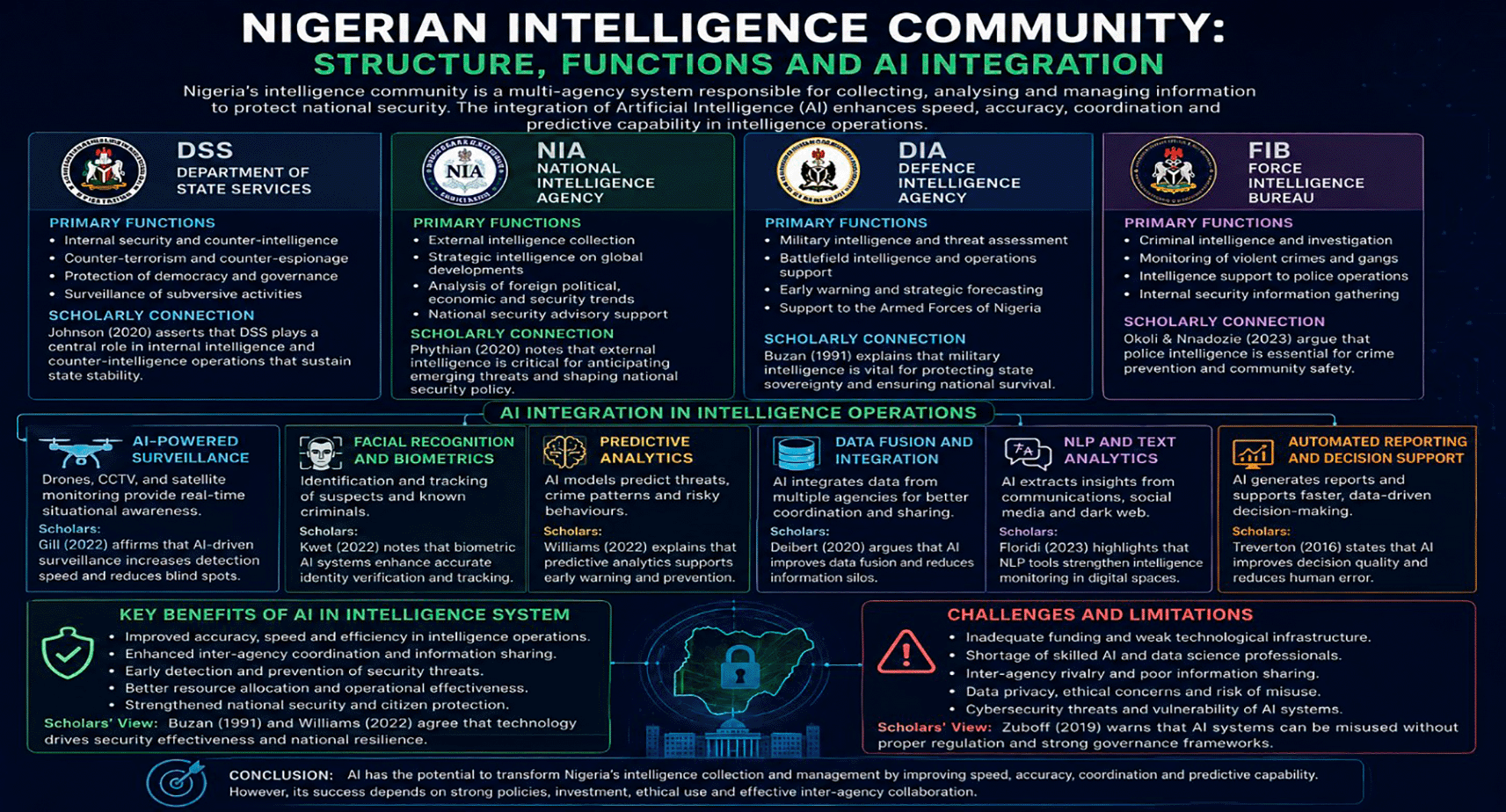
The Nigerian intelligence community blends both traditional espionage techniques and up-to-date technology to gather intelligence to protect national security and counteract both internal and external threats. The principal agencies of Nigeria’s intelligence community are the Force Intelligence Bureau (FIB), the National Intelligence Agency (NIA), the Department of State Services (DSS), and the Defense Intelligence Agency (DIA). Each of these organizations plays an integral part of Nigeria’s intelligence operations and uses a variety of techniques and methods of operation to accomplish their missions. Despite their critical importance to the national security of Nigeria, these organizations face serious challenges, such as inadequate funding, competition among the agencies, and political interference (Bassey, Asangausung & Udousoro, 2024).
To clearly illustrate Nigerian intelligence architecture concept, Figure 1 provides an overview of the organisation structure of the Nigerian Intelligence Community, which includes the Department of State Services (DSS), the National Intelligence Agency (NIA), the Defence Intelligence Agency (DIA), and the Force Intelligence Bureau (FIB); and to incorporate how these multiple types of intelligence disciplines (HUMINT, SIGINT, and TECHINT), through the use of AI (e.g., predictive analytics system and decision-making; automatic detection of various types of threats instantly and response; improved surveillance and monitoring; AI-based data integration and correlation; border and maritime security management) are integrated with AI-enabled technologies.
Developed by the author (2026).
The National Intelligence Agency was formed as a new intelligence agency of Nigeria in 1986 following the cessation of operations of the pre-existing National Security Organisation (NSO) and the restructuring of Nigeria’s Predecessors of Intelligence framework with the enactment of Decree No. 19 of 1986. It is mandated to collect, process, and disseminate foreign intelligence relating to Nigeria’s external security interests and diplomatic relations (Adejoh & Shimawua, 2018). The NIA is Nigeria’s main agency for collecting and reporting foreign intelligence. It plays a major role in safeguarding Nigeria from foreign-motivated threats of espionage, transnational terrorism, cyber threats, international organised crime, and foreign political interference. The NIA gathers information through the Nigerian embassies, the Nigerian high commissions, Nigerian diplomatic missions, both Nigerian-based and foreign partner-based, across many countries worldwide. According to Phythian (2013), foreign intelligence agencies operate on a contemporary basis, with cooperation using their diplomatic networks and international partnership. The NIA has extensive working relationships with allied foreign intelligence agencies and international organisations. The three focus areas of the NIA comprise the monitoring of global developments which are detrimental to Nigeria’s political, economic, and security interests. With regards to the vast array of foreign intelligence, one of the most important tasks of the NIA is to collect and report on strategic foreign intelligence concerning terrorism, international criminal networks, arms trafficking, cyber espionage, and geopolitical development.
The Force Intelligence Bureau (FIB) is the Nigeria Police Force’s intelligence agency for criminal intelligence support to law enforcement operations throughout Nigeria. As the central source of intelligence within the police system, the FIB provides reliable and actionable intelligence to inform policing and operations to prevent crime, keep the peace, and improve the security of Nigeria (Abdallah, 2024). The FIB is the main authority for intelligence-gathering of actual or potential criminal activity by criminals involved in armed robbery, kidnappings, financing terrorism, organized crime, cybercrime and any other internal threats to state security. As indicated by Abdallah (2024), police intelligence must be effectively used to provide proactive responses to criminal activity rather than simply responding after the crime has occurred. The bureau uses a variety of methods of collecting intelligence about criminal activities, including Human Intelligence (HUMINT), informants, surveillance, undercover policing and with the use of criminal intelligence databases. HUMINT refers to the use of informants, sources in the community, and undercover officers to collect information first-hand from criminal activity areas and suspect networks (Okoli & Nnadozie, 2023). The FIB also relies heavily on using digital forensics intelligence, which involves collecting and analyzing data obtained from electronic devices like mobile phones, computers, and web-based platforms used by criminals. This includes monitoring cybercrime, financial fraud and the digital technology used to commit crimes. In addition to HUMINT and digital forensics, the FIB maintains and uses a variety of criminal intelligence databases that include records of criminal suspects, criminal organizations, fingerprints, biometric identifiers, as well as information about past criminal behavior by individuals. Criminal intelligence databases allow police agencies to establish patterns of criminal behavior and quickly identify repeat offenders and criminal networks more effectively (Okoli & Nnadozie, 2023).
The Department of State Security (DSS) is Nigeria’s principle security and intelligence agency that has a key role in Nigeria’s internal security, counter terrorism activities and counter intelligence operations. It was established in 1986 after the dissolution of the National Security Organisation (NSO) via Decree No 19 of 1986 which was part of a wider re-structuring to Nigeria’s national security architecture. The DSS works under the Office of the National Security Advisor, and is a critical component of Nigeria’s internal safety and security from threats to Nigeria’s stability (Musa, 2021). The DSS is primarily charged with the collection, analysis and dissemination of intelligence of both current and potential internal threats to Nigeria, including terrorism, insurgency, espionage, subversion, political violence and threats to critical national infrastructure. Internal intelligence agencies, like the DSS, are critical to ensuring the stability of the State, particularly in countries facing complex security challenges, such as Nigeria (Musa, 2021). In carrying out its mission, the DSS also conducts counter terrorism and counter insurgency intelligence operations in various regions throughout Nigeria. A key area of focus for the DSS is identifying and disrupting terrorist cells, criminal syndicates and extremist networks. The DSS is viewed as key in preventing coordinated attacks and countering security threats by dismantling them before they are executed (Ayodele & Musa, 2024). In addition to internal and external intelligence gathering, the DSS is also responsible for the protection of senior government officials, critical infrastructure, and sensitive government installations. Moreover, the DSS safeguards local governments from security threats directed at government facilities, military installations, airports and strategic economic assets. The DSS relies on various collection methods such as Human Intelligence (HUMINT), undercover operations, and various forms of surveillance and monitoring, to collect intelligence. HUMINT plays an integral role within the DSS. Human Intelligence consists of the use of informants, covert operatives and embedded agents, who gather intelligence from amongst suspected individuals and groups. (Ayodele & Musa, 2024).
Intelligence gathered from humans (HUMINT) is intelligence obtained from human sources such as informants, undercover operatives, defectors, and witnesses. It is a primary source of intelligence still relied on by Nigerian Security Services in fighting terrorism, insurgency and crime (Adebimpe et al., 2021). HUMINT is a source of contextual data and ground-level information that cannot be provided by technical systems in covert and/or informal criminal environments. HUMINT is used to identify attacks already being planned, map criminal networks, and understand how groups are structured and what their intentions are. The effectiveness of HUMINT derives in part from its dependence upon the reliability of its sources. As a result, HUMINT is susceptible to the effects of misinformation, bias, and manipulation from its sources. HUMINT also requires the allocation of considerable resources to recruit, protect and manage informants.AI can enhance HUMINT by correlating and verifying human reporting against multiple data sources; detecting inconsistencies in human data; and building a basis for determining the credibility of the source of information. AI may also be utilized to integrate HUMINT with other forms of intelligence to improve the accuracy of assessments in public safety activities (Gill, 2016).
Signals intelligence (SIGINT) is the process of capturing, monitoring, and interpreting electronic communication and signal transmission (radio, telephone, internet communications, and encrypted messaging) SIGINT is one of the key intelligence types used by Nigerian security agencies to monitor activities of terrorist organizations and criminal activity as well as hostile communications (Ayodele & Musa, 2024). Additionally, SIGINT provides the capability to conduct national security operations through the identification of planned attacks, coordination of activities, and the linkage of suspects through SIGINT. In particular, SIGINT is important for organizations conducting counter-terrorism operations and monitoring the activities of organized crime. While there are many advantages to the use of SIGINT, there are also significant challenges. SIGINT operations are challenged by inadequacies in interception technology, the encryption of communications, and limitations in cybersecurity, which limit the efficiency and effectiveness of intelligence (Ayodele & Musa, 2024). Artificial Intelligence (AI) enhances SIGINT by providing automated capabilities for signal analysis, decryption, and the identification of suspicious patterns within communications. Machine learning systems help to identify and process vast amounts of intercepted data quickly and accurately; hence, AI successfully enhances threat detection and response time (Brundage et al., 2018). Cyber IntelligenceCyber Intelligence refers to the detection, analysis, and prevention of digital threats against information systems, computer networks, online platforms, and communications systems. Cyber Intelligence addresses activities associated with cybercrime, which includes hacking, phishing, ransomware, online fraud, and digital radicalization (Brundage et al., 2018). As a function of cyber intelligence, the protection of critical cyber infrastructure (digital) within Nigeria (financial institutions, government databases, and communication networks) is primarily accomplished through the application of cyber intelligence. Cyber Intelligence also supports the monitoring of radical extremist activities and criminal activity that transpires over the internet through various platforms. Through the analysis of cyber events using network monitoring systems, digital forensics, malware analysis, and threat intelligence platforms, cyber intelligence assists security agencies by tracking cybercriminals, identifying digital fingerprints, and reducing the prevalence of data breaches (Klimburg, 2017). Likewise, cyber intelligence must work to address certain challenges associated with cyber threats, which include rapidly evolving cyber threats, lack of skilled personnel in the cybersecurity field, and constrained technology capabilities needed to keep pace with the technology utilized by cybercriminals.AI enhances cyber intelligence through real-time threat detection, automated intrusion detection systems, predictive analysis of the potential for a cyber attack, and expeditious responses to security breaches.
Technical Intelligence (TECHINT) refers to the collection and analysis of intelligence gathered using technical methods, including but not limited to electronic devices (such as phones), surveillance systems, sensors, satellite systems or drones and imaging systems. TECHINT collects visual and electronic information about relevant activities for national security which supports security operations with proof or evidence of those actions (Okwor, 2022).
AI refers to computer systems that are capable of performing tasks that normally require a certain level of intelligence. Examples of these types of tasks include data analysis, pattern recognition, prediction, and decision-making. As such, national security agencies are beginning to incorporate AI into their intelligence collection, which is helping to increase efficiency, accuracy, and response timing (Allen & Gregory, 2020). The application of AI plays a role in the collection and analysis of intelligence by examining large sets of both structured and unstructured data from a variety of sources including HUMINT, SIGINT, TECHINT, and cyber intelligence platforms, thus enhancing the speed and quality of intelligence that security agencies use when making national security decisions (Center for Security and Emerging Technology, 2020). Additionally, the incorporation of AI allows security agencies to conduct real-time surveillance and monitoring of events allowing them to detect potential threats much faster than they could without the use of AI, which provides them with an opportunity to respond proactively rather than reactively if a threat is detected. AI applications are also beneficial in detecting potential threats, monitoring individuals who have been identified as potential threats, and developing automated alerts when possible threats are observed. Another factor that increases the effective coordination between national security agencies is the ability to effectively integrate and share intelligence and data across systems. As a result, AI technology reduces the amount of effort agencies use to collect information while enhancing operational efficiency through effective cooperative operations (Floridi, 2023). Among the challenges associated with the integration of AI into national security operations include ethical considerations, personal privacy impacts, algorithm bias, and excessive reliance on automation when making major security operations decisions.
Predictive analytics in national security involves using historical data, real-time intelligence and statistical algorithms to predict potential security threats or criminal activity. Predictive analytics allows security agencies to identify risks before they happen and use their resources more effectively (Boulanin & Verbruggen, 2017). Predictive analytics in Nigeria’s security system is used to identify terrorism hotspots, the movements of insurgents, and increasingly frequent criminal activities. This enables intelligence agencies to transition from reactive responses to proactive security planning and prevention. Predictive analytics also result in better decisions because they provide evidence-based insights for strategic placement of security personnel, surveillance assets, and operational resources. The Center for Security and Emerging Technology (2020) states that predictive systems improve situational awareness and long-term forecasting of potential threats. However, there are challenges with predictive analytics; for example, there can be issues with the quality of the data, a lack of integrated intelligence systems, and a risk of making incorrect predictions based on insufficient or inaccurate data. Artificial intelligence (AI) improves predictive analytics through the development of machine learning models that detect patterns, predict future threats, and improve the accuracy of predictions through learned data processes. This improves the speed and accuracy of decision-making for security operations (Gill, 2022).
Automatic threat detection and response refers to the use of intelligent systems to identify, analyze and respond to threats with minimal human intervention. This technology is widely used in cybersecurity, surveillance systems and counterterrorism to improve the speed and accuracy of responding to threats (Bello & Adeyemi, 2023). Automatic threat detection and response systems in Nigeria’s security environment identify cyberattacks, monitor suspicious movements, and track abnormal activities across both digital and physical security networks, which supports improved early warning capabilities. These systems help reduce the amount of time between detecting a threat and responding to it. Automatic threat detection and response systems identify potential risks by analyzing sensor data, monitoring software data, intrusion detection system data, and conducting real-time analytics. When a threat is detected, an automatic alert or response is generated to minimize the damage caused by the threat or prevent further escalation (Brundage et al., 2018). There are several challenges associated with automatic threat detection and response systems: systems can produce errors, generate false alarms, have limited infrastructure, and depend on stable network connectivity. Artificial intelligence systems enhance automatic threat detection and response by improving the ability of systems to recognize patterns, reducing the number of false-positive results, and improving the ability of systems to make real-time decisions. Additionally, artificial intelligence systems have the capability to provide adaptive learning, which enables automatic threat detection and response models to be improved over time based on new data (Allen & Gregory, 2020).
Enhanced surveillance and monitoring refers to the use of advanced technological solutions to observe, monitor, and analyze activity in real-time in support of security and intelligence activities. Enhanced surveillance and monitoring are important for protecting critical infrastructure, public spaces, and international borders against security threats (Allen & Gregory, 2020). In Nigeria’s security environment, enhanced surveillance technologies include Closed Circuit Television (CCTV) cameras, drones, satellite systems, and computer vision tools to monitor activities in high-risk locations and detect suspicious activities. Enhanced surveillance technology improves situational awareness and helps generate rapid response to new threats. Enhanced surveillance technology helps in the area of border security, crowd monitoring, and tracking of criminal or terrorist movements. Enhanced surveillance technology enables security agencies to collect continuous visual intelligence across many operational settings (Gill, 2022).
AI data integration and correlation refers to the use of Artificial Intelligence systems to combine, analyze, and interpret intelligence data from multiple sources to produce a unified security picture. It enables intelligence agencies to connect information from HUMINT, SIGINT, TECHINT, cyber intelligence, and OSINT for more accurate decision-making (Russell & Norvig, 2021).
In Nigeria’s security architecture, fragmented intelligence across agencies often reduces operational effectiveness. AI helps solve this by integrating datasets from different security institutions into centralized platforms, improving coordination and reducing intelligence duplication (Floridi, 2023).
AI systems also identify hidden patterns, relationships, and anomalies across large datasets, such as linking financial transactions to criminal networks or connecting communication patterns to planned attacks. This enhances threat detection and investigation accuracy (Gill, 2022).
However, challenges include poor data quality, lack of interoperability between agency systems, and concerns over data security and privacy. Artificial Intelligence strengthens national security management by enabling real-time correlation of intelligence inputs, improving analytical speed, and supporting evidence-based strategic decisions. This leads to faster identification of threats and more coordinated responses across security agencies (Chukwu & Hassan, 2022).
Border management and maritime security involve the protection, monitoring, and control of Nigeria’s land borders, airspace, and maritime domains to prevent illegal activities such as smuggling, human trafficking, arms trafficking, and unauthorized entry. These functions are critical due to Nigeria’s extensive and porous borders (Onuoha, 2021).
Security agencies use various tools and strategies for border control, including biometric identification systems, surveillance drones, CCTV networks, and patrol operations. These systems help improve monitoring of movement across borders and strengthen national security enforcement (Brundage et al., 2018). Maritime security focuses on safeguarding Nigeria’s coastal waters, oil installations, shipping routes, and offshore assets from piracy, illegal bunkering, and maritime crimes. It plays a key role in protecting the country’s economic interests and energy infrastructure (Allen & Gregory, 2020). Despite these efforts, challenges such as inadequate surveillance coverage, porous borders, limited manpower, and weak inter-agency coordination continue to affect border security effectiveness.
Artificial Intelligence (AI) enhances border and maritime security by enabling automated facial recognition, predictive threat detection, drone-based monitoring, and real-time analysis of movement patterns. AI systems also assist in identifying suspicious cross-border activities and improving response coordination among security agencies (Onuoha, 2021).
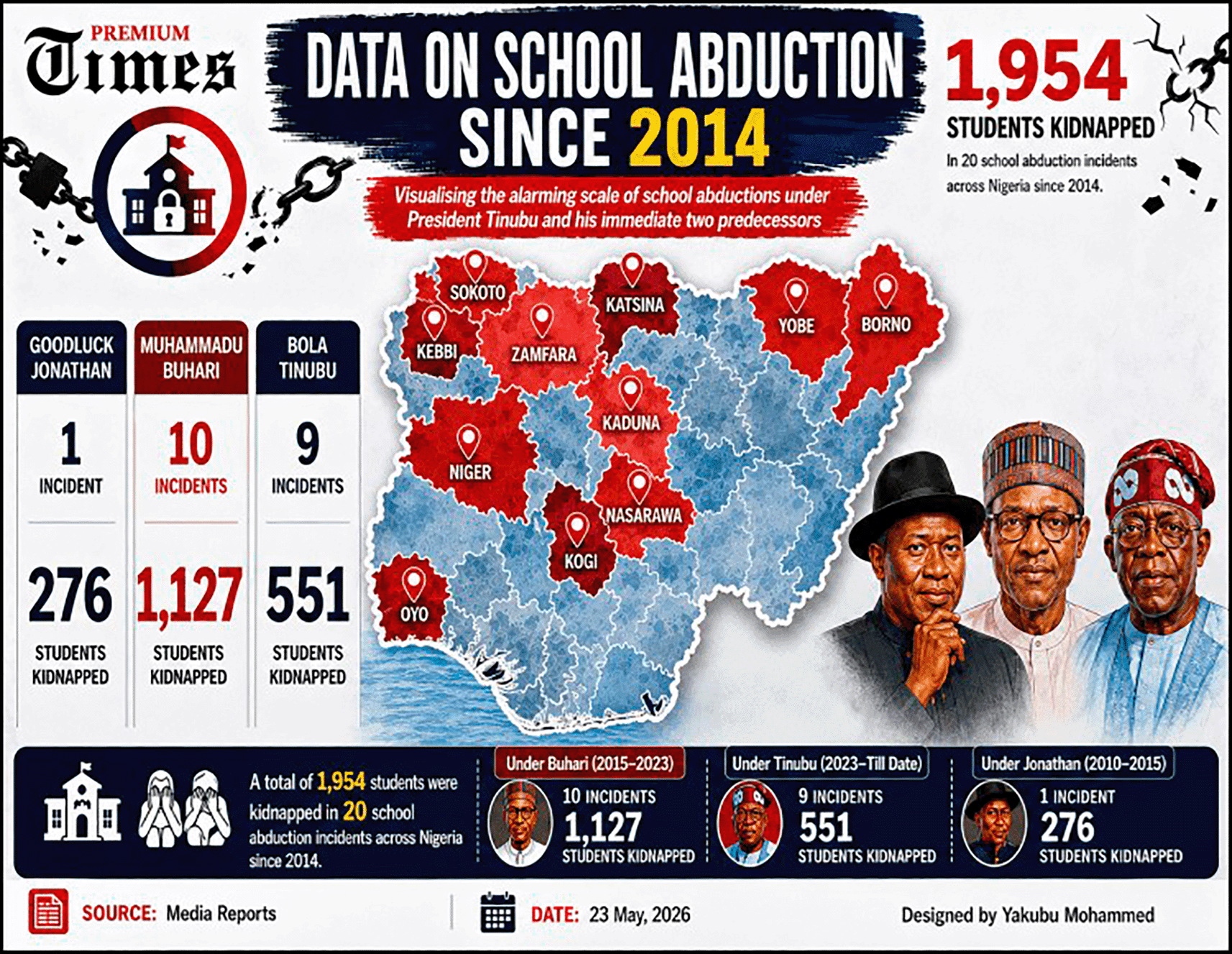
Figure 2 illustrates how insecurity has persisted in Nigeria’s national security climate throughout successive administrations even with current Nigeria Intelligence Community. Despite a change in political leadership, mass abductions, terrorism, banditry, and other violent crimes have continued to increase. In this figure 2 PREMIUM TIMES (2026) has provided empirical data showing that the Nigerian government has had nine mass school kidnapping events involving 551 students and staff in just the short time since the beginning of the Tinubu administration. This indicates a continuation of an already established pattern of insecurity in northern regions of Nigeria, with increased violence being experienced. This trend represents what scholars refer to as a normalization of insecurity within fragile state structures. Williams (2008) states that when non-state armed groups continue to operate consistently, and the state has little ability to resist them, violence becomes institutionalized, rather than episodic. Likewise, Buzan (1991) says that when state capacity is unable to deter or eliminate threats that persist, they become “structurally embedded.” In the context of Nigeria, the normalized pattern of insecurity is exemplified by the ongoing activities of bandit groups, insurgents, and criminal networks that kidnap individuals in different areas of Nigeria. Lippmann (1943) reinforces this thinking by asserting that insecurity lasts as long as state authority does not have the ability to effectively enforce deterrence, leading to a perception of state vulnerability. This aligns with current circumstances in Nigeria, where groups involved with committing crime are continually adapting, reorganizing, and expanding despite the continued intervention of military and police forces in Nigeria. When this situation in Nigeria is viewed in comparison to technologically developed states of the United Kingdom, United States, and China, the structural differences between the two contexts are clear. In each of the countries, surveillance systems that are enabled by artificial intelligence (AI) are embedded into national security systems. In the UK, CCTV networks and facial recognition systems supported by AI allow for real-time monitoring of public areas, allowing for prompt identification of suspects and preventing criminal escalation. In the US, AI-powered analytics, satellite surveillance, and integrated intelligence databases are available for both intelligence and law enforcement agencies to assist with early identification of threats and coordinated response operations. China is perhaps the most advanced of the three countries as AI-enabled surveillance is supported by large-scale facial recognition systems and predictive policing technologies that monitor the population and prevent threats. Because the level of AI integration is so advanced, detecting criminal activities early in the different countries is far more likely than in Nigeria. This results in organized criminal groups being virtually guaranteed that their actions will not be detected until long after those actions have taken place, and as a result, they will operate for a lengthy time without being detected. This is consistent with Brundage et al. (2018), who argue that the effectiveness of AI will depend on the quality of data, the degree to which systems are integrated, and the extent to which institutions are prepared to use those data and systems. Klimburg (2017) further explains that advanced systems of surveillance will require stable digital infrastructures and strong coordinating mechanisms, both of which are lacking in most developing security contexts. Similarly, Floridi (2014) cautions that without sound governance frameworks and sufficient technological capacities, digital intelligence systems cannot be expected to achieve their full operational potential. Thus, while the use of AI will significantly enhance intelligence collection and the management of security in moreadvanced economies, the limited use of AI in Nigeria is responsible for delays in threat detection, limited surveillance coverage, and low operational efficiencies. This accounts for why certain organized criminal groups in Nigeria are able to persist and develop with substantially fewer interruptions facilitated by AI.
Premium times (2026).
To strengthen Nigeria’s National security intelligence apparatus, the resulting action requires intentional transitioning from a fragmented and reactive manner of operating intelligence to adopt an integrated, technology-driven approach to intelligence. Artificial Intelligence (AI) technologies will be able to enhance the development of predictive analytics, surveillance and intelligence coordination; however, the successful use of AI will rely heavily on the readiness of institutions, data integration, and a sustained investment in technology.
Internationally, countries such as the US, UK and China have established national security operations leveraging AI-driven intelligence systems. Intelligence organisations within the US use AI-driven data fusion platforms/technologies for dissemination of satellite surveillance information to support predictive policing and develop early identification of potential threats with rapid coordinated responses from federal and state law enforcement agencies. The UK uses AI technology through enhanced CCTV networks and facial recognition technologies to support real-time crime detection and improve situational awareness within urban settings. China highlights a further advanced model with large-scale AI-driven surveillance infrastructure that integrates technologies such as facial recognition, behavioural analytics and predictive policing to monitor and prevent threats to both local and national security.
From the aforementioned international practices, Nigeria should focus on the establishment of a centralised intelligence integration system designed to connect the key security agencies responsible for national security including the Department of State Security (DSS), National Intelligence Agency (NIA), Defence Intelligence Agency (DIA) and the Nigeria Police Force (NPF). By doing so, Nigeria will reduce the fragmentation of intelligence and enhance the ability to share real-time information amongst themselves to expedite the response to emerging threats.
The study demonstrates that AI provides a potentially transformative means for Nigeria to enhance its national security intelligence collection and management systems. Existing academic literature supports this empirical assessment, providing a conceptual basis through which to consider how AI can leverage predictive analytics, enhance surveillance systems, provide cyber intelligence, and support automated threat detection (Allen & Gregory, 2020; Floridi, 2023). However, the practical implementation of AI, ultimately the effectiveness of AI technology is dependent upon the readiness of the institutions using AI and integration of the various systems in which AI is located.
The data informing this study’s conclusions were obtained from a review of only published scholarly literature, books and reputable online scholarly information. As no human participants were directly involved, issues of informed consent or direct data collection are not relevant. However, adherence to ethical standards such as academic integrity, citation of resources and responsible use of secondary data was strictly observed.