Просмотр новости
Найдите то, что Вас интересует
 Спутники
 РН
РН SpaceX
 Роскосмос
 NASA
NASA
СпутникиРНSpaceXРоскосмосNASABackground Online purchasing has made medicines easy to obtain, but safe use depends on appropriate information and knowledge of which products may lawfully be bought outside licensed pharmacy premises. Under the Thai Drug Act B.E. 2510, only limited household remedies may be sold outside pharmacies. We examined why students buy medicines online, what safety information they receive, and how well they recognize which products may lawfully be sold online. Methods An analytical cross-sectional survey was conducted among 385 university students who had previously purchased medicines or health products online between December 2024 and January 2025. A structured questionnaire assessed purchasing motivations, safety information, and a ten-item knowledge index covering regulatory categories and specific marketed products. Descriptive statistics were used to summerise purchasing behaviour and information receipt. A prespecified logistic regression model was used to identify factors associated with adequate knowledge, following the STROBE guideline. Results Of the 385 participants, 205 (53.2%) had bought medicines online and 348 (90.4%) has purchased health products. Perceived prudouct quality or certification received the highest mean influence ranting (4.44 of 5), followed by convenience (4.25), resonable price (4.17), and privacy (4.15). Among medicine purchasers, only 46 (22.4%) received all five safety-information items; storage and side-effect information were supplied least often. The mean knowledge score was Knowledge was 6.04 out of 10, and 105 participants (27.3%) met the criterion for adequate knowledge. Participants scored higher on regulatory categories than on practiceal product recongnition (4.15 versus 1.89 out of 5; Cohen's d = 1.32). Only 10.6% recognised that the large-pack paracetamol product could not be purchased online. Studing pharmacy (adjusted odds ratio 9.11) and older age (1.38 per year) were associated with adequate knowledge. Conclusions Knowledge of which medicines may lawfully be purchased online was limited in this sample of previous online purchasers; and safety information was often imcomplete. As digital channels for medicine access expand, consumers need practical education based on specific products, while online systems should provide structured medicien information and access to professional advice.
Research Article
[version 1; peer review: 1 approved with reservations]
Duangkamon Sakloetsakun1, Jinwara Sinthujariwat1, Warimon Nontamart1, Yaowapha Chotsapsakun1, Panumart Phumart
https://orcid.org/0000-0002-0639-1829
1Duangkamon Sakloetsakun1, Jinwara Sinthujariwat1, [...] Warimon Nontamart1, Yaowapha Chotsapsakun1, Panumart Phumart
https://orcid.org/0000-0002-0639-1829
11 Khon Kaen University Faculty of Pharmaceutical Sciences, Khon Kaen, Khon Kaen, 40000, Thailand
Duangkamon Sakloetsakun
Roles: Conceptualization, Formal Analysis, Methodology, Validation, Writing – Original Draft Preparation, Writing – Review & Editing
Jinwara Sinthujariwat
Roles: Data Curation, Formal Analysis, Investigation, Writing – Original Draft Preparation
Warimon Nontamart
Roles: Data Curation, Formal Analysis, Investigation, Writing – Original Draft Preparation
Yaowapha Chotsapsakun
Roles: Data Curation, Formal Analysis, Investigation, Writing – Original Draft Preparation
Panumart Phumart
Roles: Conceptualization, Formal Analysis, Funding Acquisition, Methodology, Project Administration, Supervision, Validation, Writing – Review & Editing
OPEN PEER REVIEW
REVIEWER STATUS
Corresponding author: Panumart Phumart Competing interests: No competing interests were disclosed.
Grant information: This work was supported by the Fundamental Fund of Khon Kaen University / National Science, Research and Innovation Fund (NSRF), Thailand (grant number 203235, assigned to Panumart Phumart). The funder had no role in study design, data collection, analysis, interpretation, or manuscript preparation.
The funders had no role in study design, data collection and analysis, decision to publish, or preparation of the manuscript.
Copyright: © 2026 Sakloetsakun D et al. This is an open access article distributed under the terms of the Creative Commons Attribution License, which permits unrestricted use, distribution, and reproduction in any medium, provided the original work is properly cited. How to cite: Sakloetsakun D, Sinthujariwat J, Nontamart W et al. Knowledge, safety information, and purchasing behavior in online medicine buying among university students in Thailand: a cross-sectional study [version 1; peer review: 1 approved with reservations]. F1000Research 2026, 15:1247 (https://doi.org/10.12688/f1000research.186663.1) First published: 29 Jul 2026, 15:1247 (https://doi.org/10.12688/f1000research.186663.1) Latest published: 29 Jul 2026, 15:1247 (https://doi.org/10.12688/f1000research.186663.1)
Online purchasing has become an increasingly common way to obtain medicines and health products, and the COVID-19 pandemic accelerated this shift as consumers sought convenience, privacy, and rapid access.1,2 Medicines, however, are not ordinary consumer goods. Their safe use depends on appropriate information and, form many products, professional judgement at the point of sale. Buying a medicine online is therefore different from buying food or cosmetics.3 In Thailand, community pharmacies are part of the formal medicine-distribution system, yet consumers increasingly encounter medicines and health products through digital channels, including food-delivery applications.
The regulatory context makes the safety of online medicine purchasing particularly important. Under the Drug Act B.E. 2510 (1967), as amended, licensed sellers of modern medicines may not sell outside the premises specified in their license, and only a limited list of household remedies may be sold more widely.4,5,6 Whether a specific product falls within this list depends on it's active ingredient, strength, pack size and registered category. The same drug may be classed as a household remedy in a small blister but as a dangerous drug in a large pack. These details are not always visible in an online listing, although products outside the household-remedy category remain widely available through online marketplaces and delivery application.
Regulatory attention and much prior research have focused on the supply side, on whether medicines are available, advertised, or sold through digital channels.7,8,9 Less is known about what consumers understand when they encounter these listings. Previous studies have examined the prevalence of online medicine purchasing and the attitudes and intentions that shape it. 2,10,11,12 Few have considered, within the same study, why consumers choose online channels, what information they actually receive, and whether they can recognise which specific products may lawfully be purchased online. These questions are directly relevant to safe self-medication, particularly among young, digitally connected consumers who are heavy users of online and delivery platforms and among whom regulated telepharmacy services are developing.
This study examined university students with previous online purchasing experience. We assessed their reason for choosing online channels, the completeness of the safety information received during medicine purchases, and knowledge of which products may lawfully be purchased online. The knowledge assessment distinguished broad regulatory categories from the recognition of specific marketed products. We also examined factors associated with adequate knowledge.
This analytical cross-sectional study used a structured online questionnaire administered to students at Khon Kaen University, a large public university in northeastern Thailand, from December 2024 to January 2025, and was reported in accordance with the STROBE guideline for cross-sectional studies.13
Eligible participants were Khon Kaen University students who could read Thai, gave informed consent, and had previously purchased at least one medicine or health product online. Restricting the sample to revious online purchasers allowed us to ask about actual purchasing decision, channels, and information received. The sample was not intended to represent all students, and the reported proportions should not be interpreted as population prevalences estimates. Convenience sampling was used. With permission, the research team approached students at five campus locations: Mor Market, the campus complex, the dining hall, the central library, and the University residence area. Printed cards contained a QR code linking to the questionnaire. The fist page explained the study and recorded electronic written consent; only students who confirmed their consent could proceed. Because the invitation was distributed as a scannable code, the number who viewed it could not be determined and a response rate could not be calculated. A single-proportion of 0.50, 95% confidence and a 5% margin, gave a target sample of approxoimately385. This target was met.
The questionnaire was adapted from a earlier instrument on medicine-purchasing behaviour. It contained five sections: participant characteristics; perceptions influencing online purchasing; purchasing behaviour; safety information received; and knowledge of online purchasing. Completion took about 15 minutes. Three experts assessed content validity, giving an item-objective congruence index of 0.85. Internal consistency of the perception items was assessed with Cronbach’s alpha for the perception items and the Kuder-Richardson formula 20 (KR-20) for the knowledge items. The total knowledge index had a KR-20 of 0.68. Values for the practical-recognition and regulatory-category subscales were 0.74 and 0.52, respectively. Two planned perception items (one product factor and one service factor) were absent from the analysis dataset. The reason could not be established from the exported data, so both items were exluded before analysis. The remaining seven perception items were rated from 1 (least influence) to 5 (most influence).
Medicine-purchasing channels were classified as web-based platforms, including marketplaces and storefronts such as Shopee, Lazada, Line, and TikTok, or delivery applications such as Grab, Line Man and Foodpanda. Participants reported whether they had received five essential types of safety information: indication, dosage and administration, side effects, storage, and precautions. These items were chosen as the minimum information needed for safe self-medication.
Knowledge was assessed with ten items. Five named product categories (household remedies, contraceptive devices, dietary supplements, antibiotics, and psychoactive drugs) and five showed photographs of specific marketed amoxicillin, paracetamol, chlorpheniramine, loperamide, and ibuprofen products. Answers were scored against the legal status of the product as depicted under the Drug Act B.E. 2510, Ministry of Public Health notifications and the Thai Food and Drug Administration database.4,5,6 The photographed products were large-pack or bottle presentations outside the household-remedy category. The correct response for each photograph was therefore that the product could not be purchased online. The total knowledge score ranged from o to 10. It comprised a five-time regulatory-category subscale and a five-item practical-recognition subscale. Adequate knowledge was defined a priori as a score of at least 8 out of 10 (80% correct). A threshold of at least 7 was examined in a sensitivity analysis. Ethical approval was obtained from the Khon Kaen University Ethics Committee for Human Research (HE672194; approved 12 November 2024).
Categorical variables were summarized as frequencies and percentages. Continuous variables are reported as means with standard deviations or medians with interquartile ranges, as appropriate. Participant-level denominators were used for multiple-response items. Information received by channel is described without treating channel as an exposure because channel choice was self-selected and related to the type of product purchased. A prespecified logistic regression model was filter for adequate knowledge. The model included faculty group, age, sex, monthly income and previous online medicine purchasing; all covariates were selected a priori on conceptual grounds. Perception items were not included because they represented purchasing attitudes rather than determinants of regulatory knowledge. Knowledge scores were compared across faculty groups with the Kruskal–Wallis test. The two subscales scores were compared with a paired-samples t-test. Analyses were performed in IBM SPSS Statistics version 29. Statistical tests were two-sided, with p-value < 0.05 considered significant; effect sizes and confidence intervals were also reported.
Convenience sampling and restriction to previous online purchasers limit generalizability, and self-reported behaviour and information receipt are subject to recall and social-desirability bias. To reduce measurement error, the questionnaire used structured options and predefined categories, and derived variables were checked against the raw responses before analysis.
A total of 385 students participated, with no missing data for the main variables after eligibility screening. Mean age was 20.61 years (SD 1.84). Most participants were women (319, 82.9%) and undergraduates (380, 98.7%). Two-thirds studied in non-health-science fields (256, 66.5%); 69 (17.9%) were pharmacy students and 60 (15.6%) studied another health-science discipline ( Table 1).
Perceived product quality or visible certification received the highest mean influence rating (4.44 out of 5). Convenience (4.25), reasonable price (4.17), privacy (4.15), and promotions (4.14) also received high rating. A variety of brands scored 3.83, while reduced contact with a pharmacist or seller received the lowest rating (3.15). When selecting products, participants most often considered sore credibility, such as an official storefront (93.8%), followed by regulatory certification marks (89.9%), and product reviews (73.8%) ( Table 2).
Of the 385 participants, 205 (53.2%) had purchased medicines online and 348 (90.4%) had purchased health products only. Among medicine purchasers, 77 (37.6%) used web-based platforms only, 54 (26.3%) used delivery applications only, and 74 (36.1%) used both. Antipyretics and analgesics were the medicines most often bought (137, 66.8%). Safety information was frequently incomplete. Dosage information (67.3%) and indication (65.9%) were provided most often, whereas precautions (50.2%), side effects (42.9%), and storage (37.1%) were less common. Only 46 medicine purchasers (22.4%) received all five items, and 22 (10.7%) received none. Descriptively, delivery-applications only-received purchasers received fewer information items than web-based-only purchasers (mean 1.93 versus 2.88 out of 5) and more often received no information (25.9% versus 3.9%). These comparisons are confounded by product type and self-selecton and should not be interpreted as channel effects ( Table 3 and Figure 1).
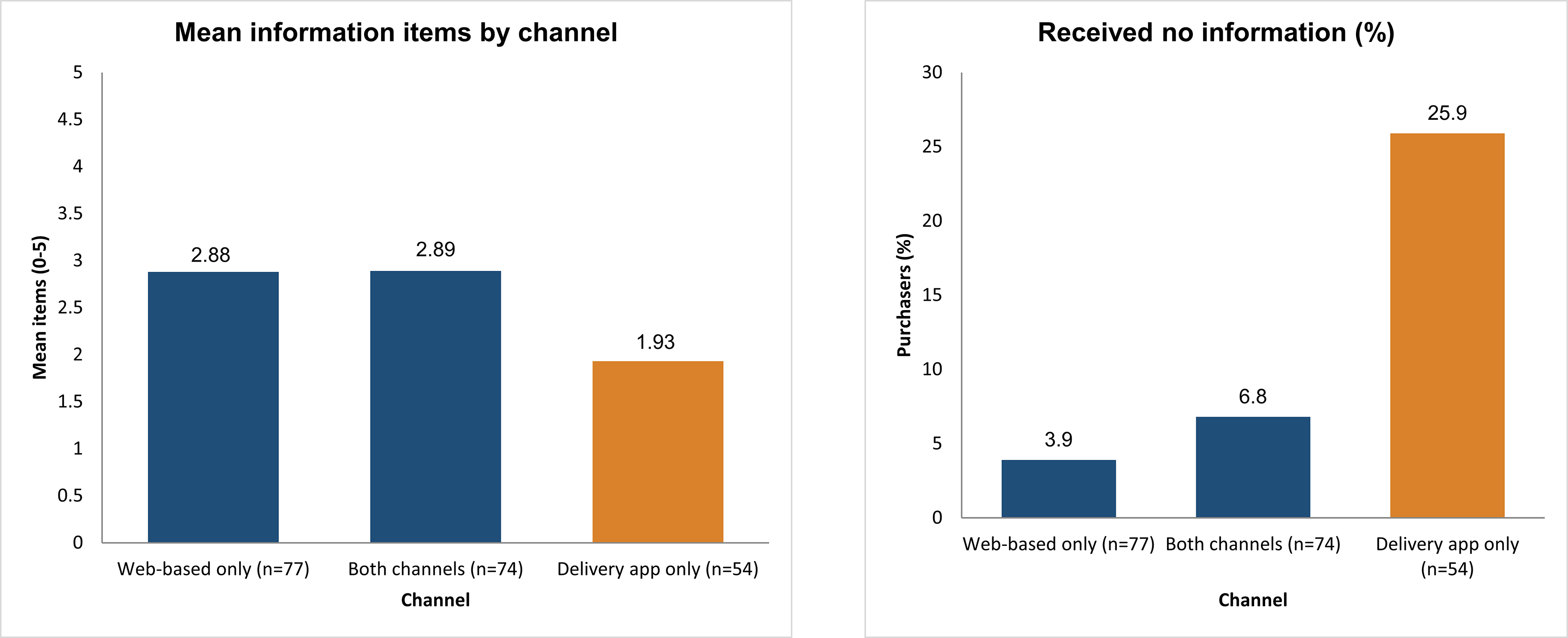
Delivery-application-only purchasers received fewer information items on average and were more likely to received none. The comparisons are descriptive and are not interpreted as channel effects.
The mean total knowledge score was 6.04 of 10 (SD 2.10, median 6). At the prespecified threshold of at least 8,105 participants (27.3%) had adequate knowledge. At a threshold of at least 7, 172 (44.7%) met the criterion. Participants performed better on regulatory categories than on practical product recognition (mean 4.15 versus 1.89 out of 5; mean difference 2.26, 95% CI 2.09–2.43; paired t = 25.83, p < 0.001; Cohen’s d = 1.32). At the item level, 94.0% correctly classified categories supplements and 71.4% correctly classified antibiotics. Recognition of specific restricted products was much poorer. Only 10.6% correctly classified the large-pack paracetamol product as not purchasable online; the coressponding figures were 32.2% for loperamide and 36.4% for chlorpheniramine. Item-level results are shown in Table 4 and Figure 2, and the difference between subscale is shown in Figure 3.
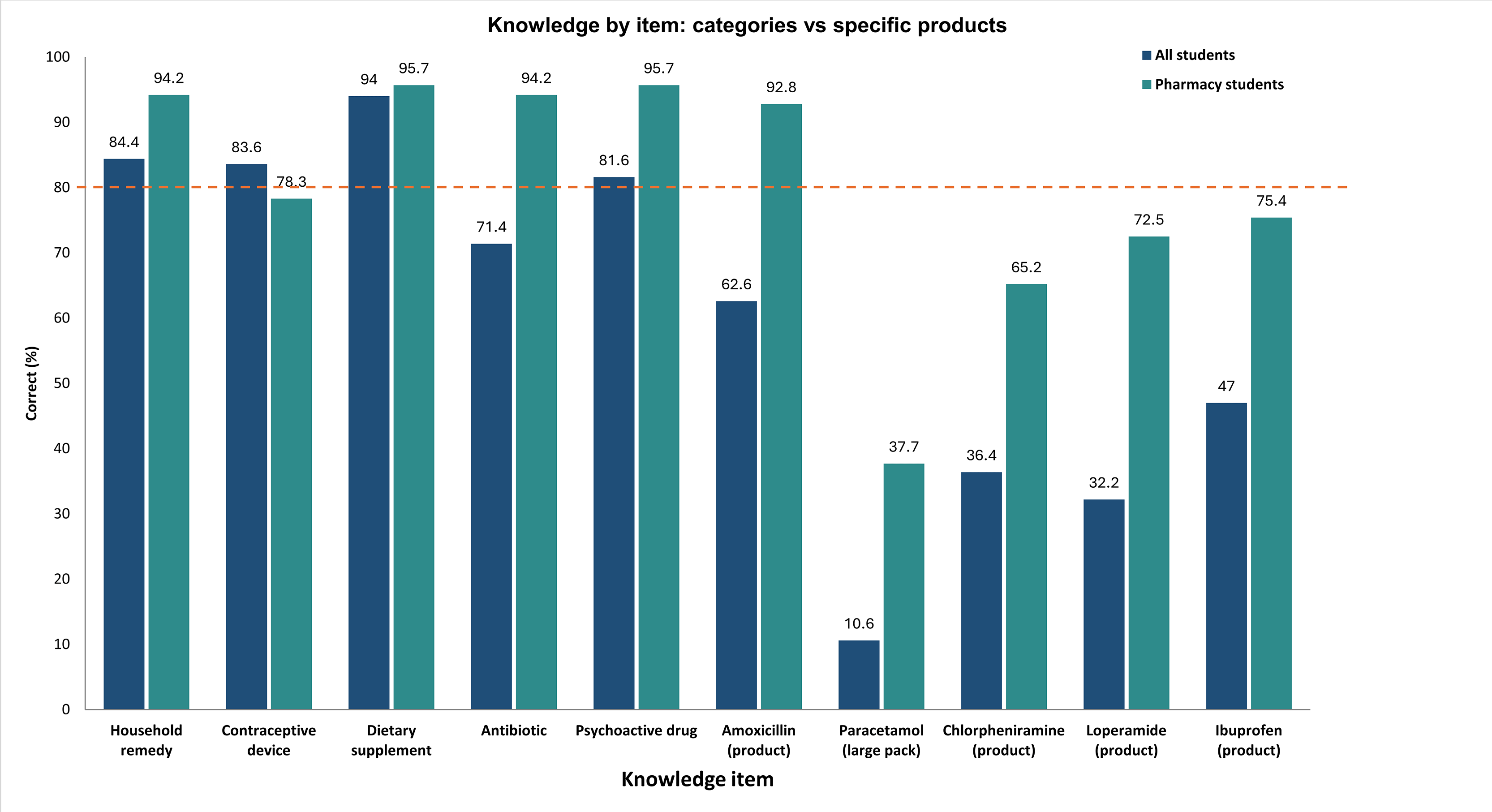
Named product categories were answered correctly more than specific product images. The sashed line marks the prespecified 80% adequacy threshold.
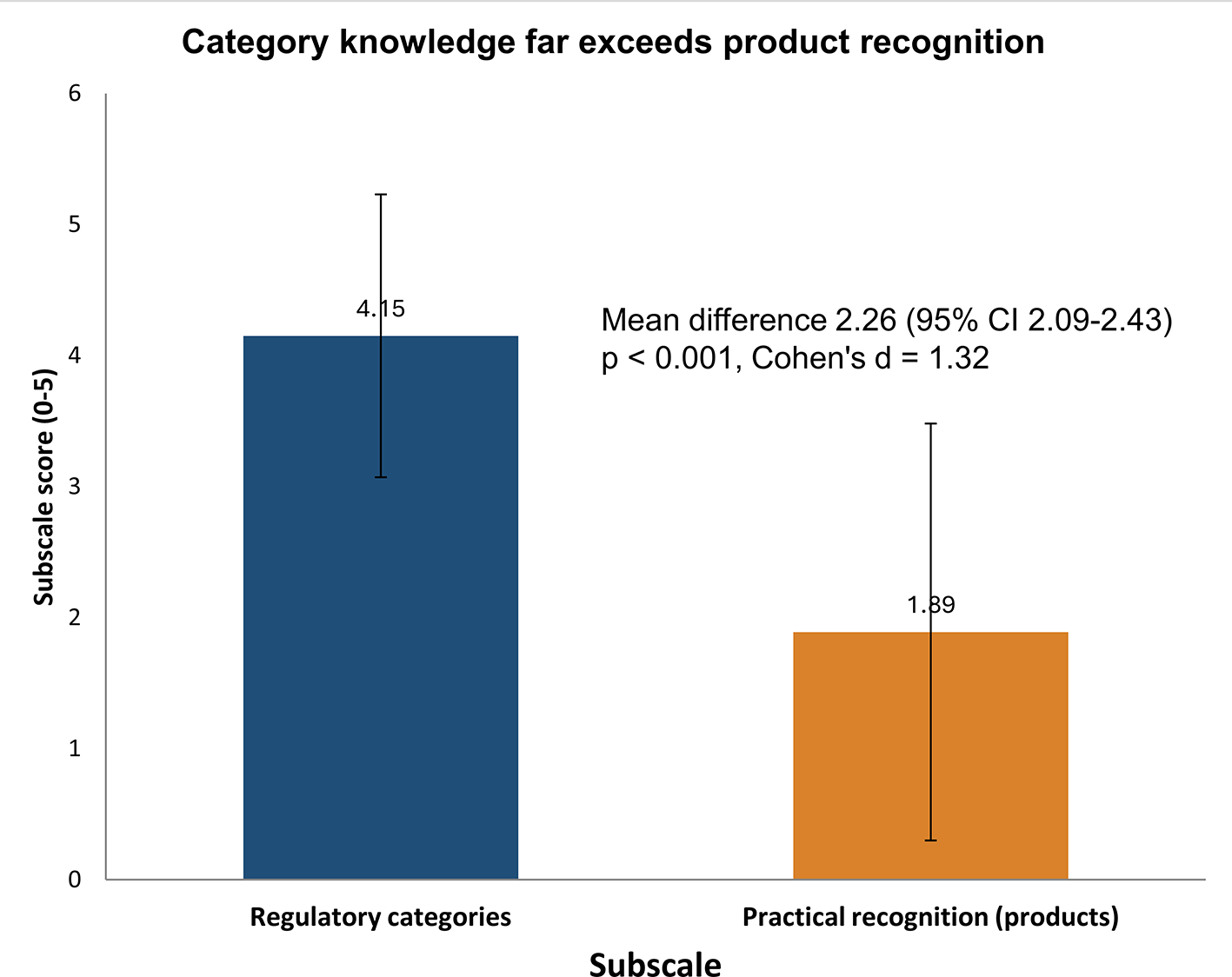
Regulatory-category knowledge exceeded practical product recognition (mean difference 2.26, 95% CI 2.09–2.43; Cohen’s d = 1.32).
Mean knowledge scores differed by field of study: 8.01 among pharmacy students, 6.57 among students in other health science disciplines, and 5.38 among non-health science students (Kruskal-Wallis p < 0.001). In the adjusted model, enrolment in pharmacy (adjusted odds ratio 9.11, 95% CI 4.67–17.80) or another health-science discipline (4.78, 95% CI 2.50–9.17) had the strongest associations with adequate knowledge. Older age was also associated with adequate knowledge (1.38 per year, 95% CI 1.18–1.61). Higher monthly income was associated with slightly lower odds of adequate knowledge (adjusted odds ratio 0.70 per income level, 95% CI 0.50–0.97), whereas sex and having purchased medicines online were not ( Table 5).
Three findings are central. First, participants valued convenience, price, privacy and perceived product quality when buying online. Store credibility and certification marks were commonly used as indicators of safety. Pharmacy accessibility was not measured, so these responses describe perceived advantages of online purchasing rather than evidence that access to a pharmacy was not a barrier. Second, safety information was often incomplete, particularly for storage and side effects. Third, knowledge was concentrated in broad regulatory categories. Many participants knew that antibiotics or psychoactive drugs should not be sold online, yet few recognised restricted products when shown familiar packages. This gap matters because online purchasing may reduce or obscure direct pharmacist involvement., Consumers may have to make product-level judgments that would ordinarily be supported by professional advice. Easy access, incomplete information, and limited applied knowledge can therefore combine to creat a medication-safety risk. Field of study and age were the main correlates of adequate knowledge; higher income was inversely associated with adequate knowledge. The inverse association with income was unexpected and was not a primary study objectives. It may reflect residual confounding by field or year of study and should be interpreted cautiously.
These findings align in direction, though not in the specific quantity measured, with the limited international evidence on consumer knowledge. In a survey of 1,070 Vietnamese people, only 19.9% understood that selling medicines online was illegal and about 84.3% found it difficult to distinguish legal from illegal online pharmacies, despite convenience being the most commonly endorsed benefit.10 That study assessed awareness of the legality of online selling and of legitimate pharmacies, whereas the present study assessed recognition of specific products. Both nevertheless point to limited consumer knowledge alongside high convenience-driven demand. The prominence of convenience, price, and quality as reasons for buying online in the present sample is consistent with the scoping review by Limbu and Huhmann, which synthesised the drivers of online medication purchasing across studies and identified convenience, price, and product-related factors among the leading determinants.12 The present study adds that, even young and educated consumers may struggle when a question moves from a broad category to a product encountered in an online listing.
The difference between category knowledge and product recognition has a practical explanation. Consumers see product images, prices and seller ratings, not legal categories. Whether a medicine may be sold outside a pharmacy depends on its strength, pack size, and registered category, and these details that may be missing or difficult to interprete online. Paraccetamol, for example, is a household remedy only in specific small presentations. A large-pack product falls outside that category and may not be sold online.4,6 Familiarity with the ingredient may explain why only one in ten participants correctly classified the large-pack paracetamol product. We did not assess product authenticity or quality. These issues are nevertheless relevant to the context of online purchasing. The US Food and Drug Administration warns that medicines from unsafe online sources may contain too much or too little active ingredient and advises consumers to check that the seller is licensed and that a pharmacist is available.14 Buying medicines online should therefore be treated as a medication-safety process rather than as ordinary retail.
The findings point to two complementary areas for action. First, because consumer knowledge was low and digital access to medicines is developing, public education should move beyond abstract legal categories toward the practical recognition of what may and may not be bought online, using real product examples. Second, as regulated telepharmacy and other digital access channels develop, easier access must be matched by systems that actively provide appropriate information and a route to professional advice, since access alone does not ensure safe use. The International Pharmaceutical Federation has similarly emphasised role of pharmacist in the safe digital supply of medicines.15 The FDA BeSafeRx principles of verifying licensure, requiring appropriate authorisation, and ensuring pharmacist availability are transferable to this setting.14 These data support consideration of such measures rather than establishing their effectiveness.
A strength of this study is its focus on young consumers who had previously purchase medicines or health products online. This is a practically important but under-examined group. The open dataset, public questionnaire, scoring key, and analysis syntax further support transparency and reuse. Several limitations should be considered. Participants were recruited by convenience sampling from one university, and all had previous online purchasing experience. The results therefore describe this group rather than the wider student population, and no response rate could be calculated. Behaviour and information receipt were self-reported and may be affected by recall or social-desirability bias. Two perception items had no recorded responses and were excluded. Channel comparisons were descriptive and confounded by product type and self-selection. The cross-sectional design identifies associations, not causes. The recognition items depended on the product presentation shown, including strength and pack size. The correct response applies to that product rather than to the drug in general. Some details may also have been difficult to read in the image, and participants may have answered from the drug name alone. The recognition score should therefore be interpreted as the ability to identify the legal status of the product as presented, not as general knowledge of the drug.
Among university students with prior online purchasing experience, knowledge of which medicines may lawfully be bought online was limited, especially when students were asked to judge specific familiar products rather than broad product categories, and the safety information received during online medicine purchases was often incomplete, particularly for storage and side-effect information. Students rated perceived quality, convenience, price, and privacy as important reasons for choosing online channels. As digital medicine-access channels develop, practical education using real product examples and digital systems that provide structured medicine information and access to professional advice are needed so that easier access is matched by safer use. Future work should test whether these educational and system-level approaches improve product recognition, information receipt, and safer online medicine purchasing.
Ethical approval was obtained from the Khon Kaen University Ethics Committee for Human Research (approval number HE672194; approved 12 November 2024). The first page of the online questionnaire described the study and confirmed that participation was voluntary and anonymous. Written informed consent was obtained electronically before proceeding, and only those who consented completed the survey. The public dataset was de-identified before sharing.
Statistical analyses were performed in IBM SPSS Statistics version 29. The SPSS syntax used to reproduce the reported analyses is available on Figshare: https://doi.org/10.6084/m9. figshare.32929142.16 No custom software was developed.
The authors used Claude (Anthropic 4.8) and ChatGPT (OpenAI 5.5), to assist with language editing, organization of the manuscript, and checking of analysis scripts. No generative artificial intelligence tool was used to generate or manipulate research data, and the figures were generated directly from the analyzed data. All AI-assisted outputs were reviewed, verified, and revised by the authors, who take full responsibility for the content.
Figshare: Knowledge, safety information, and purchasing behavior in online medicine buying among university students in Thailand. https://doi.org/10.6084/m9.figshare.32929142.16
This project contains the following extended data: the public Thai questionnaire and its English translation, with the five product-image knowledge items replaced by generic descriptions; the knowledge key giving the generic name, dosage form, legal category, correct answer, rationale, and source for each item; the SPSS syntax; the figure workbook with source data and charts; and the completed STROBE checklist. Data are available under the terms of the Creative Commons Zero (CC0 1.0 Public Domain Dedication).
The authors thank the students of Khon Kaen University who participated in the survey, and the Faculty of Pharmaceutical Sciences for institutional support.
This work was supported by the Fundamental Fund of Khon Kaen University / National Science, Research and Innovation Fund (NSRF), Thailand (grant number 203235, assigned to Panumart Phumart). The funder had no role in study design, data collection, analysis, interpretation, or manuscript preparation.
The funders had no role in study design, data collection and analysis, decision to publish, or preparation of the manuscript.
© 2026 Sakloetsakun D et al. This is an open access article distributed under the terms of the Creative Commons Attribution License, which permits unrestricted use, distribution, and reproduction in any medium, provided the original work is properly cited.
Current Reviewer Status: ?
Key to Reviewer Statuses VIEW HIDE
ApprovedThe paper is scientifically sound in its current form and only minor, if any, improvements are suggested
Approved with reservations A number of small changes, sometimes more significant revisions are required to address specific details and improve the papers academic merit.
Not approvedFundamental flaws in the paper seriously undermine the findings and conclusions
Version 1
VERSION 1
PUBLISHED 29 Jul 2026
Reviewer Report 08 Aug 2026
Dai Xuan Dinh, Hanoi University of Pharmacy, Hanoi City, Vietnam
Approved with Reservations
VIEWS 0
Is the work clearly and accurately presented and does it cite the current literature?
Partly
Is the study design appropriate and is the work technically sound?
Partly
Are sufficient details of methods and analysis provided to allow replication by others?
Partly
If applicable, is the statistical analysis and its interpretation appropriate?
Partly
Are all the source data underlying the results available to ensure full reproducibility?
Yes
Are the conclusions drawn adequately supported by the results?
Yes
Competing Interests: No competing interests were disclosed.
Reviewer Expertise: Pharmacy practice
Close