Просмотр новости
Найдите то, что Вас интересует
 Спутники
 РН
РН SpaceX
 Роскосмос
 NASA
NASA
СпутникиРНSpaceXРоскосмосNASAWe’re announcing new ways we’re bringing some of Google’s AI technology to journalists and news organizations.
A new feature in Pinpoint lets reporters query documents to quickly learn key points. Plus, new research funding and training will help reporters explore how they can use AI in their work.
Matt Cooke
Head of Google News Lab
Yuval Shukroon
Product Manager
Tight deadlines, quickly moving news, complex stories and shifting audience needs have required a lot more bandwidth for journalists. As the news industry has evolved, Google has been collaborating with local news organizations around the world to find how we can continue to support the core work of journalists: reporting.
Today we’re announcing new ways we’re bringing some of Google’s AI technology to journalists and news organizations. Through Pinpoint, a tool for journalists, we’re launching a new feature that lets reporters query documents to quickly learn key points. And through the Google News Initiative we’re announcing new training and research funding to help journalists develop new skills and explore how they can use AI in their work.
Pinpoint uses Google’s AI and Search technologies to help reporters quickly search through hundreds of thousands of text, audio, image and video files. This helps them find patterns in data, identify new potential stories, or easily find a quote they need from a video or audio file.
Sifting through large amounts of documents is a challenge for journalists — whether they work at a large news organization or a smaller, local one. Now, two new features in Pinpoint will support reporters’ ability to query and research a corpus of documents.
First, we’re announcing new generative AI features that help reporters evaluate documents or a collection of documents by asking questions to better understand key points. For example, if a reporter was looking at a collection of historical documents, they could ask Pinpoint questions to help them better understand what’s in them, such as their key points and main themes. Users can also click on each response to see the corresponding text in the original document.
An example of how a new early access generative AI feature will work in Pinpoint.
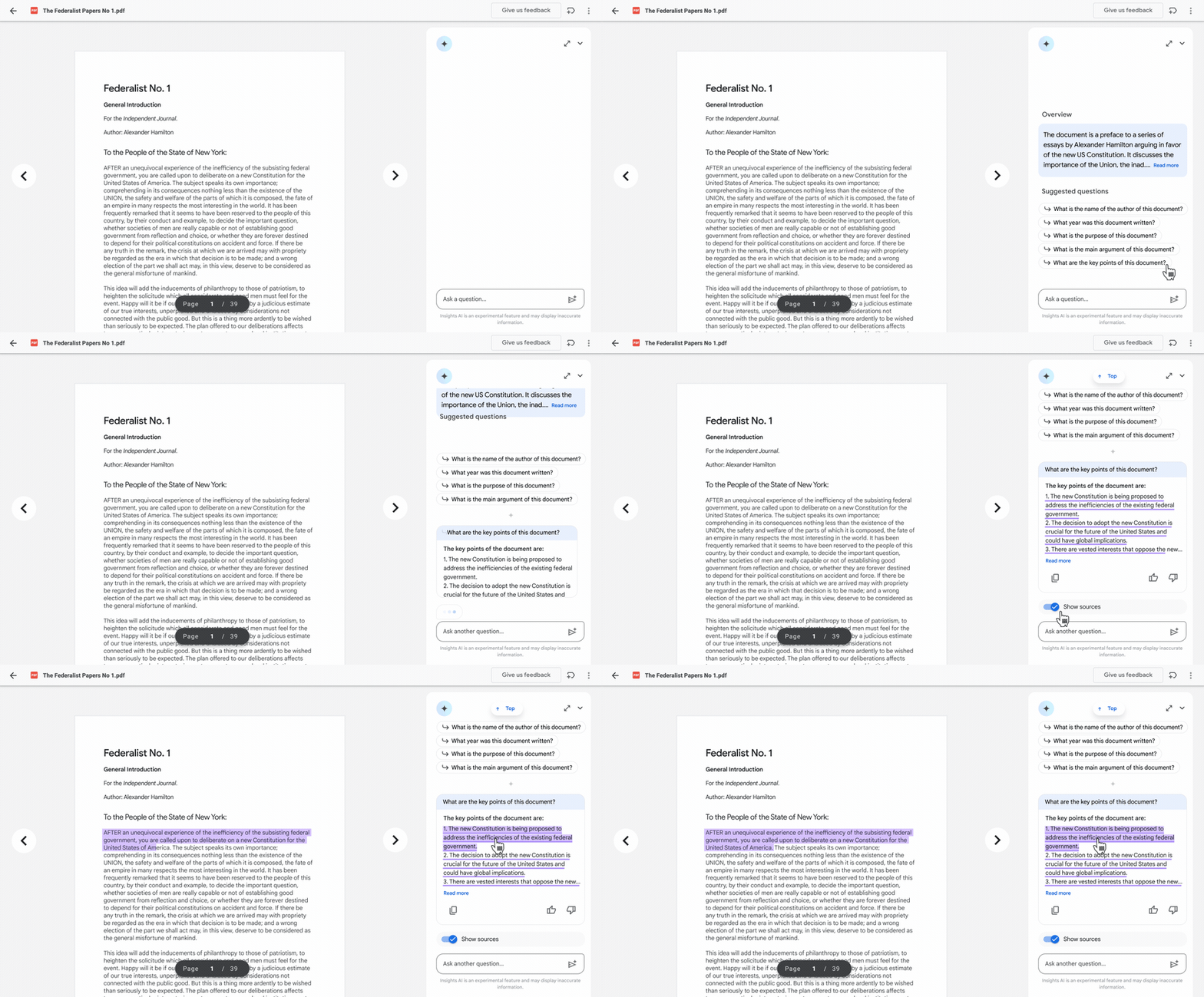
Starting today, reporters can request early access to analyze single documents. This feature is available in English in the US, Argentina, Brazil, Chile, India and Mexico. We hope to expand this feature to include collections of documents, additional regions and languages in the coming months.
The second feature we recently launched in Pinpoint helps reporters to more easily explore data that is found across multiple documents. Where documents have similarly structured data tables, Pinpoint can convert the data into a single spreadsheet. Now reporters don’t have to spend valuable time manually typing in data from different sources into a single sheet and instead can get to the important work of uncovering stories behind the data.
This feature is now available globally.
For years we’ve collaborated with reporters around the world on testing the features of Pinpoint to help them save time and discover new stories. This collaboration has really helped enhance Pinpoint in a way that makes it even more useful to the day-to-day work of journalists.
An example of what journalists would see if they use the feature in Pinpoint to help them organize similar data tables into a single spreadsheet.
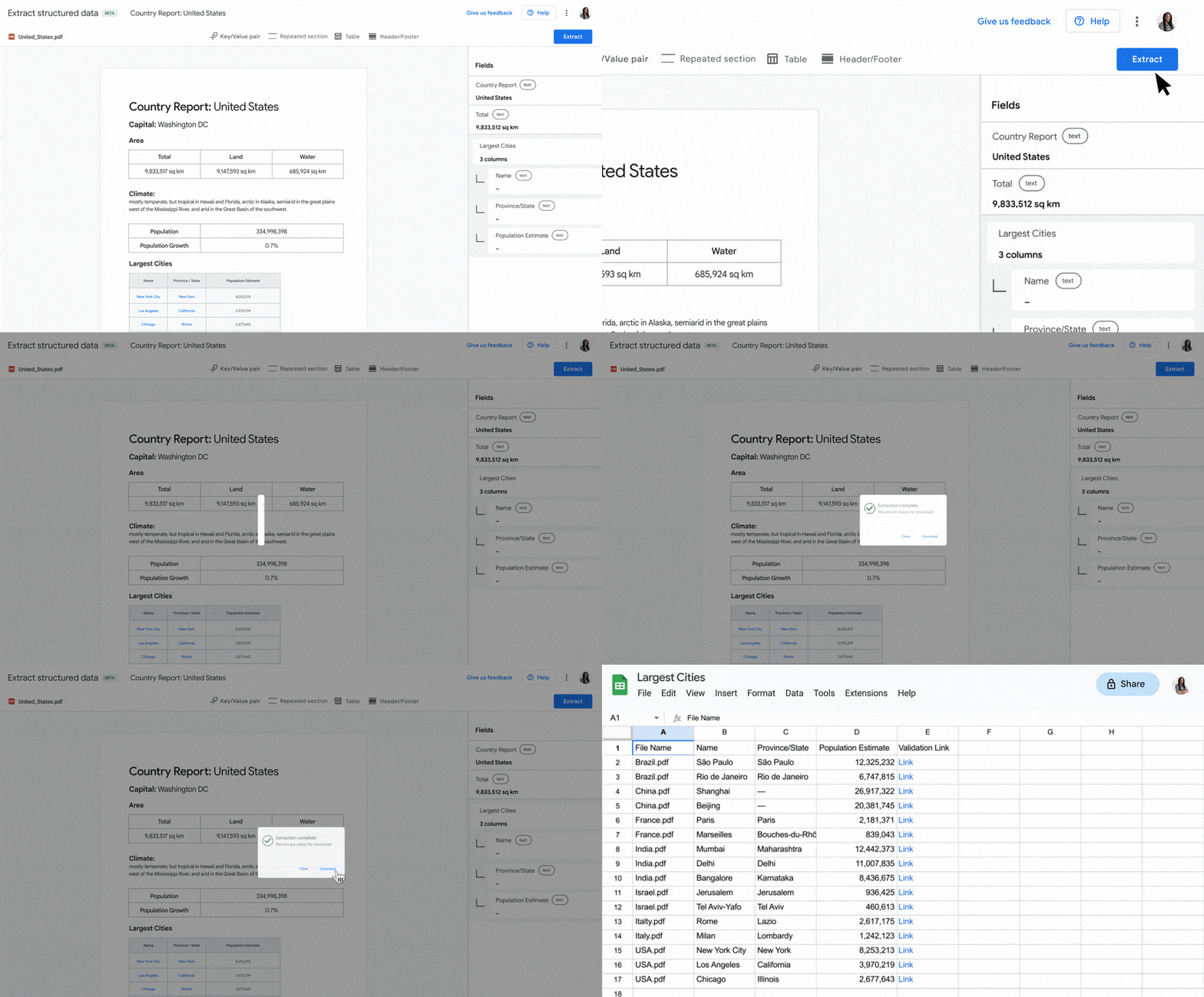
We’re continuing to work with academics and subject matter experts to help journalists and publishers explore ways in which AI technologies can assist their work.
Today we’re sharing two new lessons, one for journalists and one for news business teams, to help people working at small- and medium-sized news publishers strengthen their AI literacy, with a focus on new and existing tools provided by Google. For example, these lessons can help journalists understand how they can speed up some of the processes involved in investigative journalism with Pinpoint or even how to find fact checks on topics easily with Fact Check Explorer.
We’re also announcing funding for five new research projects to help examine the ways generative AI technology can fight misinformation, strengthen quality information and tackle harmful content. This funding will support the independent research underway at the University of Cambridge, the University of Westminster working with Facts Matter, Full Fact, Meedan and WITNESS.
The efforts announced today are in addition to our partnership with “Journalism AI” at the London School of Economics, who with support from the Google News Initiative since 2018, have developed training and research to support journalists around the world.
There’s a lot more to come this year and we’re looking forward to continuing to develop the tools and resources that support journalists’ work around the world.
| # | Наименование новости | Тональность | Информативность | Дата публикации |
|---|---|---|---|---|
| 1 | New ways Google is helping local news | 0 | 8.06 | 08-06-2023 |
| 2 | New ways to find your favorite sources and original content in AI Search | 0 | 11.76 | 27-05-2026 |
| 3 | Supporting the web with new features and partnerships | 0 | 8.3 | 10-12-2025 |
| 4 | The latest AI news we announced in January | 0 | 13.47 | 04-02-2026 |
| 5 | New features coming to Fact Check Explorer | 0 | 12.14 | 29-06-2023 |
| 6 | New ways to create and get things done in Google Workspace | 5 | 7 | 19-05-2026 |
| 7 | Read our new report on AI-powered threats and our latest defenses. | 0 | 15.09 | 11-05-2026 |
| 8 | Google попыталась подсластить пилюлю малого охвата из-за ИИ для СМИ | 0 | 12.03 | 21-08-2026 |
| 9 | News Showcase is launching in Finland | 0 | 7.97 | 29-02-2024 |
| 10 | The latest AI news we announced in March 2026 | 0 | 5 | 01-04-2026 |