Просмотр новости
Найдите то, что Вас интересует
 Спутники
 РН
РН SpaceX
 Роскосмос
 NASA
NASA
СпутникиРНSpaceXРоскосмосNASAChoosing the right school for your child is one of the biggest decisions you’ll face as an international parent. And in the Netherlands, you’ve got options. The Dutch education system […]
Choosing the right school for your child is one of the biggest decisions you’ll face as an international parent. And in the Netherlands, you’ve got options.
The Dutch education system includes openbare (public) schools and bijzondere (special) schools, which are privately run but publicly funded.
On top of that, there’s a growing network of international schools for families who haven’t quite made the Netherlands their forever home.
So which is right for your family? Here are the six main differences to help you decide.
1. There are different eligibility requirementsNot every child can simply walk through the doors of a Dutch International School (DIS). There are specific eligibility criteria set by the Dutch Ministry of Education.
In general, DIS schools are intended for:
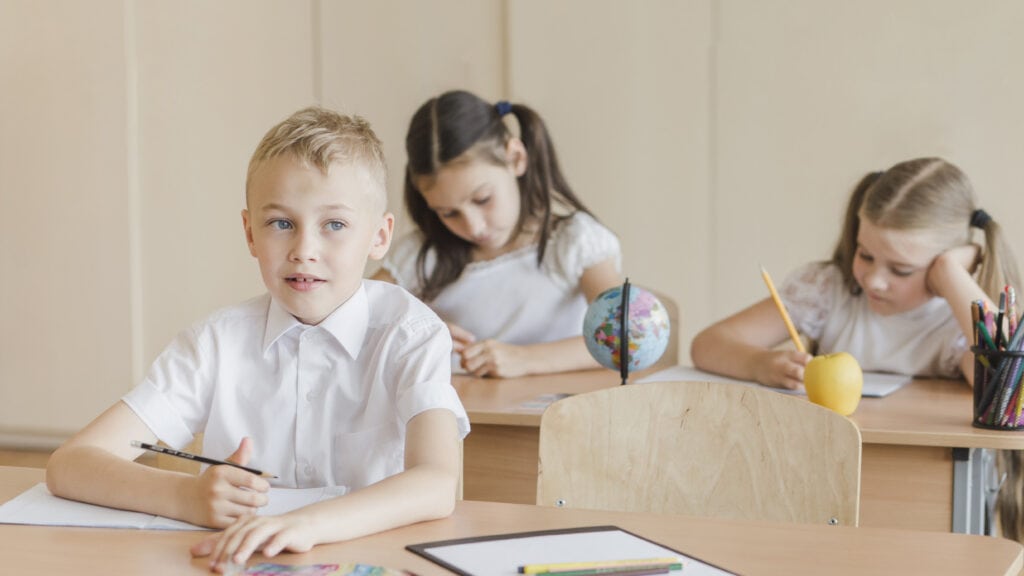 If you’re here for the long haul, your child may not be eligible for a government-funded international school. Image: Freepik
This means that if you’re a permanent resident or have a Dutch child who’s grown up here, you may not qualify for a government-funded international school.
However, privately funded international schools, like those offering the British curriculum, typically have broader admissions policies with no government eligibility requirement.
Each school has its own application process, so it’s worth researching individually to find out what applies to your family’s situation.
Considering an International school for your child? At the British School of Amsterdam, students can receive an education from the age of 3, all the way to 18. Offering a world-class British curriculum, BSA graduates go on to study at top institutions across the world. Learn more.
2. The language of instructionThis is perhaps the most obvious difference, and the one that will have the biggest impact on your child’s daily life.
Dutch state schools teach entirely in Dutch, which can mean a steep adjustment period for children who don’t speak the language yet.
Kids are adaptable, but there may be a tricky few months while they find their footing socially and academically.
International schools teach primarily in English. Crucially, though, students still learn Dutch, so they’re not completely cut off from local culture.
Dutch state schools teach English, but the year it starts and how much time is dedicated to it vary per school.
 One thing to consider is whether you want your child to dive straight into Dutch. Image: Depositphotos
When it comes to language immersion, there are pros and cons on both sides:
Neither is the “wrong” choice. It really depends on your child, your timeline, and how deeply you want them embedded in Dutch life.
3. The curriculum and qualificationsDutch state schools follow the Dutch national curriculum. This is important to consider because it includes a streaming process at secondary level.
Around age 12, students in Dutch schools sit for assessments. They are then placed into one of three tracks based on ability and aptitude:
This streaming happens relatively early, and the track a child is placed into shapes their entire secondary education path.
 Depending on their aptitude, Dutch secondary school students are placed in one of three tracks. Image: Freepik
VWO is roughly equivalent to A-Levels or the International Baccalaureate, but getting there will look quite different for your child if they attend a Dutch state school.
READ MORE | The Dutch education system: the simple guide to Dutch schools
The Dutch streaming process can be a significant stressor for international parents. Meanwhile, international school systems, such as the British curriculum, keep the doors open for longer.
International schools offer a range of qualifications, depending on the school, including:
Another thing to consider is whether your family is likely to relocate again. Curriculum continuity matters a great deal, and internationally recognised qualifications such as the GCSE/A-Levels or IB are a universal currency for top-tier universities worldwide.
In other words, they’ll transfer much more smoothly than a Dutch diploma when applying to universities abroad.
4. Costs and what you’re paying forDutch state schools are free, funded by the government. There is a vrijwillige ouderbijdrage (voluntary parental contribution) for extras like school trips or materials, but the core education costs you nothing.
International schools are a different story. Fees range from around €4,500 per year for subsidised Dutch International Schools, up to €15,000 to €23,000+ annually for fully private international schools.
 An international school often offers smaller class sizes compared to a Dutch state school. Image: Depostiphotos
What justifies the price tag? Private international schools tend to offer:
Private international schools also have complete independence in curriculum and staffing.
It’s worth noting that while DIS schools must follow certain Dutch government mandates, privately funded international schools can remain 100% committed to, for example, British standards and the English National Curriculum.
Make sure to check your employment contract if you’re in the Netherlands on an expat package.
Many employers include international school fees as part of their relocation benefits, so it’s worth asking before you assume it’s all coming out of your own pocket.
5. Extracurriculars and school tripsInternational schools tend to offer a broader range of after-school activities, thanks to their resources and diverse student body.
Think debate clubs, Model UN, international exchange trips, and a wide variety of sports. The school calendar often includes longer summer and Christmas holidays, too — though school days themselves can run a little longer.
 International schools offer more after-school activities. Image: Freepik
At Dutch state schools, the majority of clubs and activities happen outside of school entirely, through music schools, community organisations, and outsourcing sports to local clubs rather than on-site after-school programmes.
At the BSA, sport and arts are integrated into the school day, fostering a sense of belonging and “school spirit” that is central to the British educational experience.
Offering over 100 extracurricular activities, as well as an active Parents’ Organisation for parents looking to find their own tribe, your child’s development and education extend beyond school hours. Learn more.
One thing international schools excel at is creating a diverse, globally minded community.
Students and teachers come from all over the world, which can be particularly valuable for children who’ve moved around a lot and are used to being “the new kid.”
There’s something to be said for walking into a classroom where half your peers have also arrived from somewhere else entirely.
READ MORE | 7 ways raising a child in the Netherlands is different
And this doesn’t just apply to the students alone. Private international schools are often the “social glue” for expat families. While state schools serve a local neighbourhood, international schools serve a global community.
That being said, Dutch state schools in larger cities like Amsterdam can also be impressively diverse, with some schools home to students from 20 or more nationalities.
But the dominant language and culture is still Dutch, which means social integration takes longer for children who need to adjust to it.
For kids who already speak English, an international school often makes day-one social life considerably easier.
Are you navigating the Dutch school system as an expat parent? Drop your experiences in the comments! We’d love to hear how you made the decision.

Before becoming the Senior Editor of DutchReview, Sarah was a fresh-faced international looking to learn more about the Netherlands. Since moving here in 2017, Sarah has added a BA in English and Philosophy (Hons.), an MA in Literature (Hons.), and over five years of writing experience at DutchReview to her skillset. When Sarah isn't acting as a safety threat to herself and others (cycling), you can find her trying to sound witty while writing about some of the stickier topics such as mortgages and Dutch law.
| # | Наименование новости | Тональность | Информативность | Дата публикации |
|---|---|---|---|---|
| 1 | This app helps expats survive the Dutch inburgering exam (without losing their minds) | 0 | 21.33 | 05-08-2026 |
| 2 | International student numbers fall for first time in 20 years | 0 | 21.68 | 11-06-2026 |
| 3 | Class ranking skews school advice for Dutch 12-year-olds: Study | 0 | 20.01 | 21-07-2026 |
| 4 | Music colleges draw internationals as Dutch student share falls | 0 | 23.35 | 20-07-2026 |
| 5 | Here’s the best way to get your meat in the Netherlands (and no, it’s not Albert Heijn) | 0 | 18.23 | 17-06-2026 |
| 6 | We had a look inside Amsterdam’s most social English language school: here’s what we loved about it | 0 | 18.27 | 09-06-2026 |
| 7 | How to speak Dutch in seven words or fewer | 0 | 25.42 | 04-07-2026 |
| 8 | 11 things to do in the Netherlands this April | 0 | 24.79 | 07-04-2026 |
| 9 | 7 things you need to keep for your accounting as a ZZPer in the Netherlands | 0 | 20.51 | 26-06-2026 |
| 10 | Open a Dutch bank account without a BSN at these banks | 0 | 22.24 | 05-08-2026 |