Просмотр новости
Найдите то, что Вас интересует
 Спутники
 РН
РН SpaceX
 Роскосмос
 NASA
NASA
СпутникиРНSpaceXРоскосмосNASATen ETF investing mistakes that erode your returns over years without you noticing, from ignoring expense ratios to panic-selling during corrections. What to fix before it compounds.
The post 10 ETF Investing Mistakes That Quietly Destroy Long-Term Returns first appeared on VentureLab.
Ten ETF investing mistakes that silently eat your returns over decades, all fixable once you see the numbers.
You bought a broad-market ETF, set up automatic contributions, and told yourself you’d hold for 30 years. Good plan. Except the ETF you picked charges 0.75% in annual fees instead of 0.03%, which will cost you roughly $120,000 in lost compounding on a $500/month investment over that period. You didn’t notice because the fee isn’t a line item on a bill. It’s deducted from the fund’s returns daily, invisible unless you know to look.
ETFs are the best vehicle most people have for building long-term wealth. But “buy an ETF” is incomplete advice. Which ETF, at what cost, in what allocation, and with what behavior around it matters enormously. A Seeking Alpha analysis found that the most damaging ETF mistakes aren’t dramatic blow-ups. They’re small, quiet errors that compound over years. Here are the ten that cost the most.
The 10 ETF investing mistakes that destroy long-term returns are:
| Mistake | Who Makes It | Cost Over 30 Years | Fix Difficulty |
|---|---|---|---|
| Ignoring expense ratios | Everyone | $50K-$150K+ | One-time swap |
| Chasing performance | Active traders | 2-4% annual drag | Behavioral |
| Overlapping ETFs | Collectors | Hidden concentration risk | Portfolio audit |
| Panic-selling | Anxious investors | Varies (often 20-40%) | Behavioral |
| No target allocation | Beginners | Unquantified risk drift | One afternoon |
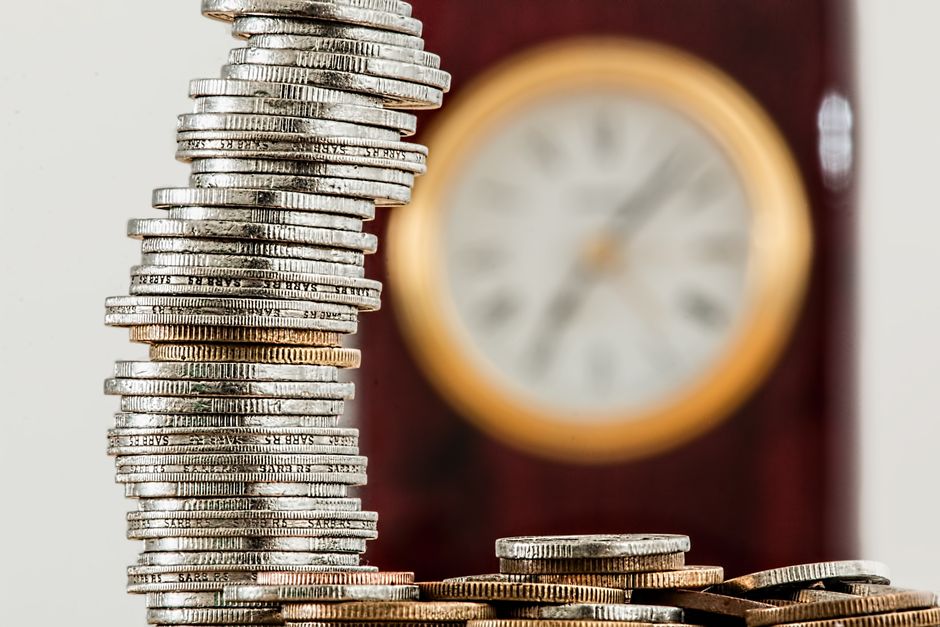
Best for: Every ETF investor, because this is the one mistake with the most predictable, most preventable cost.
The Vanguard S&P 500 ETF (VOO) charges 0.03% annually. A competing S&P 500 fund from a different provider might charge 0.50%. Both funds track the same index. Both hold the same stocks. The only difference is that the expensive one takes $50 per year for every $10,000 invested, while Vanguard takes $3. Over 30 years, investing $500/month at 8% average returns, that 0.47% gap costs you roughly $120,000 in lost compounding.
Vanguard announced further expense ratio cuts in 2025 specifically because small fee differences compound into large dollar amounts over decades. The industry average for equity ETFs has dropped to about 0.16%, but many investors still hold funds charging 0.50-1.00% because they never checked.
What to do: Check the expense ratio of every ETF you own. If you’re paying above 0.20% for a broad-market index fund, find the equivalent from Vanguard, Schwab, or Fidelity. The switch takes 15 minutes and saves thousands.
2. Chasing Last Year’s Top-Performing ETF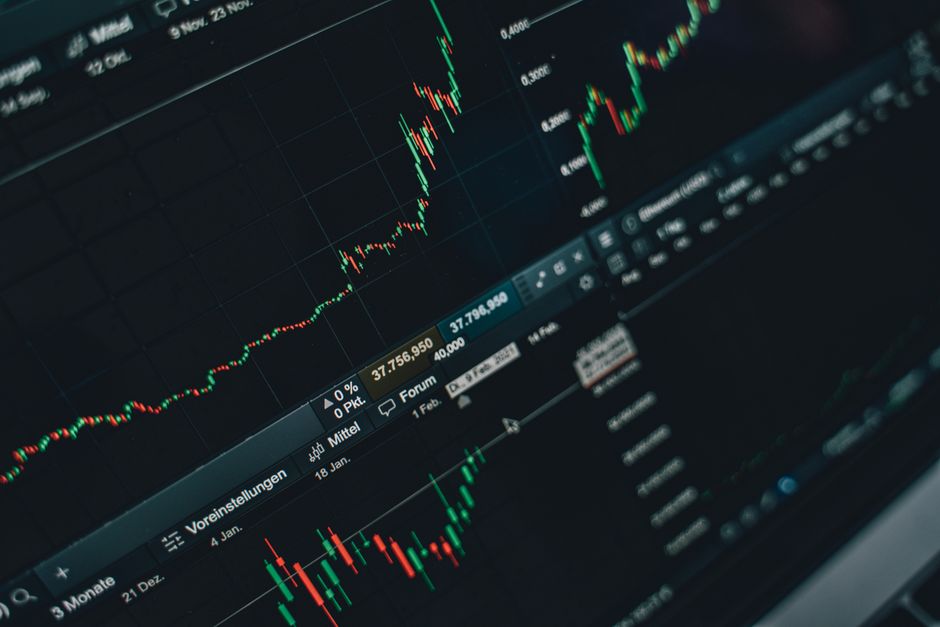
Best for: Investors who buy whatever topped the “best ETFs of 2025” lists.
An ETF returned 45% last year. You buy in. It returns 3% this year and -12% the next. You sell and move to whatever returned 45% this year. Repeat. This pattern has a name: performance chasing. It’s the most reliable way to buy high and sell low.
Morningstar’s annual “Mind the Gap” study consistently finds that investors earn 1-2% less per year than the funds they own, largely because of poorly timed buying and selling. That gap is almost entirely behavioral. The fund performs fine. The investor performs badly because they enter after the gains and exit after the losses. One of the most upvoted threads on r/ETFs (156 upvotes, 145 comments) asked “What mistakes did you make when buying ETFs?” and performance chasing was the most common answer.
What to do: Pick ETFs based on what they hold, what they charge, and how they fit your allocation. Ignore 1-year returns entirely. If an ETF’s 10-year average return and expense ratio look right, buy it regardless of what it did last quarter.
3. Holding Overlapping ETFs Without Realizing ItBest for: Investors who own five or six ETFs and assume they’re diversified.
You own VTI (total US stock market), VOO (S&P 500), and QQQ (Nasdaq-100). Feels diversified. It isn’t. VTI already contains every stock in VOO. QQQ’s top holdings (Apple, Microsoft, Amazon, Nvidia) are also the top holdings of both VTI and VOO. You’re holding three funds that overlap 70-85% and you’ve tripled your concentration in mega-cap tech without meaning to.
Hold on, I need to explain something first. ETF overlap isn’t always bad. Owning VTI and VXUS (total international) gives you near-zero overlap and genuine global diversification. The problem is owning multiple US large-cap funds that track nearly identical holdings. Every additional overlapping ETF increases your exposure to the same companies without adding new diversification. Tools like ETF Research Center’s overlap tool let you check exact overlap percentages between any two ETFs for free.
What to do: Run every pair of ETFs you own through an overlap calculator. If two funds share more than 50% of their holdings, one of them is probably unnecessary. Keep the one with the lower expense ratio.
4. Panic-Selling During Market Corrections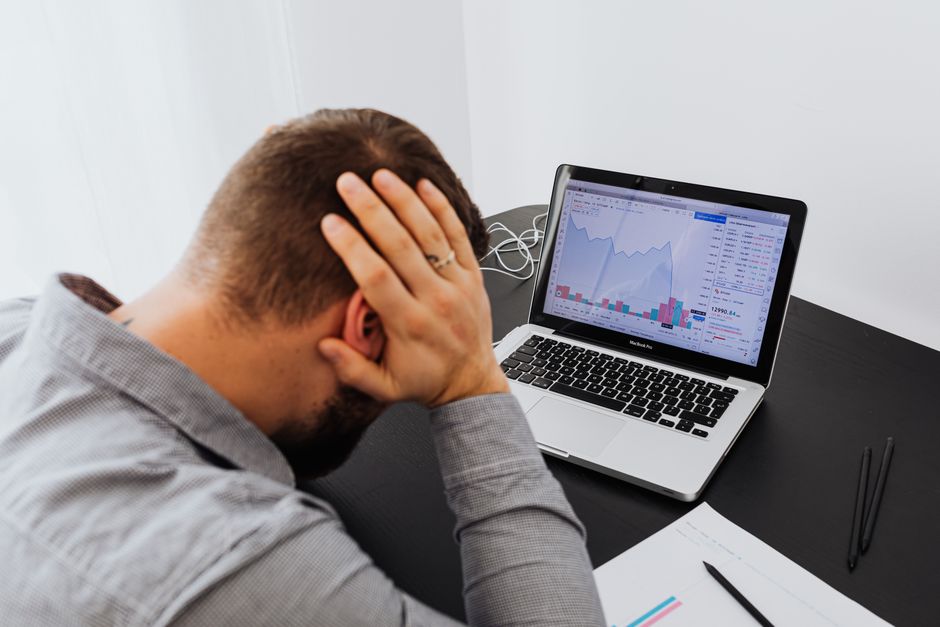
Best for: Every investor who has ever checked their portfolio during a 10%+ drop and felt the urge to sell everything.
The S&P 500 has experienced a 10%+ correction roughly once per year, on average, since 1950. A 20%+ bear market happens roughly every 3-4 years. These are not anomalies. They are the normal cost of being in the market. Selling during a correction locks in your losses and forces you to decide when to re-enter, which is a second timing decision most people get wrong.
The math is brutal. If you invested $10,000 in the S&P 500 in January 2000 (right before the dot-com crash) and held through every crash, correction, and pandemic, you’d have roughly $65,000 by early 2026. If you panic-sold during the 2008 crash and re-entered six months later, you’d have roughly $45,000. Same starting point. Same fund. Twenty thousand dollars of difference, caused by one sell-and-rebuy decision.
What to do: Delete your brokerage app from your phone during corrections. Set automatic contributions to continue regardless of market conditions. Write yourself a note now, while you’re calm, that says “Do not sell during a crash.” Read it when the crash comes. (If portfolio risk is already on your mind, our angel investing mistakes guide covers similar behavioral traps in a different context.)
5. Trying to Time ETF PurchasesBest for: Investors sitting on cash waiting for “the right moment” to buy.
You have $20,000 to invest. The market hit an all-time high last week, so you wait for a pullback. The market goes up another 5%. Now you’re waiting for a bigger pullback. Three months pass. The market is up 8% and you’ve missed all of it. You’re now trying to time a market that has gone up in roughly 70% of all calendar years since 1928.
Vanguard research found that lump-sum investing (putting money in immediately) beats dollar-cost averaging (spreading it over months) about two-thirds of the time, precisely because markets go up more often than they go down. The remaining one-third of the time, DCA wins. But waiting indefinitely for “a dip” is neither strategy. It’s avoidance with a financial cost. Time in the market beats timing the market because nobody can consistently call the bottom.
What to do: If the money is for a 10+ year goal, invest it now. If the volatility of a lump sum makes you uncomfortable, dollar-cost average over 3-6 months. Both are better than sitting in cash indefinitely.
6. Ignoring Tax EfficiencyBest for: Investors who own ETFs in both taxable and tax-advantaged accounts without thinking about placement.
A bond ETF that pays monthly interest belongs in your IRA, not your taxable brokerage account. An international stock ETF that generates foreign tax credits belongs in your taxable account, not your IRA (because you can only claim the foreign tax credit in a taxable account). Asset location, meaning which ETFs go in which account type, can add 0.2-0.5% per year to your after-tax returns.

The general rule: put tax-inefficient assets (bonds, REITs, actively managed funds with high turnover) in tax-advantaged accounts (IRA, 401k). Put tax-efficient assets (total market index ETFs, international ETFs) in taxable accounts. The ETFs themselves don’t change. Where you hold them changes how much of the return you keep after taxes.
What to do: List every ETF you own and its account location. Move bond ETFs and high-dividend ETFs to tax-advantaged accounts. Keep broad index ETFs and international funds in taxable accounts. Consult a tax advisor if your situation is complex.
7. Over-Diversifying Into Too Many Niche ETFs
Best for: Collectors who own 15+ ETFs across every theme and sector imaginable.
You own a cannabis ETF, a space exploration ETF, an AI ETF, a clean energy ETF, a robotics ETF, a cybersecurity ETF, and a genomics ETF. Each one holds 30-50 stocks. Together, they cost more in expense ratios than a single total-market fund, generate more tax events, and many of their top holdings overlap. Your “diversified” portfolio of seven thematic ETFs might actually be less diversified than VTI alone, which holds 4,000+ stocks across every sector.
Thematic ETFs charge 0.40-0.75% on average, compared to 0.03% for a total-market fund. They also have survivorship issues: many thematic ETFs that launch during a hype cycle close within 3-5 years when the theme fades and assets flow out. You end up with a forced liquidation and a capital gains event you didn’t plan for.
What to do: A three-fund portfolio (US total market, international total market, bonds) covers 10,000+ stocks and the global bond market. Add thematic ETFs only as satellite positions (under 10% of your portfolio), and only if you accept that they carry higher fees and higher volatility.
8. Not Rebalancing Your PortfolioBest for: Set-it-and-forget-it investors who haven’t checked their allocation in over a year.
You set a 70/30 stock/bond allocation three years ago. Stocks went up. Bonds didn’t. Your portfolio is now 85/15 without you doing anything. You’re taking significantly more risk than you intended, and you’ll feel it when the next correction hits your now-stock-heavy portfolio.
Rebalancing means selling what’s grown beyond your target and buying what’s fallen below it. It sounds counterintuitive because you’re selling winners and buying losers. But it’s a disciplined way to buy low and sell high automatically. A portfolio that rebalances annually has historically delivered similar returns to an unrebalanced portfolio with lower volatility and smaller drawdowns during crashes.
What to do: Set a calendar reminder to rebalance once per year. Or use a 5% band rule: rebalance whenever any asset class drifts more than 5 percentage points from its target. In tax-advantaged accounts, rebalance by redirecting new contributions instead of selling.
9. Confusing ETF Price with ETF ValueBest for: Beginners who think a $30 ETF is “cheaper” or “better value” than a $300 ETF.
VTI costs about $285 per share. SPTM costs about $65 per share. Both are total US stock market ETFs. Both hold essentially the same basket of stocks. Buying one share of VTI and one share of SPTM gives you equivalent exposure per dollar invested. The share price tells you nothing about the fund’s value, its return potential, or whether it’s expensive. It’s just the unit size, like buying a 12-oz can versus a 2-liter bottle of the same product.
This confusion leads beginners to avoid excellent low-cost ETFs because the share price “seems high” and buy inferior funds because they “seem affordable.” What matters: expense ratio, what the fund holds, tracking error (how closely it follows its index), and total return. Share price is irrelevant to all four. Most brokerages now offer fractional shares anyway, so you can buy $50 of a $300 ETF without needing a full share. (For broader investing fundamentals, our budgeting apps guide covers tools to track what you’re actually investing each month.)
What to do: When comparing ETFs, look at expense ratio, holdings, and tracking error. Ignore the share price. If you want to invest less than one full share, use fractional shares through Fidelity, Schwab, or any major brokerage.
10. Investing Without a Target Allocation
Best for: Everyone who bought ETFs without deciding what percentage goes where.
You own seven ETFs. You bought them at different times based on articles you read, recommendations from friends, and whatever your brokerage app featured on the homepage. You have no idea what your overall allocation to US stocks, international stocks, or bonds actually is. When someone asks “what’s your allocation?” you say “mostly stocks, I think.”
Without a target, you can’t rebalance. You can’t measure risk. You can’t know if you’re overexposed to one country, one sector, or one asset class. A target allocation doesn’t need to be complicated. “80% global stocks, 20% bonds” is a target. “60% US stocks, 25% international stocks, 15% bonds” is a target. The specific numbers matter less than having numbers at all, because without them, your portfolio is a collection of random buys rather than a strategy.
What to do: Write down your target allocation today. Three to four asset classes is enough for most people: US stocks (VTI or VOO), international stocks (VXUS), bonds (BND), and optionally a small allocation to alternatives. Set percentages that match your risk tolerance and time horizon. Then build toward those percentages with every future contribution.
How We Chose TheseWe reviewed academic research on investor behavior gaps (Morningstar’s annual “Mind the Gap” study, Vanguard’s lump-sum vs. DCA analysis), cross-referenced with high-engagement discussion threads on r/ETFs and r/investing, and verified fee impact calculations against current Vanguard, Schwab, and Fidelity expense ratios. Mistakes were ranked by long-term dollar impact (how much they cost over 20-30 years), frequency (how commonly investors make them), and fixability (how quickly the mistake can be corrected).
This article is for general information only and is not financial or legal advice. Speak with a qualified financial advisor or attorney before making investment, fundraising, or business-formation decisions.
The Bottom LineTwo mistakes cause the most damage over a lifetime: ignoring expense ratios (#1) and panic-selling during corrections (#4). Fix those two and you’ll outperform most investors without doing anything else clever. If you want to go further, check your ETFs for overlap (#3), set a target allocation (#10), and rebalance once a year (#8). The entire list can be fixed in a single afternoon. The cost of not fixing it compounds every year you wait.
Frequently Asked Questions What is the biggest ETF investing mistake?Ignoring expense ratios. A 0.50% annual fee versus a 0.03% fee on the same S&P 500 index costs roughly $120,000 in lost compounding over 30 years on a $500/month investment. This mistake is the most expensive because it compounds silently every year, and the fix takes 15 minutes: swap to the lower-cost fund.
How many ETFs should I own in my portfolio?Three to five is enough for most investors. A US total market ETF (VTI), an international stock ETF (VXUS), and a bond ETF (BND) covers the global stock and bond market at rock-bottom fees. Adding more ETFs beyond this often creates overlap and higher costs without meaningful diversification improvement.
Should I sell my ETFs during a market crash?No. Selling during a crash locks in losses and forces you to time the re-entry, which most investors get wrong. The S&P 500 has recovered from every crash in history. Investors who held through the 2008 financial crisis, the 2020 pandemic crash, and the 2022 bear market all recovered their losses within 1-3 years and went on to new highs.
Is it better to lump-sum invest or dollar-cost average into ETFs?Lump-sum investing beats dollar-cost averaging about two-thirds of the time, according to Vanguard research, because markets go up more often than they go down. If the psychological risk of investing a large amount at once is too high, dollar-cost averaging over 3-6 months is a reasonable compromise. Both strategies dramatically outperform holding cash indefinitely.
How often should I rebalance my ETF portfolio?Once per year is sufficient for most investors. Alternatively, use a 5% band rule: rebalance whenever any asset class drifts more than 5 percentage points from your target allocation. In tax-advantaged accounts (IRA, 401k), rebalancing is free of tax consequences. In taxable accounts, redirect new contributions to underweight asset classes instead of selling overweight ones.
| # | Наименование новости | Тональность | Информативность | Дата публикации |
|---|---|---|---|---|
| 1 | 10 Dividend Investing Mistakes That Reduce Your Passive Income Over Time | 0 | 8.2 | 14-07-2026 |
| 2 | Faktor-ETF: 7 Anlagestrategien, die Sie kennen sollten | 0 | 22.37 | 14-07-2026 |
| 3 | 10 Mistakes New Franchisees Make That Lead to Business Failure | 0 | 7.13 | 12-07-2026 |
| 4 | Micro-Investing Auto-Trade Risks: Checklist Before You Turn It On | 0 | 8.63 | 23-07-2026 |
| 5 | Questions to Ask Before You Buy Pre-IPO Shares Through an SPV in 2026 | 0 | 9.88 | 26-07-2026 |
| 6 | Hiring a Fractional CFO in 2026? Ask About Runway and Controls | 0 | 7.81 | 25-07-2026 |
| 7 | Copy Trading Fake Track Records: Red Flags to Spot | 0 | 7.3 | 22-07-2026 |
| 8 | SCHD: The Biggest Mistake New Dividend Investors Make | 0 | 13.13 | 13-08-2026 |
| 9 | Wealth wisdom of the day: 'Understand not only the magic of compounding long-term returns, but the...': Crucial money lesson for investors from the 'Father of Indexing' | 5 | 7 | 17-07-2026 |
| 10 | How to invest without getting your fingers burnt: Tips from Vanguard's UK boss: Video | 0 | 8.92 | 12-08-2026 |