Просмотр новости
Найдите то, что Вас интересует
 Спутники
 РН
РН SpaceX
 Роскосмос
 NASA
NASA
СпутникиРНSpaceXРоскосмосNASAThe Magalloway project is one of Maine's biggest conservation victories in a decade, protecting remote forests and prime trout streams from development.
 A drone view of the north end of Aziscohos Lake in the Magalloway region of northern Oxford County. (Courtesy of Jerry Monkman/Ecophotography)
One of the largest gaps in Maine’s conservation landscape has been closed.
The final paperwork was filed Friday to complete a multiyear effort to protect 78,000 acres of rugged woods in north Oxford County from development. Bridging two other conserved areas, the Magalloway project creates a 500,000-acre wildlife corridor in New Hampshire and Maine.
The land has been sold and all conservation easements are now on file, but the $62 million deal isn’t quite done — the four conservation groups behind the project still have $1.9 million left to raise to create a long-term stewardship fund and cover the last of their legal fees.
The groups — Rangeley Lakes Heritage Trust, Forest Society of Maine, Northeast Wilderness Trust and The Nature Conservancy — formed the Magalloway Collaborative more than a year ago. Donations have ranged from individual $50 contributions to million-dollar grants.
This month, the collaborative secured the $55 million needed to buy the development rights to 62,500 acres of the project lands from Bayroot LLC, an investment company that is controlled by Yale University that has owned and logged the region for two decades.
The deal splits the 78,000 acres into three zones: Bayroot’s protected but still working forest, an 11,200-acre wilderness preserve near the headwaters of the Magalloway River, and a 4,400-acre parcel managed by Rangeley Lakes Heritage Trust for public recreation.
The Bayroot property will continue to embrace sustainable forestry practices and supply timber to mills across the region, according to Dan Hudnut, president of Wagner Forest Management, the company that works the land for Bayroot.
The Forest Society of Maine will oversee the conservation easement on the Bayroot land, which prevents Bayroot or anyone it might sell the land to from ever hosting wind farms, transmission lines, or vacation camp developments.
“Working forest conservation easements are a nice way to continue to do what we like to do and keep people employed and recreational users happy while protecting the forest itself from being lost forever,” Hudnut said. “We all walk away happy.”
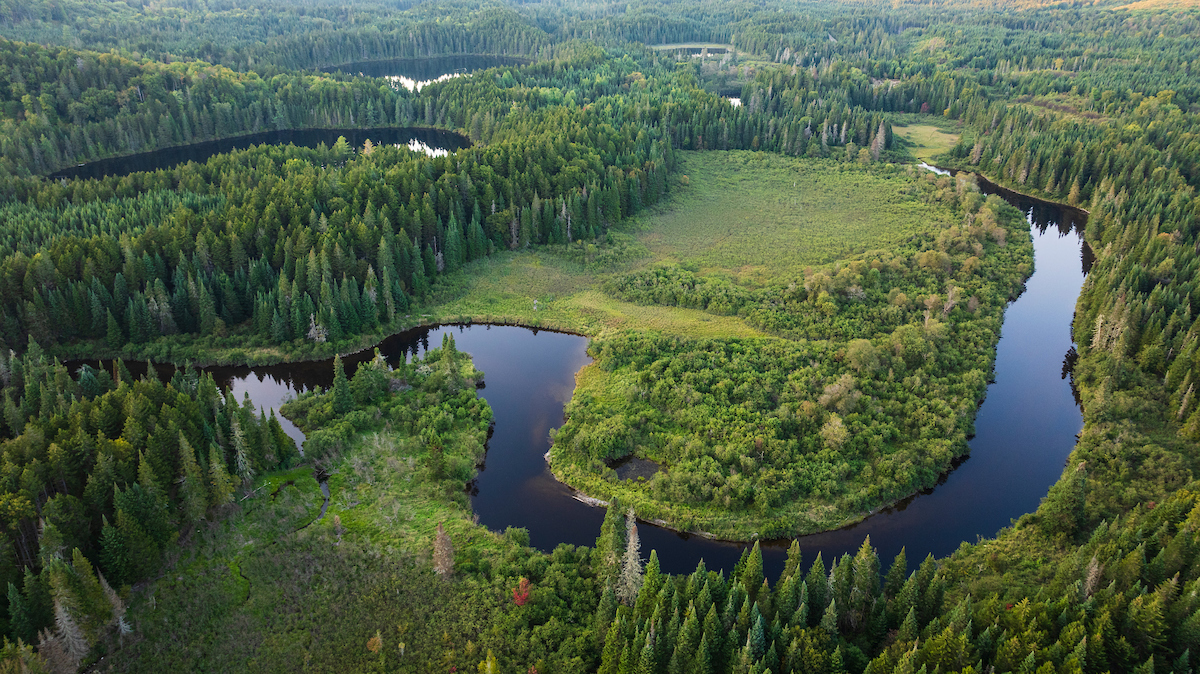 The Magalloway River, just north of Parmachenee Lake in Maine’s northern forest. (Courtesy of Jerry Monkman/Ecophotography)
The project promises a significant if unquantified boost to Maine’s long-term climate goals. The project brokers have not calculated the exact volume of carbon trapped in the Magalloway forest, but they note that Maine’s forests as a whole store approximately 2 billion metric tons of carbon.
Protecting this parcel helps the state edge closer to Maine’s goal of conserving 30% of its land by 2030. Maine has struggled to hit this target, which was outlined in the state’s first climate action plan produced in 2020. Currently, about 22.5% of Maine is protected.
Ecological restoration is already underway at Magalloway.
For example, Rangeley Lakes Heritage Trust plans intentionally fell trees into parcel streams to recreate the natural river curves that were straightened during logging drives of the last century. The logs create areas where trout can hide and spawn.
Registered Maine guides like Vic Medina have called the deal a victory for their way of life. The project easements will help protect an area where they have brought hundreds of clients to fish, hunt or simply enjoy the wildlife, including the brook trout and lynx, Medina said.
While fundraising is never easy, project organizers said that the Magalloway project sold itself. The area evokes the unforgettable character of Maine’s North Woods, said Mark Berry, forest program director of The Nature Conservancy of Maine.
The early morning fog will often cling to the glassy lakes, he said. The air carries the sharp scent of spruce and balsam. The Magalloway River is a near constant soundtrack, its waters so pristine they represent one of the nation’s last sustaining havens for native brook trout.
“This deal happened because of generosity, and there’s still an opportunity to be a part of it,” said Richard Knox, a director with the Northeast Wilderness Trust, reflecting on the final fundraising push. “We can’t wait to get the news out there and have people view this place for themselves.”
Editor’s note: This story was updated on July 28 to correct the spelling of Bayroot LLC and the Northeast Wilderness Trust.

Penny is excited to be the Portland Press Herald’s first climate reporter. Since joining the paper in 2016, she has written about Maine’s lobster and cannabis industries, covered state politics and... More by Penelope Overton
| # | Наименование новости | Тональность | Информативность | Дата публикации |
|---|---|---|---|---|
| 1 | Returning land and care of it to Wabanaki Nations yields great opportunity | Nature Connects | 0 | 44.01 | 19-07-2026 |
| 2 | These homes in Kennebunk are in high demand — by purple martins | 0 | 35.09 | 28-07-2026 |
| 3 | This guide will help you paddle your way through western Maine | 0 | 40.39 | 23-07-2026 |
| 4 | Maine’s aging water systems face a growing funding gap | Opinion | 0 | 35.62 | 21-07-2026 |
| 5 | Maine’s rural hospitals cannot survive another Susan Collins term | Opinion | 0 | 41.91 | 27-07-2026 |
| 6 | 5 things to know about the Mountain Division Trail | 0 | 42.85 | 22-07-2026 |
| 7 | 11 Maine boat rides and tours for water-powered fun this summer | 0 | 38 | 27-07-2026 |
| 8 | Maine lighthouse keeper weathers the elements to care for Nubble Light | 0 | 36.82 | 30-07-2026 |
| 9 | Striped bass anglers help with UMaine study | 0 | 34.59 | 22-07-2026 |
| 10 | Groups to sue Lolo Forest over shrinking grizzly habitat | 0 | 9.44 | 11-08-2026 |