Просмотр новости
Найдите то, что Вас интересует
 Спутники
 РН
РН SpaceX
 Роскосмос
 NASA
NASA
СпутникиРНSpaceXРоскосмосNASAA new study suggests the Chicxulub asteroid generated extreme atmospheric heat that may have ignited global wildfires and killed exposed animals within hours of impact.
Scientists have long known that the asteroid that killed the dinosaurs 66 million years ago triggered a devastating long winter by blocking the Sun.
A new study published July 28, 2026, in the Journal of Geophysical Research: Biogeosciences suggests the killing began far sooner and far faster than that. Within the first one to two hours of impact, a global blanket of fine silicate dust trapped the heat of billions of tons of falling debris. It radiated it back down to Earth with enough force to spontaneously ignite forests and incinerate exposed animals, alive, in the open, with no time to flee.
Here is the simplest way to picture what happened. When the six-mile-wide Chicxulub asteroid struck the Yucatán Peninsula, it blasted an enormous column of vaporized rock beyond the atmosphere. That material circled the planet and began falling back.
As it re-entered, air resistance generated a massive pulse of radiant heat, like the inside of a global oven. What the new Purdue University study found is that fine dust, hanging in the atmosphere, acted as a lid that amplified that heat by a factor of 3.5. Animals in the open, including the largest dinosaurs, had no shelter and no time. The ice age came later. The roasting came first.
What the Dust Actually DidThe research team, led by planetary scientist Brandon Johnson at Purdue University, modeled what happened when fine silicate dust, not the larger, heavier debris called spherules, remained suspended in the atmosphere during and after the re-entry heat pulse.
Earlier research had focused on those larger particles and concluded that the heat pulse lasted roughly 20 minutes. Johnson's team found that when the finer, longer-suspended dust was included, it behaved like a thermal blanket: it blocked the heat from escaping upward while simultaneously radiating it downward.
The result was a heat flux at the surface amplified 3.5 times beyond previous estimates, enough to push ground temperatures past the point at which dry plant material ignites spontaneously and the skin of large animals begins to blister.
Johnson described the implications to the American Geophysical Union, which published the press release:
"We're in the realm where we might be essentially killing off everything within that first hour or two," Brandon Johnson, planetary scientist, Purdue University, said in AGU press release.
That framing applies specifically to animals caught in the open. Creatures in burrows, caves, or shallow water, including small mammals, some reptiles and birds, would have been shielded from radiant heat. It is precisely those groups that survived the extinction and gave rise to the modern animal world.
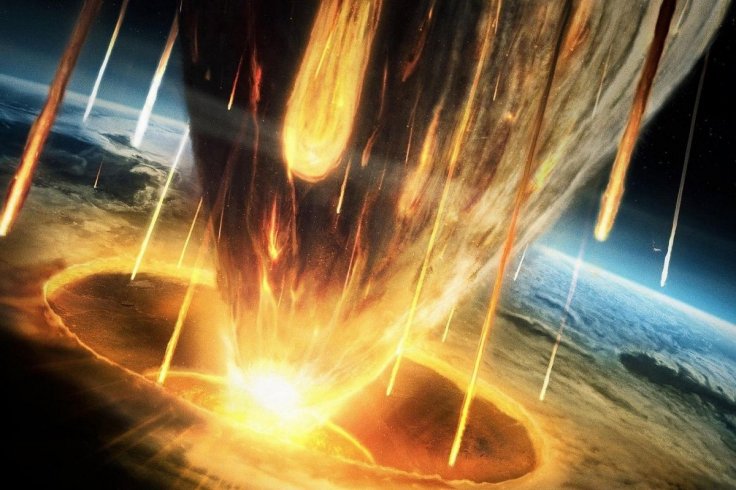 Artist’s impression of an asteroid impact.
Pixabay
Artist’s impression of an asteroid impact.
Pixabay
The sequence of destruction the new study describes unfolds in layers.
The new research does not replace the long-winter hypothesis. It adds a first chapter that was previously underestimated. The Purdue team's study is titled Heat and Wildfires During the K-Pg Mass Extinction Enhanced by Fine Dust.
The Purdue University press release, authored by communications team member Liz Kwalwasser, described the effect in terms that made headlines: the dust cloud caused "planetwide spontaneous combustion, atmospheric contamination and population collapse in any species that couldn't take shelter," effectively "charbroiling" Cretaceous creatures.
Why This Reopens an Old DebateThe Chicxulub impact's kill mechanisms have been debated since Luis Alvarez and his colleagues first identified the iridium-enriched clay layer marking the K-Pg boundary in 1980.
The sulfur dioxide hypothesis, which proposed that vaporized sulfate rock caused most of the cooling, has weakened in recent years after empirical studies found less sulfur released than models had assumed. The dust hypothesis is now gaining ground.
The American Geophysical Union noted that the new study "reinvigorates the decades-long debate around whether it was the asteroid impact or another aftereffect that killed the dinosaurs." For those that died in the first hours, standing in open forests when the sky began to glow, the debate may already have been settled 66 million years ago.
| # | Наименование новости | Тональность | Информативность | Дата публикации |
|---|---|---|---|---|
| 1 | ⚡ Удар астероида вызвал глобальную огненную бурю, которая испепелила динозавров ... | 0 | 9.37 | 30-07-2026 |
| 2 | Ученые пересмотрели гибель динозавров из-за удара метеорита 66 млн лет ... | 0 | 9.99 | 07-08-2026 |
| 3 | Астероиды не только убивали динозавров — задолго до этого они создали материки, на которых мы живём | 5 | 7 | 08-07-2026 |
| 4 | How asteroids may have sparked life on Earth | 0 | 10.08 | 02-07-2026 |
| 5 | Life rebounded shockingly fast after the asteroid that killed the dinosaurs | 0 | 7.78 | 15-03-2026 |
| 6 | Астероид, погубивший динозавров, вызвал гигантское цунами | 0 | 0 | 12-09-2019 |
| 7 | Учёные выяснили, как динозавры «сварились» за два часа | 0 | 8.86 | 28-07-2026 |
| 8 | Астероидные удары создали условия для зарождения жизни на ранней Земле | 5 | 7 | 06-07-2026 |
| 9 | Что добило динозавров после планетарной катастрофы - "подсказку" дала пыль ... | 0 | 6.86 | 29-07-2026 |
| 10 | Динозавры "сварились" в образовавшейся после падения астероида пыли: Новая версия ... | 0 | 6.02 | 29-07-2026 |