Просмотр новости
Найдите то, что Вас интересует
 Спутники
 РН
РН SpaceX
 Роскосмос
 NASA
NASA
СпутникиРНSpaceXРоскосмосNASAThe FCC has expanded its crackdown on Chinese technology, bringing robot vacuums and other smart autonomous devices under the same import restrictions as humanoid robots.
The Trump administration's expanding technology crackdown is no longer limited to humanoid robots. A sweeping new rule is set to impact a broad range of Chinese-made autonomous machines, including robot vacuum cleaners, robotic lawnmowers and delivery robots.
It was reported previously that the administration has decided to ban Chinese humanoid robots in the US. However, a statement from the Federal Communications Commission (FCC) reveals that the restrictions go far beyond humanoid machines.
The agency's broad definition of an "advanced robotic device" also covers many autonomous household robots already familiar to consumers, including robot vacuum cleaners.
The FCC describes these devices as "software-controlled autonomous" machines that "can perceive [their] environment," weigh more than 4.4 pounds including their charging dock, move across the ground and feature wireless connectivity.
Robot Vacuums Join the Ban as Security Debate IntensifiesThe expanded definition means future robot vacuum cleaners manufactured primarily outside the US could face significant hurdles before entering the American market.
While existing products already available in US stores can continue to be sold, manufacturers launching new models will have to seek FCC waivers.
The decision could have sweeping consequences for the industry because most popular robot vacuum brands, including Chinese manufacturers such as Dreame, Roborock and Ecovacs, produce their devices overseas.
Even some US-based robotics companies may not escape the restrictions if they fail to meet domestic manufacturing thresholds.
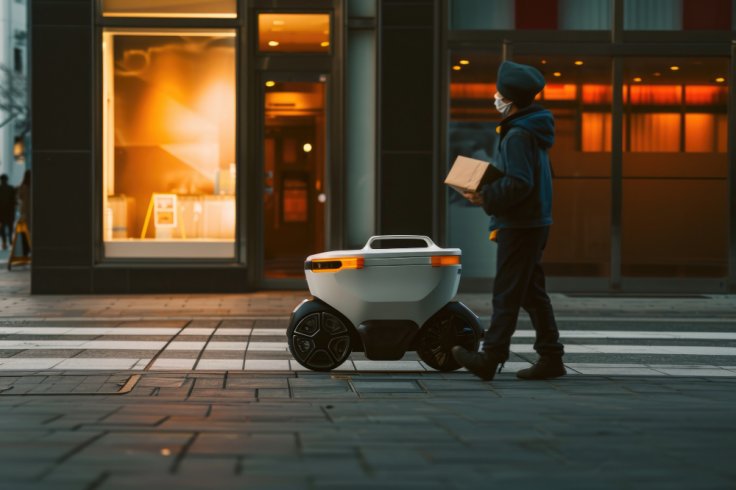
The rules also extend beyond cleaning robots. Autonomous lawnmowers, sidewalk delivery robots and other software-driven mobile machines capable of mapping and navigating their surroundings could also fall under the FCC's broad classification.
 magnific.com
Over the years, supporters of tighter restrictions have argued that autonomous household robots pose unique cybersecurity risks because they continuously map homes, collect environmental data and remain connected to wireless networks.
However, it is believed that the latest approach is overly broad and does little to improve cybersecurity directly. As industry observers noted, the restrictions focus primarily on manufacturing location rather than software security standards.
Existing robot vacuums already operating inside American homes remain unaffected, raising questions about whether the policy meaningfully addresses the privacy concerns cited by regulators.
As reported by The Verge, the policy was described as "ham-fistedly broad," arguing that instead of targeting companies with weak cybersecurity practices, the rules effectively cover nearly every manufacturer that produces less than 65% of its products in the US.
Robotics Industry Faces Uncertain FutureThe new restrictions arrive as consumer robotics continues to expand rapidly worldwide. Robot vacuum cleaners represent one of the largest and fastest-growing segments of the home automation market, driven by increasing demand for affordable smart home devices.
Recent cybersecurity incidents have added weight to concerns over connected robots. In 2024, hackers reportedly compromised Ecovacs Deebot X2 robot vacuums, enabling attackers to broadcast offensive messages through onboard speakers.
More recently, thousands of DJI robotic devices were reportedly targeted in another security breach, highlighting vulnerabilities in internet-connected consumer robots.
As the battle over connected devices intensifies, the latest FCC action signals that Washington's scrutiny now extends well beyond humanoid robots to virtually every autonomous machine entering American homes.
| # | Наименование новости | Тональность | Информативность | Дата публикации |
|---|---|---|---|---|
| 1 | US Bans Import Of Foreign Robot Vacuums And Robotics | 0 | 9.35 | 30-07-2026 |
| 2 | The FCC just banned almost all robot vacuums made outside the US | 0 | 9.19 | 30-07-2026 |
| 3 | The FCC just banned almost all robot vacuums made outside the US | 0 | 9.19 | 30-07-2026 |
| 4 | The US foreign-made robot crackdown is coming for future Roombas too | 0 | 9.79 | 30-07-2026 |
| 5 | США также запретили импорт роботов-пылесосов | 0 | 10.92 | 30-07-2026 |
| 6 | В США вводят ограничения на импорт человекоподобных роботов из Китая | 0 | 10 | 28-07-2026 |
| 7 | Trump administration bans foreign-made humanoid robots in move targeting China | 0 | 7.73 | 29-07-2026 |
| 8 | Власти США запретили ввоз китайских роботов из-за угрозы шпионажа | 0 | 14.8 | 29-07-2026 |
| 9 | US bans foreign-made humanoid robots, targeting China over national security | 0 | 8.03 | 29-07-2026 |
| 10 | US bans foreign-made humanoid robots, targeting China over national security | 0 | 8.03 | 29-07-2026 |