Просмотр новости
Найдите то, что Вас интересует
 Спутники
 РН
РН SpaceX
 Роскосмос
 NASA
NASA
СпутникиРНSpaceXРоскосмосNASA The world of virtual reality gaming has always lingered on the edge of my horizon: close enough to imagine but just perfectly out of reach. Not only are headsets fairly expensive - with low-end options such as the Meta Quest 3S setting you back over £300 - but the setups also come with so many physical barriers, and often need a fairly powerful PC to run the newest games. I don't think we're too far off from these issues diminishing, but it simply isn't accessible to me at the moment.
So while I may not be so ready to hop aboard the VR hype train yet, the Moss games have always intrigued the platformer fan in me. After years of both entries in this series being limited to VR headsets only, Moss: The Forgotten Relic finally provides the opportunity to play Book I and II together on all modern platforms. While it's evident these games probably work best in their original format, I'm glad to say The Forgotten Relic still serves as a great way to experience this amazing story.
<video>
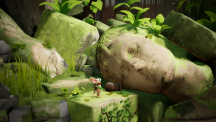
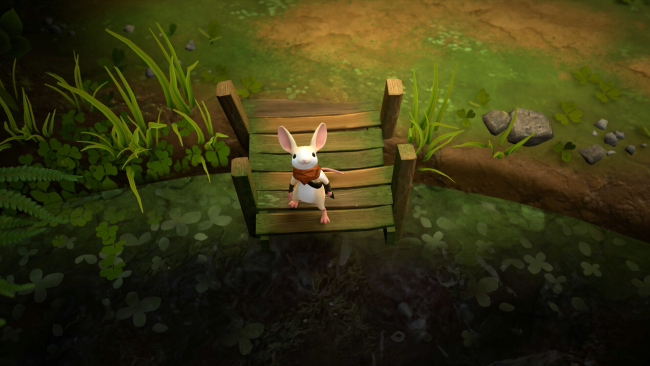
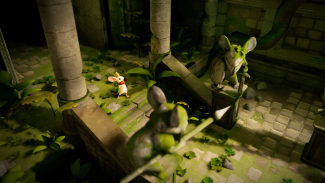
I was immediately charmed by Moss' protagonist, Quill. This heroic little mouse has so much personality in everything from her expressive animations to the squeaks and gasps she makes in reaction to the vast and expansive world around her. The art style blends realism and fantasy in perfect harmony with some truly breath-taking environments that provide a sublime sense of scale. Each room feels like a kids playset brought to life, with you, the player, its grand designer, moving objects with the power of the Glass Relic that keeps you and Quill connected.
The plot's setup is fairly simple, with the game's storytelling seeming more focused on building a connection between the player and Quill as she develops from the fearful little girl we first meet into the brave, determined hero of her world. Experiencing the journey alongside her this way helps emphasise the arduous quest the two of you undertake, allowing you to truly feel the burden she bears, the loss she faces. It makes each wholesome moment or massive milestone you reach together all the more gratifying, with Quill often celebrating by reaching out to you for a high-five or breaking out into a little dance.
Scenes like these were utterly adorable, however I did get the feeling I'd have enjoyed them even more with a VR headset on. I still felt a very strong connection to Quill by the end of The Forgotten Relic, and was devastated when the time came to finally bid her farewell. But the extra level of immersion and tangibility virtual reality can provide would've made the experience that much more enjoyable and emotional.
<bild></bild>
<bild></bild>
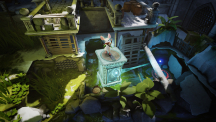
This wasn't the only limitation I felt playing Moss in this way, especially when comparing with clips of the original games. Playing in VR provides a full panoramic view of each room, allowing you to turn and see each puzzle in its entirety from a bird's-eye perspective. Without this level of mobility possible via a controller, The Forgotten Relic utilises a variety of camera angles in each area to switch the focus to whichever section you're currently traversing. But with how much of a distance some of these puzzles can span across, it's easy to forget exactly what you were working towards a minute ago. It's nothing major, but The Forgotten Relic has a few moments here and there that make you wish you were playing it in its original format.
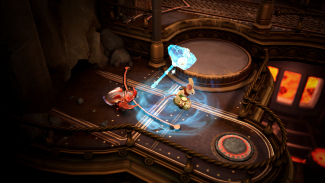
The game is absolutely at its best in these puzzle-platformer moments, though. Some of these are seriously good brain teasers, with many moving parts and abilities at your disposal which you're required to string together in order to clear a room or obtain a key. Your role as the Reader has you shifting platforms and moving massive puzzle pieces Quill's tiny arms can't, clearing the way for her to move through areas. It does a lot of important work in further building the relationship between you and Quill, constantly reliant on one another to progress. Book II massively expands on this by providing Quill with new tools and moves, including a wall climb and a dash, broadening the possibilities for new puzzle-platforming problems.
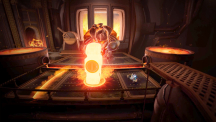
When you're not solving these puzzles, Moss breaks things up with the occasional battle. These are fine enough and fairly simple: dodge when an enemy attacks, slice them up with your sword otherwise. Both books throw the odd boss fight at you, which is where the combat really shines, usually implementing some variety of puzzle element that puts the skills you learned prior to the test. But for the standard enemy encounters there isn't much going on, though they're rarely long enough to be a real gripe for me. Again, Book II steps things up with a couple of new weapons, although switching between them is more of a matter of efficiency than necessity.
<bild></bild>
Aside from this and the constant loading between rooms, I really don't have much negative to say about Moss: The Forgotten Relic. The puzzles are great, the environments are stunning, and the mouse gives you hugs, high-fives, and dances. What more could you want? After turning the final page of the book, I can safely say I had a great time with Moss and would love to return to its world one day, whether it be through the power of a VR headset or a third entry in what could make for a spectacular trilogy.
The world of virtual reality gaming has always lingered on the edge of my horizon: close enough to imagine but just perfectly out of reach. Not only are headsets fairly expensive - with low-end options such as the Meta Quest 3S setting you back over £300 - but the setups also come with so many physical barriers, and often need a fairly powerful PC to run the newest games. I don't think we're too far off from these issues diminishing, but it simply isn't accessible to me at the moment.
So while I may not be so ready to hop aboard the VR hype train yet, the Moss games have always intrigued the platformer fan in me. After years of both entries in this series being limited to VR headsets only, Moss: The Forgotten Relic finally provides the opportunity to play Book I and II together on all modern platforms. While it's evident these games probably work best in their original format, I'm glad to say The Forgotten Relic still serves as a great way to experience this amazing story.
I was immediately charmed by Moss' protagonist, Quill. This heroic little mouse has so much personality in everything from her expressive animations to the squeaks and gasps she makes in reaction to the vast and expansive world around her. The art style blends realism and fantasy in perfect harmony with some truly breath-taking environments that provide a sublime sense of scale. Each room feels like a kids playset brought to life, with you, the player, its grand designer, moving objects with the power of the Glass Relic that keeps you and Quill connected.
This is an ad:
The plot's setup is fairly simple, with the game's storytelling seeming more focused on building a connection between the player and Quill as she develops from the fearful little girl we first meet into the brave, determined hero of her world. Experiencing the journey alongside her this way helps emphasise the arduous quest the two of you undertake, allowing you to truly feel the burden she bears, the loss she faces. It makes each wholesome moment or massive milestone you reach together all the more gratifying, with Quill often celebrating by reaching out to you for a high-five or breaking out into a little dance.
Scenes like these were utterly adorable, however I did get the feeling I'd have enjoyed them even more with a VR headset on. I still felt a very strong connection to Quill by the end of The Forgotten Relic, and was devastated when the time came to finally bid her farewell. But the extra level of immersion and tangibility virtual reality can provide would've made the experience that much more enjoyable and emotional.
This is an ad:
This wasn't the only limitation I felt playing Moss in this way, especially when comparing with clips of the original games. Playing in VR provides a full panoramic view of each room, allowing you to turn and see each puzzle in its entirety from a bird's-eye perspective. Without this level of mobility possible via a controller, The Forgotten Relic utilises a variety of camera angles in each area to switch the focus to whichever section you're currently traversing. But with how much of a distance some of these puzzles can span across, it's easy to forget exactly what you were working towards a minute ago. It's nothing major, but The Forgotten Relic has a few moments here and there that make you wish you were playing it in its original format.
The game is absolutely at its best in these puzzle-platformer moments, though. Some of these are seriously good brain teasers, with many moving parts and abilities at your disposal which you're required to string together in order to clear a room or obtain a key. Your role as the Reader has you shifting platforms and moving massive puzzle pieces Quill's tiny arms can't, clearing the way for her to move through areas. It does a lot of important work in further building the relationship between you and Quill, constantly reliant on one another to progress. Book II massively expands on this by providing Quill with new tools and moves, including a wall climb and a dash, broadening the possibilities for new puzzle-platforming problems.
When you're not solving these puzzles, Moss breaks things up with the occasional battle. These are fine enough and fairly simple: dodge when an enemy attacks, slice them up with your sword otherwise. Both books throw the odd boss fight at you, which is where the combat really shines, usually implementing some variety of puzzle element that puts the skills you learned prior to the test. But for the standard enemy encounters there isn't much going on, though they're rarely long enough to be a real gripe for me. Again, Book II steps things up with a couple of new weapons, although switching between them is more of a matter of efficiency than necessity.
Aside from this and the constant loading between rooms, I really don't have much negative to say about Moss: The Forgotten Relic. The puzzles are great, the environments are stunning, and the mouse gives you hugs, high-fives, and dances. What more could you want? After turning the final page of the book, I can safely say I had a great time with Moss and would love to return to its world one day, whether it be through the power of a VR headset or a third entry in what could make for a spectacular trilogy.
| # | Наименование новости | Тональность | Информативность | Дата публикации |
|---|---|---|---|---|
| 1 | Review: Moss: The Forgotten Relic (Switch 2) – A Port That Doesn't Fall Flat On A Flatscreen | 0 | 8.23 | 21-07-2026 |
| 2 | Fading Echo | 0 | 7.96 | 21-07-2026 |
| 3 | Verho - Curse of Faces | 0 | 6.56 | 27-07-2026 |
| 4 | The Mound: Omen of Cthulhu | 0 | 6.23 | 15-07-2026 |
| 5 | The Mermaid Mask | 0 | 6.56 | 17-07-2026 |
| 6 | #Drive Rally | 0 | 6.81 | 27-07-2026 |
| 7 | Momento | 0 | 5.32 | 06-07-2026 |
| 8 | Clair Obscur: Expedition 33 devs are working on a Nintendo Switch 2 version, but note the "big technical challenge" of getting it up and running | 0 | 11.1 | 29-07-2026 |
| 9 | Mortal Shell 2 sells out of physical Revered Edition PS5 pre-orders as players rush to buy the highly-anticipated game on disc | 0 | 19.73 | 22-07-2026 |
| 10 | Only the lonely: The Lonesome Guild is the game where sad sacks can become super heroes, says our critic Peter Hoskin | 0 | 8.23 | 01-12-2025 |