Просмотр новости
Найдите то, что Вас интересует
 Спутники
 РН
РН SpaceX
 Роскосмос
 NASA
NASA
СпутникиРНSpaceXРоскосмосNASATracking brand conversations used to mean monitoring major social networks and news sites. Now the surface area includes TikTok trends, AI-generated articles, subreddits, podcasts, Read more...
The post Why brands need a unified social and media intelligence strategy appeared first on Sprout Social.
Summary
Tracking brand conversations used to mean monitoring major social networks and news sites. Now the surface area includes TikTok trends, AI-generated articles, subreddits, podcasts, decentralized networks, forum communities…the list goes on. Each one is a place where people form opinions and shape narratives about your brand. The problem is that most teams are only catching a fraction of these conversations. Mentions only tell you that conversations are happening—they don’t tell you where they started, how fast they’re moving or where they’re heading next.
There’s a deeper structural issue too: most organizations still treat social media intelligence and traditional media intelligence as separate functions. The social team monitors platforms while the public relations team watches news and editorial coverage. Neither has the full picture, and when no one’s connecting the dots across channels, crises can escalate and opportunities might slip by unnoticed.
A story doesn’t stay on one channel, and neither should your intelligence strategy. This article breaks down what unified social and media intelligence looks like and how to build a strategy that moves your team from reactive to proactive.
What is media intelligence?Media intelligence is the practice of collecting, analyzing and interpreting coverage across news, broadcast, print and online channels to understand how the public and press perceive your brand.
It goes beyond clipping headlines. Media intelligence gives communications teams a structured view of brand health, covering competitive position, reputation trajectory and message resonance—all in one place.
Knowing your brand was mentioned is the starting point, but it’s a bit like knowing someone talked about you at a party without knowing what they said, who they told or how the room reacted. Media intelligence fills in the rest.
Media intelligence vs. social media intelligenceMedia intelligence captures how journalists, publications and broadcasters cover and frame your brand. Social media intelligence focuses on real-time public conversation, including the sentiment, volume and velocity of discussions across social platforms.
| Media intelligence | Social media intelligence |
| News, broadcast, print and online editorial | Social platforms, forums and decentralized networks |
| Brand coverage and press framing | Real-time public conversation and sentiment |
| Institutional reputation and share of voice | Audience behavior, trends and community signals |
| Slower-moving, high-authority sources | Fast-moving, high-volume signals |
| What journalists and publications are saying | What everyday people are saying |
In practice, the two are inseparable. An investigative piece in a trade publication can ignite a wave of social commentary within hours. A narrative that starts on Reddit or Bluesky can find its way into mainstream editorial by the end of the week.
According to Sprout’s Q1 2026 Pulse Survey, 49% of people cited social media as the most common channel to discover breaking news, ahead of TV (45%) and news apps (32%). Consumers (39%) also want news organizations and individual reporters to be more active on social media to share breaking updates and engage with audiences. The line between where news breaks and where it’s reported has never been thinner.
What’s the difference between media intelligence and media monitoring?Media monitoring is the foundation. It tracks where your brand appears across news sites, blogs, broadcasts and social platforms, and alerts you when it does. It answers the question: what’s being said right now?
Media intelligence takes that raw coverage and adds a layer of analysis. It identifies patterns, tracks sentiment shifts and contextualizes mentions against competitive and historical data. It answers a harder question: what does this mean for our brand?
Predictive media intelligence goes further still. By analyzing early velocity signals, semantic patterns and how narratives spread across different communities, predictive models can estimate the statistical probability that a story will escalate based on how similar stories have traveled before. It answers the question: what’s likely to happen next, and how soon?
A product safety rumor gaining traction in a Reddit community is a good example. A monitoring tool would flag it once it hits a news site, but predictive intelligence could detect the velocity spike on the forum in advance, giving your team time to assess and prepare next steps before it becomes a full-blown crisis.
Predictive intelligence tools like NewsWhip by Sprout Social bring this capability to communications teams, moving intelligence from retrospective to predictive.
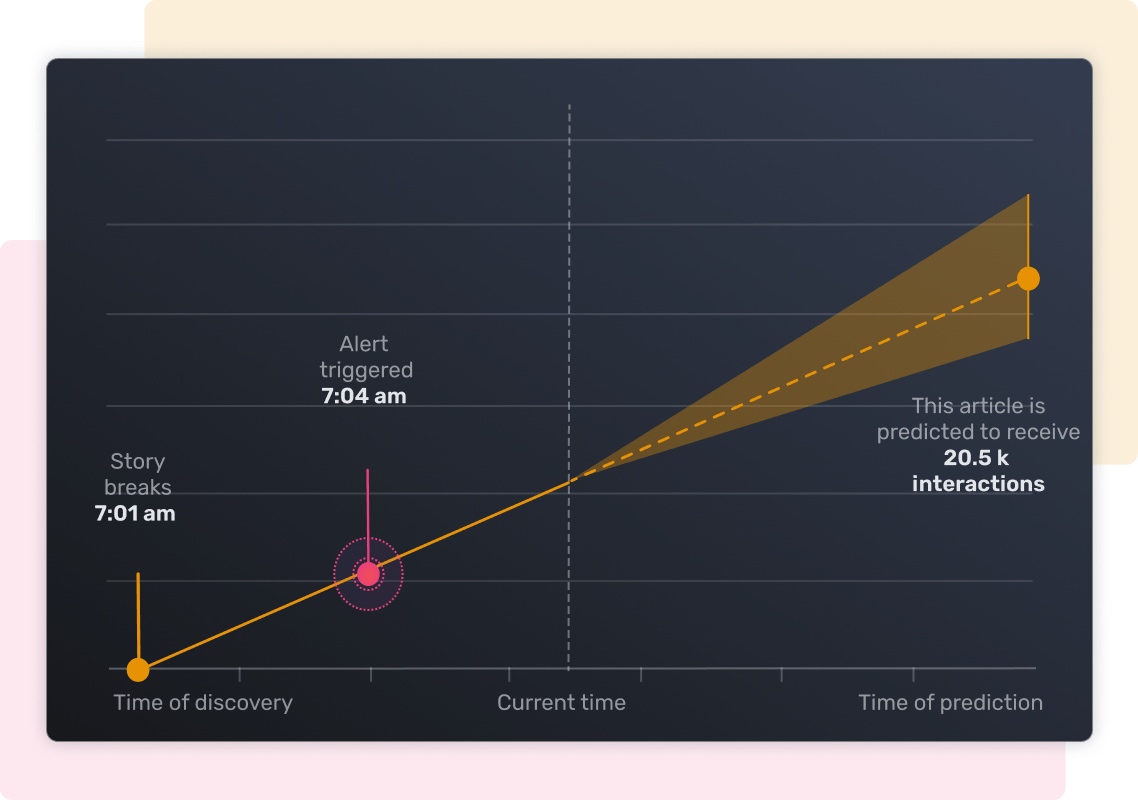
Separate tools, teams and data streams mean no one ever has the complete picture. Here’s what changes when they come together.
Stronger brand perception across all channelsPress coverage and social conversation don’t always tell the same story. A product launch might generate positive editorial coverage but land flat with consumers on social, or vice versa. Unifying both signals tells you which perception is winning, where the gap is and what’s driving it.
Earlier visibility into market shiftsWhen a competitor starts taking heat about their pricing, your social team might catch it, but without a connection to your media intelligence, it might not reach the comms or brand teams who could act on it. Unified intelligence closes that gap, getting the right signals to the right people while there’s still time.
Stronger, evidence-backed decisionsNot every spike in coverage warrants a response. By combining what’s happening now with what’s likely to happen next, unified media intelligence helps teams separate signals from noise and direct resources toward the conversations that truly need attention.
Crisis prevention, not just crisis responseA negative review on a niche industry forum may not require a full crisis management response, but it could evolve into a more serious situation. Unified media intelligence gives your team the context to recognize patterns early and act on them while they’re still a contained conversation rather than a headline.
A clearer read on what’s rising and what’s fadingConsumer values shift, regulations emerge and cultural moments build long before they show up in mainstream coverage. Brands that spot these forces early—in creator content, advocacy communities and trade commentary—have time to shape their messaging and adjust positioning around what’s coming rather than what’s already here.
What metrics matter most in media intelligence?Effective media analysis draws on quantitative and qualitative measures. The numbers tell you what’s happening at scale. The qualitative layer tells you what the numbers mean.
Quantitative metricsThese give you a measurable baseline for brand health and competitive position:
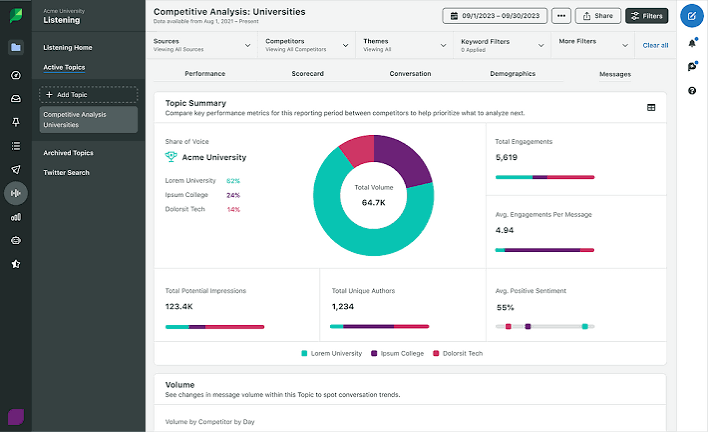
These add depth to the numbers and reveal how your brand is actually being understood:
Modern media analysis uses AI to make the qualitative layer manageable at scale. Rather than reading millions of mentions individually, AI brand monitoring surfaces the dominant narratives, flags emerging ones and maps how different audiences—press, consumers, industry voices—talk about your organization.
The result is a clearer picture of not just how much coverage you’re getting, but what it’s actually saying.
How to choose the best media intelligence toolNot all media intelligence tools are built for the same job. As news cycles compress and content fragments across more channels, the gap between basic social media monitoring platforms and true intelligence tools has widened.
The right tool helps you stay ahead of what’s coming, not just track what’s already happened.
Key features to look for:
NewsWhip and Sprout Listening check all of these boxes, combining channel coverage, predictive intelligence, AI-powered narrative and conversation analysis, and real-time alerts.
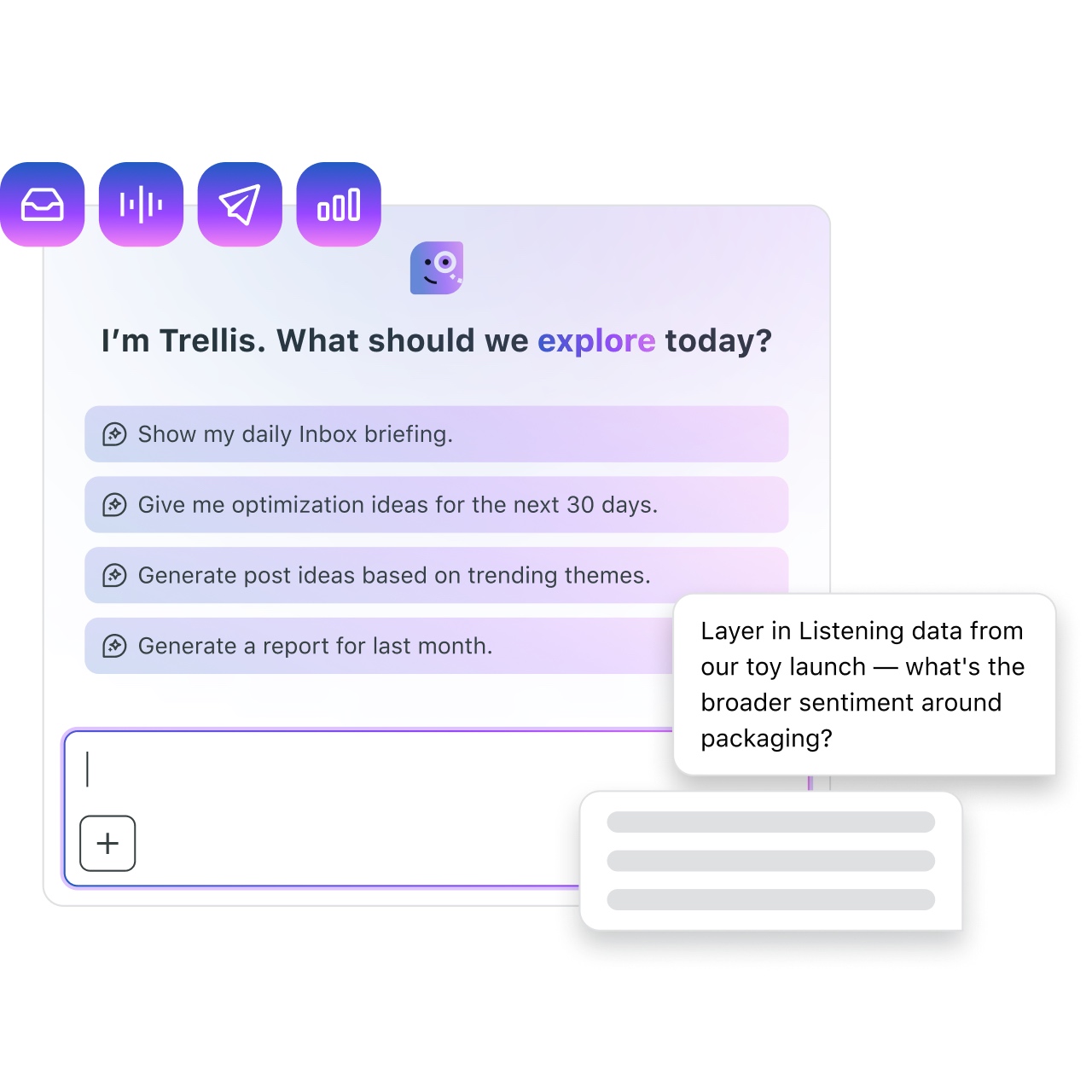
Sprout’s Trellis adds an agentic AI layer. It autonomously monitors for signals that matter to your brand and delivers them in real time, so your team can focus on decisions rather than data gathering.
Stay ahead of your own storyReputation builds gradually. A product conversation gains traction on Bluesky and your comms team is already on it. A competitor’s pricing backlash surfaces and your brand strategists have the context to position around it. A sustainability trend builds in the trade press and your messaging is ready to move with it before it goes mainstream. These individual moments may seem small, but the cumulative effect is significant.
Communications teams that unify social and media intelligence build this advantage systematically. Briefings get sharper. Leadership conversations become more forward-looking. And when something does escalate, your team already has the context to respond with confidence.
To learn more about why brands need to build these intelligent capabilities, read the Social Intelligence Report.
Frequently asked questionsWhat is the purpose of media intelligence?
Media intelligence helps brands understand how they’re being talked about and perceived across news, broadcast, print and online channels. It gives communications teams a structured view of brand health, covering competitive position, reputation shifts and whether messaging is landing, so they can make informed decisions rather than reactive ones. Media intelligence helps brands understand how they’re being talked about and perceived across news, broadcast, print and online channels. It gives communications teams a structured view of brand health, covering competitive position, reputation shifts and whether messaging is landing, so they can make informed decisions rather than reactive ones.
What is an example of media intelligence?
A communications team tracking coverage after a product launch—monitoring sentiment across news outlets, measuring share of voice against competitors and identifying which narratives are gaining traction—is practicing media intelligence. If a critical angle starts appearing in influential spaces, the right tool flags it early enough to respond before it reaches a wider audience.
What is social media threat intelligence?
Social media threat intelligence is the practice of monitoring social platforms for signals that could pose a risk to a brand. This includes tracking emerging negative narratives, flagging misinformation and detecting early signs of reputational threats. It sits at the intersection of social monitoring and risk management, giving teams the context to act before a threat escalates.
| # | Наименование новости | Тональность | Информативность | Дата публикации |
|---|---|---|---|---|
| 1 | How to build a cross-network brand monitoring strategy on social | 0 | 12.31 | 09-07-2026 |
| 2 | How to build a brand newsroom | 0 | 10.31 | 28-07-2026 |
| 3 | A tactical guide to social media comments and responses | 0 | 8.23 | 23-07-2026 |
| 4 | How Lemonade built next-gen brand trust with Sprout Social | 0 | 14.18 | 30-01-2026 |
| 5 | How to predict market shifts with social data and audience intelligence | 0 | 10.99 | 24-07-2026 |
| 6 | Social media management for startups: A complete guide | 0 | 11.83 | 24-07-2026 |
| 7 | How to build your Bluesky strategy: The complete guide for modern brands | 0 | 10.27 | 13-07-2026 |
| 8 | PMG turns strategic creator selection into direct sales with Sprout Social Influencer Marketing | 0 | 7.33 | 19-05-2026 |
| 9 | How to rethink the social media marketing funnel with a flywheel | 0 | 6.55 | 06-07-2026 |
| 10 | Facebook analytics for small business success | 0 | 10.32 | 03-07-2026 |